
JOURNAL
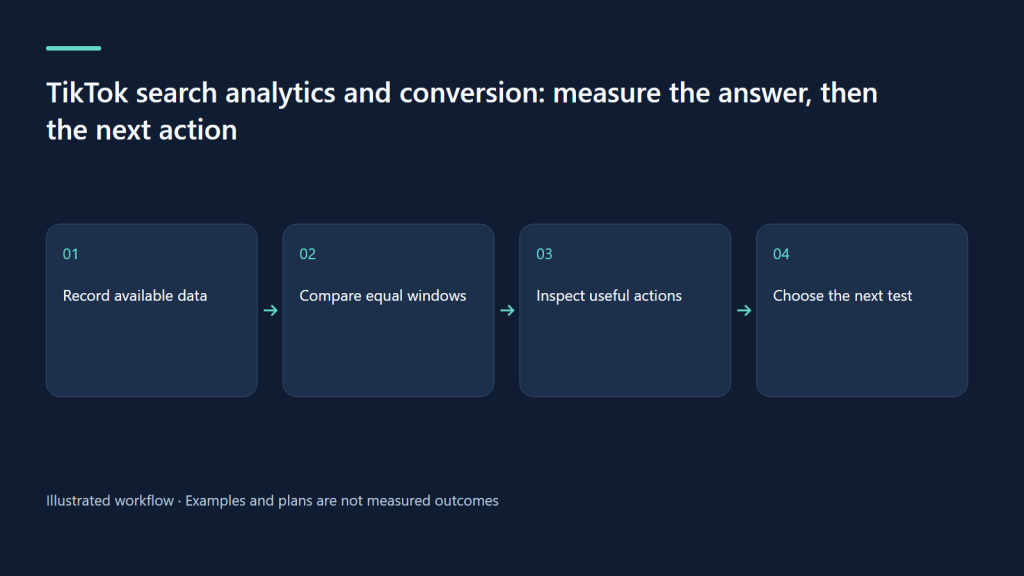
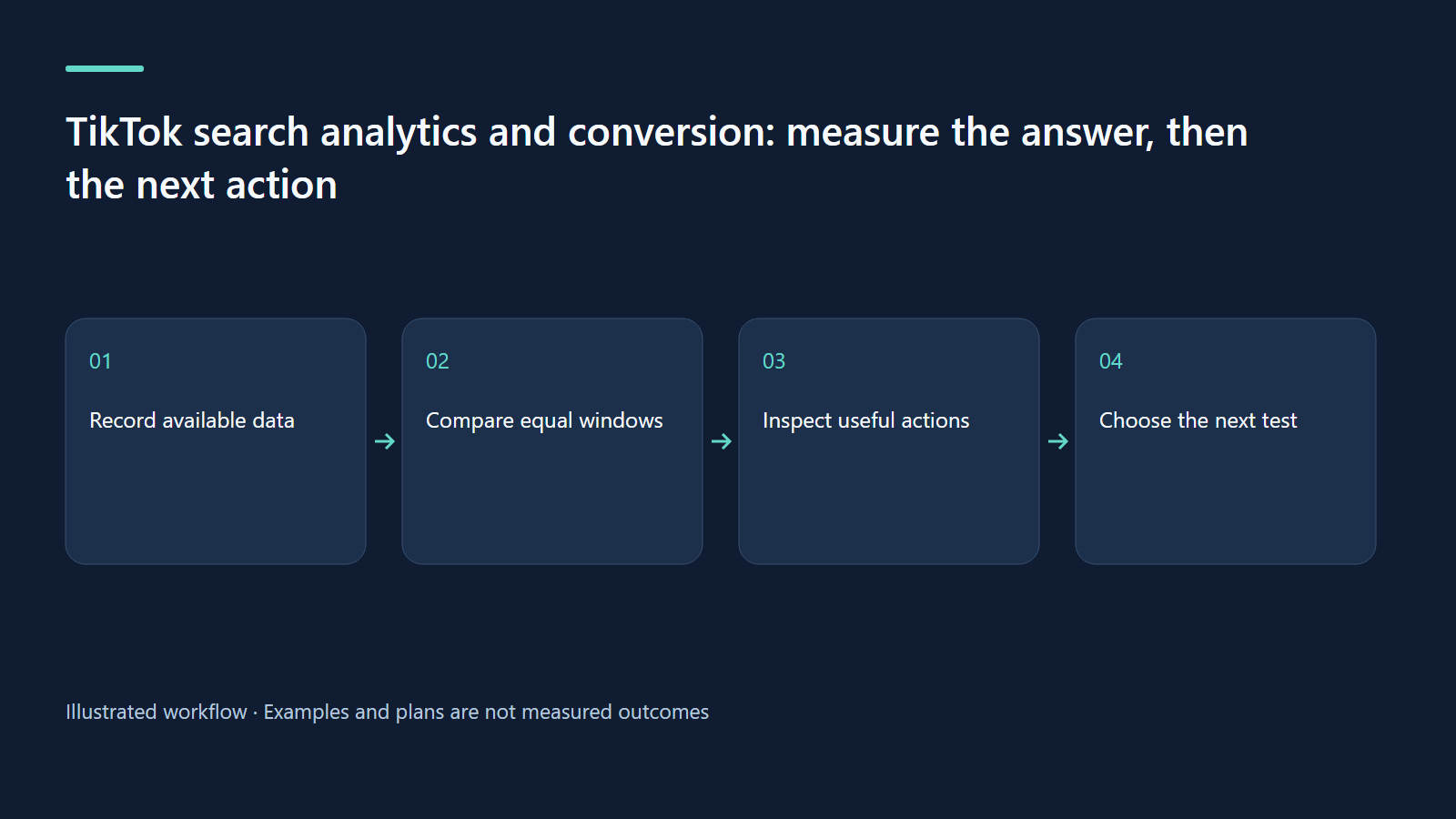
TikTok search analytics and conversion: measure the answer, then the next action
Separate discovery, comprehension and meaningful adult inquiries instead of treating every view as a business result.
On this page
A video can attract views without helping the intended audience, and a useful answer can reach a modest audience while generating meaningful questions. Analytics should help distinguish those situations. The first step is to define what the video is meant to accomplish. For an adult educational creator, that might be a parent understanding a home activity, a teacher requesting a preparation checklist or a qualified adult inquiry about a workshop.
Start with available data, not an imagined dashboard
TikTok’s Creator Search Insights guide describes search analytics for posts. Access and displayed fields can vary, so inspect your account before designing a report. The official introduction states that the tool launched in selected regions. An unavailable field should remain unavailable in your records, rather than being inferred from unrelated totals.
Create a simple ledger with publication date, question answered, format, observation date and the metrics you can actually see. Preserve screenshots or exports only when they are appropriate for your own account, and keep personal information out of shared reports. Record metric definitions alongside the numbers. A count of profile visits is different from a count of people who later contacted you, and neither establishes that a search result caused the contact.
Separate three stages of evaluation
Discovery asks whether people encountered the answer. Comprehension asks whether the video communicated its practical point. The next action asks whether an adult did something consistent with the goal. These stages can use different evidence. Available search analytics may inform discovery; repeated setup questions may expose comprehension problems; an optional checklist request can indicate a relevant action. None should be silently substituted for another.
| Stage | Possible evidence | What it does not prove |
|---|---|---|
| Discovery | Available search performance or post views. | That viewers understood the lesson. |
| Comprehension | Questions referring to the demonstrated steps. | That every viewer learned successfully. |
| Action | Adult checklist requests or workshop inquiries. | Revenue or causal attribution to search. |
| Business outcome | Confirmed bookings in your own records. | That the same result will recur. |
Define conversion without inflating the claim
For a lesson-preparation account, a conversion can be a request for a relevant resource rather than a sale. Define it before publishing: “An adult asks for the paper bridge materials checklist” is precise. “The audience engaged” is not. If links or contact options are available, use a clearly named resource and an accessible destination. If they are unavailable, do not build the measurement plan around them; choose a feasible next action.
A call to action should match the answer. After a home activity, offer the materials checklist; after an AI lesson review, offer the review template. Do not interrupt a simple explanation with several unrelated offers. For educational examples involving children aged 6–12, address parents and teachers, collect no child’s contact details and keep the activity offline. The commercial journey, if any, is an adult’s decision.
A hypothetical calculation and its limits
Suppose a proposed review records 800 total post views and 16 adult resource requests. The arithmetic gives two requests per hundred recorded views. These are fictional numbers for explaining the calculation, not private account results. The ratio should be described as requests divided by total views. It should not be renamed a “search conversion rate” unless the numerator and denominator genuinely identify the same search-origin audience.
Even with source data, people may encounter the creator several times before acting. A request can follow a profile visit, an older lesson or a recommendation from a friend. Ask an optional, simple source question when appropriate, but recognize self-report limits. Do not collect unnecessary personal information merely to improve attribution. A modestly imperfect measurement system can still guide editorial decisions when its limitations are explicit.
Compare videos at equal ages
Choose observation windows before the test, such as the same number of days after publication. Record later follow-up separately. Comparing a month-old video with a new upload confounds time with content quality. Also record topic and format differences. A materials demonstration and a software review may serve different needs, so a raw view total does not establish which one is better for the account.
Prefer repeated patterns over a single exceptional post. If several activity videos generate the same preparation question, consider a dedicated answer. If a high-view video produces irrelevant inquiries, tighten the promise and audience description. If a modest-view lesson produces specific adult requests, explore whether the lesson deserves a clearer opening rather than abandoning the subject.
Practical exercise: write a measurement contract
Before publishing three comparable videos, write their shared purpose, one primary metric and one qualitative check. For example: “Help parents set up low-preparation activities; count relevant checklist requests; inspect whether comments show confusion about materials.” Add the observation window and unavailable fields. Keep this note so the success definition cannot drift toward whichever number looks best.
At review time, pair the numbers with the actual videos. Watch the opening, the demonstration and the final prompt again. Summarize what you know, what you infer and what remains unknown. The next experiment should address the largest uncertainty, such as a confusing setup or a weak transition to the resource, rather than changing every element at once.
Troubleshooting incomplete attribution
If search data is missing, report overall performance without inventing a search breakdown. If requests are counted inconsistently, define duplicates and exclude spam before comparison. If business outcomes arrive much later, maintain a separate follow-up record. If a video has no actions, verify that the next step was visible, useful and actually available. Analytics becomes valuable when it improves the next answer, with enough honesty to avoid turning uncertainty into a success story.
Related learning paths
Related reading
08 Oct 2026 · 5 min read
TikTok SEO
TikTok search and For You: design for two different discovery moments
Build a useful answer for searchers without losing the visual proof that makes a recommendation worth watching.
Read more
08 Oct 2026 · 5 min read
TikTok SEO
Creator Search Insights: turn topic signals into a defensible content brief
Use search topics and content gaps as research leads, then validate audience fit and your ability to deliver a complete answer.
Read more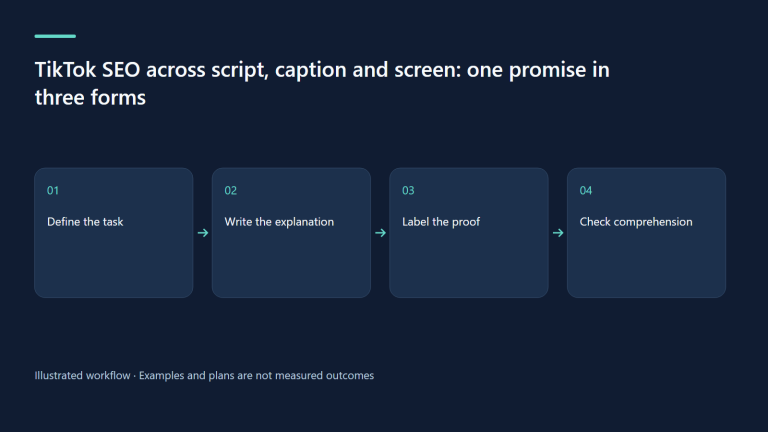
08 Oct 2026 · 5 min read
TikTok SEO
TikTok SEO across script, caption and screen: one promise in three forms
Coordinate the spoken explanation, post caption and visible labels so an adult viewer understands the task and can act on it.
Read more
Discussion
Comments are reviewed before publication. Your email is kept private.