
JOURNAL
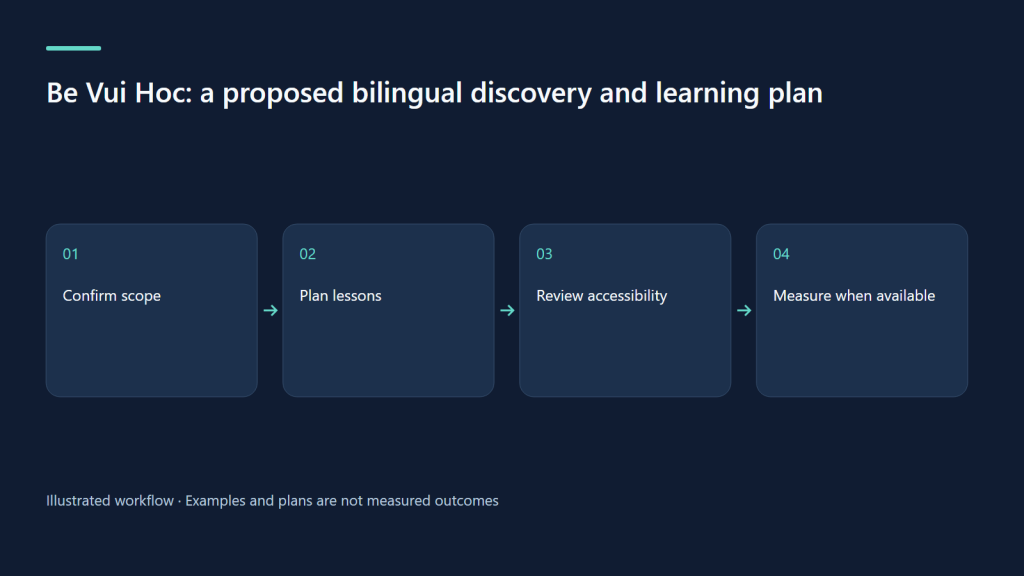
Be Vui Hoc: a proposed bilingual discovery and learning plan
A clearly labeled planning case for a children’s learning channel, with audience constraints, lesson briefs and a future measurement sheet.
On this page
This is a proposed worked plan for Be Vui Hoc Cung Chip, not a report of measured channel improvement. The channel address is the project reference; private Studio analytics are unavailable for this article. No view growth, ranking gain or learner outcome is claimed. The aim is to show how a bilingual children’s learning project could organize its editorial promises, navigation and review process before reliable performance evidence exists.
Separate what is known from what needs a decision
The public channel reference does not establish which lessons have the best retention, what queries bring viewers or how families use them. Start an evidence register with three labels: confirmed project information, proposed editorial choice and missing measurement. For this exercise, bilingual learning is the proposed design goal. Age range, lesson duration, vocabulary level and production cadence remain decisions to confirm with the channel owner rather than facts inferred from a handle.
Choose one small learning unit for the pilot. A hypothetical lesson on numbers one to five is easier to review than a large collection covering every subject. Define a visible learning action: the learner can count a small group of objects and hear the number in Vietnamese and English. That objective should control pacing, illustrations and repetition. A promise such as “be fluent instantly” would be inappropriate because a short counting lesson cannot substantiate it.
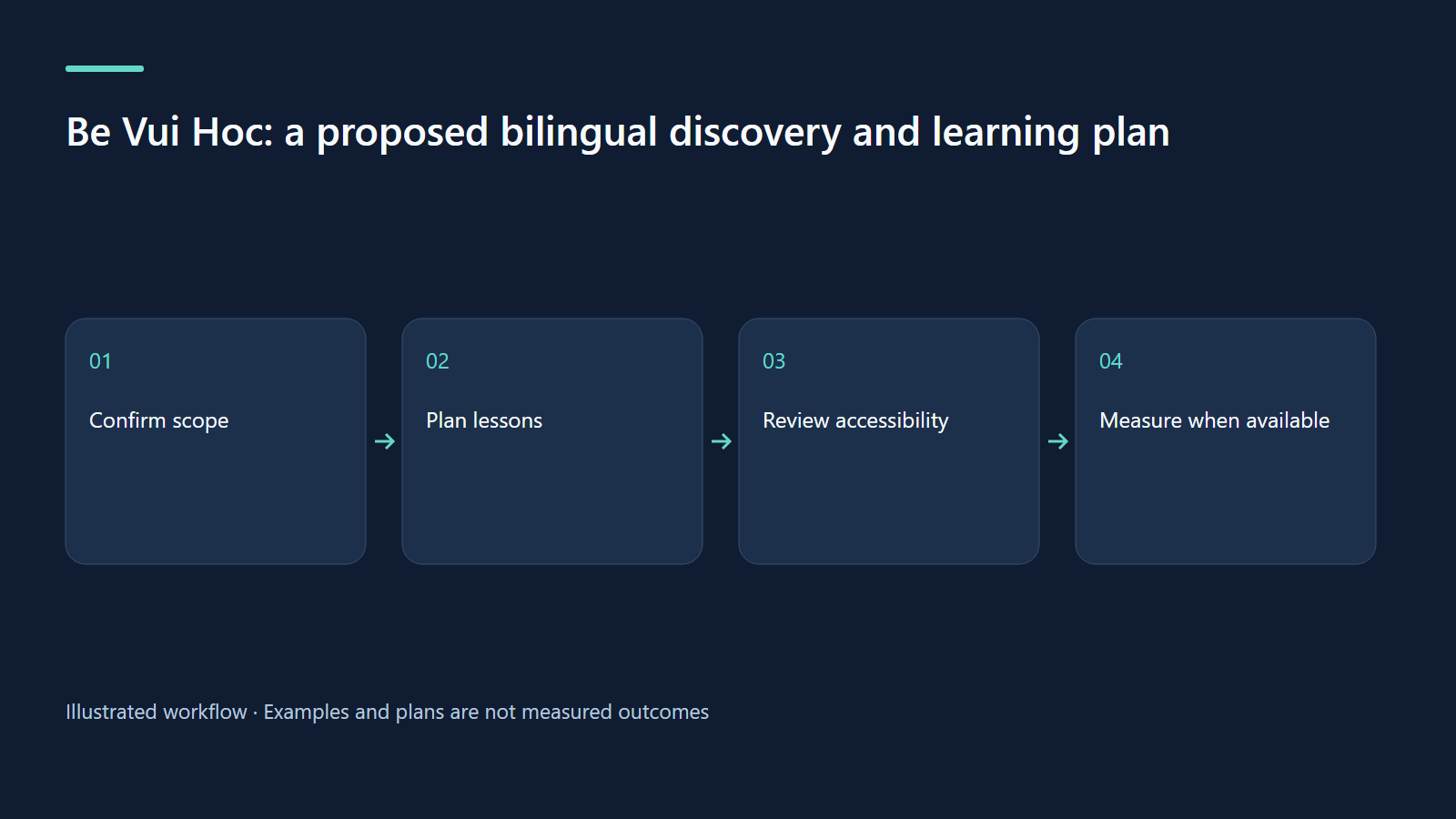
Plan discovery around the actual lesson
Search planning could use a clear task phrase such as learning to count from one to five in Vietnamese and English. This is a candidate phrase, not a measured high-volume keyword. Browse packaging could show five recognizable objects and a restrained bilingual number label. Suggested planning could connect the lesson conceptually to a colors or object-naming activity. A Short could practice one compact counting example, while remaining understandable as its own viewing experience.
These are different entry contexts, not a promise that all four will distribute the pilot. The long lesson should not be cut into a Short that omits the instruction necessary to understand the activity. Likewise, a thumbnail should not imply a complete English course when the video demonstrates five numbers. The most defensible initial improvement is consistency between the package and the learning action, which can be reviewed directly before publication.
| Lesson | Visible action | Bilingual treatment | Review question |
|---|---|---|---|
| Count one to five | Count a small object group | Vietnamese model, English model, practice | Are objects visible while each number is spoken? |
| Recognize three colors | Match a named color to an object | Consistent word order in both languages | Does the color label match the illustration? |
| Name familiar objects | Recognize and name three items | Short clear phrases and a recap | Is vocabulary suitable for the agreed age range? |
Write the pilot as a sequence of teachable moments
For counting, begin with a small visible group and a clear instruction. Model counting slowly enough that each spoken number corresponds to an object highlight. Repeat with a new group, provide a brief practice pause and then model the answer. Use the second language in a consistent position so that the learner is not repeatedly guessing which word belongs to which object. The pause is a design proposal; its duration should be checked with the intended audience and teaching reviewer.
A parent-facing companion description can explain the activity and suggest practicing with safe everyday objects. Keep the child-facing video focused on the lesson rather than technical production details. Avoid unnecessary information requests, competitions or claims about intelligence. If the project uses a character, let the character support the instruction rather than distract from counting. Review visual changes around each answer so the child can follow the action without relying on reading every label.
Respect the made-for-kids feature context
YouTube’s audience guidance says made-for-kids videos do not have comments, cards or end screens. Plan the pilot accordingly: an on-screen recap is part of the video, whereas an interactive end screen is a separate platform feature. Do not ask viewers to use disabled comments as a learning exercise, and do not treat changing the audience setting as a way to recover unavailable tools.
The same distinction matters for packaging experiments. YouTube’s native A/B testing eligibility excludes made-for-kids videos. This proposed child-facing pilot therefore uses prepublication editorial reviews rather than a promise to run native tests. A separate tutorial teaching adult creators how the project was made would require its own audience assessment. It must not be used as a pretext to mislabel children’s lessons.
Review language and accessibility before measuring reach
Check Vietnamese pronunciation, English pronunciation and the meaning of every translated phrase with competent reviewers. Captions should match the final recording, and object labels should remain consistent across the three pilot lessons. Verify that the illustration displays exactly the quantity being counted. A visually attractive scene with six visible objects during a lesson about five is an instructional error even if the package earns attention.
Organize the public lesson library into useful learning collections where appropriate, and ensure descriptions identify the lesson scope clearly for adults selecting material. Keep a revision log for caption and vocabulary corrections. Editorial accuracy is something the team can improve immediately without access to Studio. It should not be postponed until the channel has enough views to make a statistical comparison possible.
Exercise: prepare a future measurement sheet
Create one row per pilot lesson with the objective, format, audience setting, publish date and reviewed languages. Leave Search terms, traffic sources, viewing measures and retention notes blank until the owner provides authorized analytics. When available, attach date ranges and metric definitions, then examine each source separately. Do not invent baseline numbers to make the case study look complete or infer learning gains from watch time alone.
Set the first review decision as a practical question: does the opening reach the activity promptly, and is the stated task clear? A later manual package change must be logged as observational because audience and exposure can change concurrently. There is no universal CTR target for this pilot. The final output is a reviewable lesson system with honest unknowns. Measured outcomes can be added later only when the underlying evidence actually exists.
Watch the source-backed local demo
These HyperFrames clips use the actual Studio UI at source commit 238bba2, with repository fixtures. Narration is English; caption tracks provide an English transcript and Vietnamese summary. Cue timing is authored at sentence level. AI, embedding and YouTube services are simulated; no family data or real channel uploads are shown.
Prepare for publication thoughtfully
MP4 · English transcript · Tóm tắt tiếng Việt
What was actually verified
We authenticated a fixture parent profile, opened creation, script, SEO and queue screens, edited paired titles, saved and read the saved source through the local API. Seven UI captures completed without page errors. The videos illustrate this limited workflow; the Studio render pipeline, child workflow and live YouTube upload were not exercised in this capture.
Try the same review exercise
Choose “count three apples” as the objective. Compare both titles and every scene against that objective. Save, reopen, and verify the pair. Before publication, separately check narration, the number of visible objects, quiz answers, audience settings and the final rendered file. A high internal SEO score cannot replace these checks or guarantee discovery.
Related learning paths
Related reading
08 Oct 2026 · 5 min read
YouTube SEO
YouTube SEO: separate Search, Browse, Suggested and Shorts
Build a practical discovery diagnosis around viewer intent, traffic sources and the promise your video actually delivers.
Read more
08 Oct 2026 · 5 min read
YouTube SEO
Build a YouTube keyword and topic map that improves the lesson
Turn audience questions into a manageable video library with intent clusters, language decisions and production-ready briefs.
Read more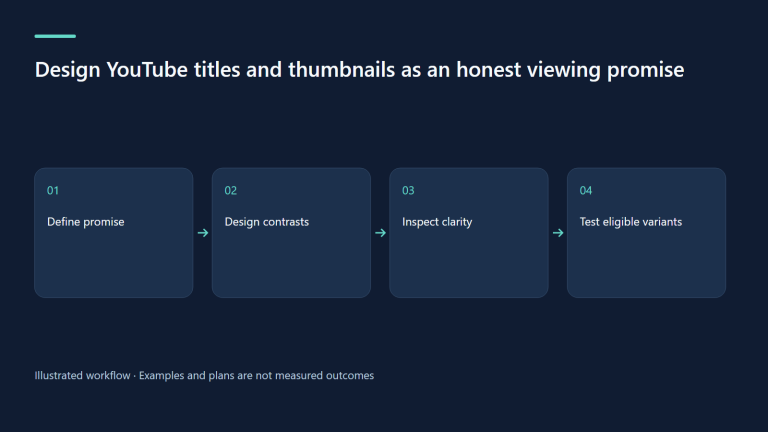
08 Oct 2026 · 5 min read
YouTube SEO
Design YouTube titles and thumbnails as an honest viewing promise
Create complementary title and thumbnail concepts, inspect small-screen clarity and plan eligible native experiments.
Read more
Discussion
Comments are reviewed before publication. Your email is kept private.