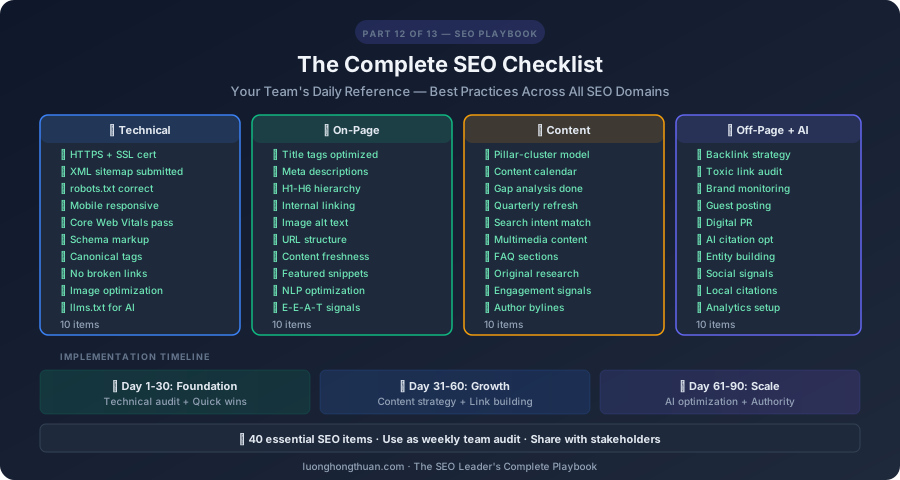
This is the culmination of everything in this series — a comprehensive, actionable checklist distilled from all 12 parts. Print it, bookmark it, share it with your team. Use it as your daily reference for every page you publish, every audit you run, and every strategy you plan.
This is Part 12 of the SEO Leader’s Complete Playbook.
Technical SEO Checklist
Crawlability & Indexation
- robots.txt properly configured (not blocking important pages)
- XML sitemap submitted to GSC and Bing Webmaster Tools
- No orphan pages (every page reachable via internal links)
- Canonical tags on all pages (self-referencing on originals)
- No excessive redirect chains (max 1-2 hops)
- 404 errors monitored and resolved monthly
- Crawl budget optimized (noindex thin/duplicate content)
- Google Search Console coverage report reviewed weekly
- robots meta tags configured correctly (index, follow defaults)
- AI crawler access configured (GPTBot, ClaudeBot in robots.txt)
Site Architecture
- URL structure is logical, flat, and keyword-inclusive
- Breadcrumb navigation implemented with schema markup
- Maximum 3 clicks from homepage to any page
- Internal linking follows hub-and-spoke model
- URL slugs are short, descriptive, lowercase, hyphen-separated
Security & Performance
- HTTPS enabled with valid SSL certificate
- No mixed content warnings
- Security headers configured (HSTS, CSP, X-Frame-Options)
- HTTP/2 or HTTP/3 enabled on server
- CDN configured for global content delivery
- Brotli compression enabled for text assets
Structured Data
- Organization/Person schema on homepage
- Article/BlogPosting schema on every blog post
- FAQ schema on pages with FAQ sections
- BreadcrumbList schema for navigation
- SiteNavigationElement schema for main navigation
- All schema validated with Google’s Rich Results Test
- No schema errors in GSC Enhancement reports
On-Page SEO Checklist
For Every Page
- Unique, descriptive title tag (under 60 characters, keyword near front)
- Compelling meta description (under 155 characters, includes CTA)
- One H1 tag containing primary keyword
- Logical header hierarchy (H1 → H2 → H3, no skipping levels)
- Primary keyword in first 100 words
- Target keyword density natural (not stuffed)
- Related/semantic keywords included naturally
- Internal links to 3-5 related pages with descriptive anchor text
- External links to 2-3 authoritative sources
- All images have descriptive alt text
- Images compressed and in WebP/AVIF format
- Images have explicit width and height attributes
- URL slug includes primary keyword, is concise
- Content fully satisfies the search intent for target keyword
- Semantic HTML used (article, section, aside, nav)
For Blog Posts
- Publication date visible and in structured data
- Author byline with link to author page
- Table of contents for posts over 1,500 words
- Key takeaways or TL;DR section
- FAQ section with FAQ schema (3-5 questions)
- Related posts section at the bottom
- Social sharing buttons visible
- Content refreshed with current year data where applicable
Content Strategy Checklist
Content Planning
- Pillar-cluster content model mapped for primary topics
- Content calendar planned 3+ months ahead
- Content gap analysis run quarterly against top competitors
- Each piece targets a specific keyword cluster (not single keyword)
- Search intent verified before content creation (check SERPs)
- Content mix balanced: 60% evergreen, 20% trending, 10% seasonal, 10% thought leadership
Content Quality
- E-E-A-T demonstrated (Experience, Expertise, Authoritativeness, Trustworthiness)
- Original data, case studies, or unique insights included
- Content depth matches or exceeds top-ranking competitors
- Readability optimized (short paragraphs, bullet lists, visual breaks)
- No thin content pages (minimum 800 words for blog posts)
- All statistics cited with sources and dates
Content Maintenance
- Declining content identified and refreshed monthly
- All content reviewed for accuracy annually
- Broken links checked and fixed monthly
- Outdated statistics updated with current data
- New internal links added when publishing related content
Core Web Vitals Checklist
LCP (Largest Contentful Paint ≤ 2.5s)
- LCP image uses
fetchpriority="high"andloading="eager" - LCP image preloaded in
<head> - Images use WebP/AVIF format with responsive srcset
- Critical CSS inlined, non-critical CSS deferred
- JavaScript deferred with
deferattribute - Server TTFB under 200ms (CDN, caching)
- Web fonts preloaded and use
font-display: swap
INP (Interaction to Next Paint ≤ 200ms)
- No JavaScript long tasks blocking main thread (under 50ms each)
- Third-party scripts deferred to after page load
- Event handlers provide immediate visual feedback
- Heavy computation offloaded to Web Workers
- Code splitting implemented (load only what’s needed)
CLS (Cumulative Layout Shift ≤ 0.1)
- All images and videos have explicit width/height or aspect-ratio
- Web fonts use
font-display: swapwith size-adjust - Ad slots have reserved space with min-height
- No content injected above existing visible content
- Lazy-loaded elements have placeholder dimensions
Off-Page SEO Checklist
Link Building
- Monthly backlink acquisition plan in place
- Competitor backlink analysis run quarterly
- Toxic links monitored and disavowed when necessary
- Unlinked brand mentions tracked and converted
- Guest posting opportunities identified in niche
- Digital PR campaigns planned quarterly
- Anchor text diversity maintained (branded, natural, keyword)
Brand Authority
- Consistent brand presence across all platforms
- Google Knowledge Panel claimed (if eligible)
- Social media profiles complete and active
- Industry mentions monitored with Google Alerts
- Thought leadership content published on external platforms
AI Optimization Checklist
For AI Platform Citation
- TL;DR section at top of every major article
- Direct answer paragraphs after each section heading
- Comparison tables for “vs” and “best” topics
- FAQ sections with FAQ schema
- Content structured for AI extraction (clear headers, lists, definitions)
- llms.txt file created at domain root
- Entity signals built (schema, Wikipedia, Wikidata, Knowledge Panel)
AI Content Quality
- All AI-assisted content reviewed by human expert
- Original experience and case studies added to AI drafts
- All statistics and facts verified independently
- Brand voice consistent (not generic AI tone)
- E-E-A-T signals present regardless of content creation method
Local SEO Checklist (If Applicable)
- Google Business Profile fully optimized
- NAP consistent across all directories and platforms
- Local citations built on top 10 relevant directories
- Review management strategy active (requesting + responding)
- LocalBusiness schema on website
- Location-specific content created for target areas
International SEO Checklist (If Applicable)
- Hreflang tags correctly implemented (with self-reference)
- x-default hreflang set for fallback
- Content localized (not just translated)
- Geo-targeting configured in GSC for generic TLDs
- Language-specific sitemaps submitted
Analytics & Reporting Checklist
Weekly Monitoring
- Organic traffic trend checked in GA4
- GSC Performance report reviewed for anomalies
- Priority keyword rankings checked
- Crawl errors reviewed in GSC
- Core Web Vitals status checked
Monthly Reporting
- Monthly SEO report created and distributed
- Organic traffic with month-over-month and year-over-year comparison
- Keyword ranking movement documented
- Conversions from organic traffic tracked
- Backlink growth reported
- Action items defined for next month
Quarterly Review
- Content gap analysis against competitors
- Full technical SEO audit (Screaming Frog crawl)
- Content refresh candidates identified
- SEO ROI calculated and presented to stakeholders
- Strategy adjusted based on data
30/60/90-Day Implementation Plan
Days 1-30: Foundation
Week 1: Technical audit
- Run Screaming Frog crawl and fix critical issues
- Verify GSC setup and XML sitemap
- Fix indexation and crawl errors
Week 2: On-page quick wins
- Optimize title tags and meta descriptions for top 20 pages
- Add missing alt text to all images
- Fix broken internal links
Week 3: Content foundation
- Map pillar-cluster content architecture
- Identify top 10 content gaps vs competitors
- Plan first pillar page
Week 4: Performance
- Run PageSpeed Insights on top pages
- Implement image optimization (WebP, dimensions, lazy loading)
- Defer non-critical JavaScript and CSS
Days 31-60: Growth
Week 5-6: Content creation
- Publish first pillar page
- Write 2-4 cluster articles
- Add FAQ schema to top pages
- Implement internal linking between new and existing content
Week 7-8: Off-page & AI
- Start link building campaign (10 quality prospects)
- Create llms.txt file
- Add TL;DR sections to key articles
- Build entity signals (schema, social profiles)
Days 61-90: Optimization
Week 9-10: Measure and refine
- Analyze first-month content performance
- Refresh 3-5 declining pages
- Expand internal linking
- Build additional backlinks
Week 11-12: Scale
- Launch content calendar for next quarter
- Set up automated reporting dashboard
- Document SEO processes for team
- Plan next quarter’s strategy based on data
Common SEO Pitfalls to Avoid
| Pitfall | Why It’s Bad | What to Do Instead |
|---|---|---|
| Keyword stuffing | Google penalizes it, hurts readability | Write naturally, use semantic variations |
| Duplicate content | Confuses Google, dilutes rankings | Canonical tags, unique content per page |
| Ignoring mobile | 60%+ of searches are mobile | Mobile-first design and testing |
| Buying links | Google penalty risk, wasted money | Earn links through quality content |
| Ignoring Core Web Vitals | Ranking factor, poor UX | Regular monitoring and optimization |
| No content refresh | Content decays over time | Monthly review of declining pages |
| Over-optimizing anchor text | Appears manipulative to Google | Natural, varied anchor text |
| Ignoring AI platforms | Missing growing traffic source | Optimize for AI citation (AEO/GEO) |
Key Takeaways
- Use this checklist for every page you publish — it takes 10 minutes and prevents costly mistakes
- The 30/60/90-day plan gets you started — but SEO is an ongoing investment
- Technical foundation first — fix crawlability and performance before building content
- Content quality over quantity — one comprehensive page beats five thin ones
- Measure what matters — organic traffic, conversions, and priority keyword rankings
- Stay current — SEO evolves; review and update your strategy quarterly
What’s Coming Next
In Part 13, we put everything into practice with SEO in Action — step-by-step implementation strategies for three real domains: luonghongthuan.com (tech portfolio), inkviet.com (Vietnamese story platform), and cublearn.app (learning app).
Full Series Navigation
- Part 1: SEO in the AI Era — What Changed, What Didn’t, and What You Must Do Now
- Part 2: The Complete Technical SEO Audit — A 100-Point Checklist
- Part 3: On-Page SEO Mastery — From Title Tags to Topical Authority
- Part 4: Off-Page SEO & Link Building — The Authority Playbook
- Part 5: Core Web Vitals & PageSpeed — Getting a Perfect Score
- Part 6: Content Strategy for SEO — Topic Clusters, Pillar Pages, and Content That Ranks
- Part 7: Advanced Keyword Research — From Search Intent to Semantic Strategy
- Part 8: SEO for AI — How to Get Cited by ChatGPT, Google AI Overviews, and Perplexity
- Part 9: AI-Powered SEO Workflow — Tools, Automation, and Prompt Engineering
- Part 10: Local SEO & International SEO — Ranking Everywhere
- Part 11: SEO Analytics & Reporting — Measuring What Actually Matters
- Part 12: The Complete SEO Best Practices Checklist — Your Team’s Daily Reference (you are here)
- Part 13: SEO in Action — Step-by-Step for luonghongthuan.com, inkviet.com & cublearn.app