
JOURNAL
The AI Product Owner & PM: Backlog, Planning & Stakeholder Alignment in the AI Era (Part 3 of 12)
Part 3 of 12 — How AI transforms the PO and PM roles: AI-assisted backlog scoring, sprint planning, status reporting, risk flagging, release note generation, and stakeholder communication — and the human judgment that keeps it grounded.
On this page
The Product Owner and Project Manager roles are fundamentally about prioritisation under uncertainty. What should we build next? What is the risk to this delivery? How do we communicate progress to stakeholders who don’t understand the technical details? These questions require judgment — and judgment is the one thing AI cannot replace. But AI can dramatically improve the quality and speed of the information that judgment is based on.
This post covers how the PO and PM roles change in an AI-augmented team.
The PO and PM Overlap (and Why It Matters for AI)
In many organisations, PO and PM overlap significantly. The PO owns the what (product vision, backlog, acceptance) while the PM owns the how of delivery (timeline, risk, resources, stakeholder communication). In AI-augmented teams, the distinction is important because:
- PO uses AI to score backlog items, generate release notes, draft stakeholder communications, and simulate prioritisation scenarios
- PM uses AI to surface delivery risk from velocity data, generate status reports, flag blockers, and model timeline scenarios
Both roles share one critical AI use case: transforming messy, incomplete data into structured, actionable decisions.
Where AI Changes the PO Game
1. Backlog Scoring & Prioritisation (AI-assisted WSJF)
Weighted Shortest Job First (WSJF) scoring requires estimating User Business Value, Time Criticality, Risk Reduction, and Job Size (effort). AI can assist by:
- Reviewing the user story and associated acceptance criteria
- Comparing it to similar past stories in the backlog (if the context is provided)
- Suggesting an initial WSJF score with reasoning
- Identifying dependencies that affect scheduling
Prompt example:
You are assisting a Product Owner scoring a backlog.
Product context: [/ai/context.md]
Current sprint velocity: [N] story points
Existing backlog: [paste top 20 stories with estimates]

Score this story using WSJF:
[paste new story]

Provide:
- User business value (1–10) with reasoning
- Time criticality (1–10) with reasoning
- Risk reduction value (1–10) with reasoning
- Recommended WSJF position relative to the existing backlog
- Dependencies that should be resolved first
The PO reviews every score and overrides based on strategic context the AI doesn’t have (e.g. “this customer is about to churn” or “this is a contractual commitment”).
2. Sprint Planning Support
Before sprint planning, AI can:
- Identify the highest-WSJF stories not yet started
- Check story dependencies and flag anything that would block sprint execution
- Review definition-of-ready compliance for each story
- Suggest a balanced sprint composition (feature work, tech debt, bug fixes)
Time saved: The manual sprint planning prep that took a PO 3–4 hours (pulling reports, reviewing stories, checking dependencies) takes under 45 minutes with AI pre-analysis.
3. Release Notes Generation
AI can transform a list of merged PRs and completed stories into human-readable release notes in the voice and tone appropriate for the audience.
Prompt example:
Generate release notes for version [X.Y.Z] from these completed stories:
[list story titles + descriptions]

Write two versions:
1. Technical release notes (for developers, include API changes)
2. Customer-facing changelog (business language, no jargon, benefits-focused)
Format: Markdown
4. Stakeholder Communication Drafts
AI can draft sprint review summaries, executive updates, and risk communications. The PM reviews and personalises — but the base structure and data assembly are automated.
Where AI Changes the PM Game
1. Delivery Risk Flagging
AI monitors sprint velocity, burndown trend, dependency status, and blocker age — and surfaces risk signals before they become crises.
Integration pattern: Use Claude via API to read the exported sprint board state (JSON from Linear/Jira) and generate a risk summary each Friday morning.
Prompt example:
You are a delivery risk analyst for a software sprint.
Sprint data: [paste exported JSON from Linear]
Past 4 sprints velocity: [X, Y, Z, W]

Generate:
1. RAG status (Red/Amber/Green) with justification
2. Top 3 delivery risks with probability and impact
3. Recommended mitigating actions for each risk
4. Questions the PM should ask in tomorrow's standup
2. Status Report Generation
Weekly status reports — pulling data from multiple tools, formatting consistently, translating technical updates to business language — is exactly the kind of high-volume, low-creativity work AI handles well.
Before: 1–2 hours every Friday pulling from Jira, Confluence, Slack.
With AI: 20 minutes reviewing and personalising an AI-drafted report.
3. Meeting Preparation
AI can review upcoming refinement and planning agendas and:
- Identify stories that are not definition-of-ready (likely to cause delay mid-session)
- Suggest questions to ask the BA about unclear stories
- Draft a prioritised running order to maximise meeting efficiency
The Human-Irreplaceable PO/PM Work
Strategic prioritisation calls: AI can score backlogs, but “we should build this feature now because this client is at risk” is a judgment call based on relationship intelligence, competitive awareness, and business context that AI does not have access to.
Stakeholder trust: POs and PMs build trust by being reliable, consistent, and honest with stakeholders. That human relationship — understanding what a nervous executive actually needs to hear, or when to push back on a scope change — cannot be delegated to AI.
Scope negotiation: When business stakeholders want more than the team can deliver, the PM negotiates scope. This requires understanding people, organisational power dynamics, and acceptable compromise. AI can model scenarios; humans must persuade.
Team dynamics: A PM who senses the team is burning out, or that a developer is struggling, and takes action — that is irreplaceable. AI can surface velocity drops; it cannot sense human distress.
Ethical prioritisation: Some prioritisation decisions carry ethical weight. Features that optimise engagement at the cost of user wellbeing, or that de-prioritise accessibility, are not purely technical decisions. The PO must own these.
The AI PO’s Sprint Cycle
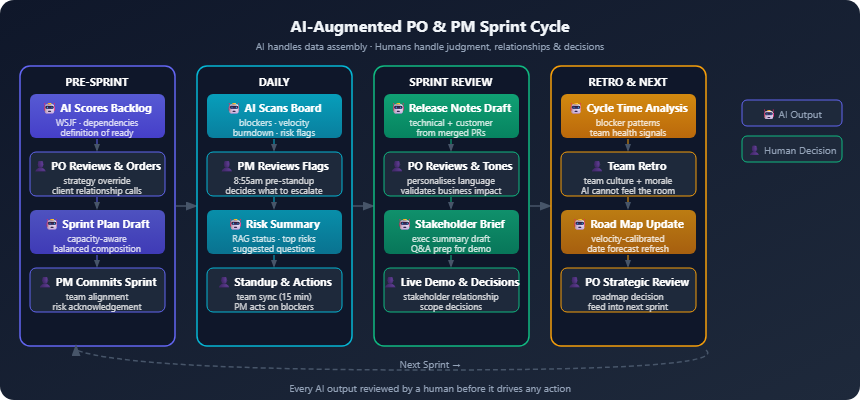
| Sprint Phase | Activity | AI Role |
|---|---|---|
| Pre-sprint | Story scoring + dependency check | AI pre-scores; PO reviews |
| Pre-sprint | Sprint planning prep | AI flags not-ready stories |
| Daily standup | Blocker identification | AI scans board overnight; PM reviews flags at 8:55am |
| Mid-sprint | Risk monitoring | AI alerts on velocity deviation |
| Pre-review | Sprint review prep | AI drafts what was completed, with business impact summary |
| Review/Demo | Stakeholder presentation | PO presents; AI-drafted release notes as supporting material |
| Retro | Team health data | AI summarises cycle time, mood data, blocker patterns |
| Post-sprint | Release notes | AI drafts tech + customer versions; PM/PO reviews |
Tools for the AI PO & PM
| Tool | Purpose |
|---|---|
| Linear AI | Backlog scoring, cycle time analysis, dependency detection |
| Claude | Risk analysis, status reports, stakeholder communication drafts |
| Notion AI | PRD writing, roadmap documentation, meeting minutes |
| GitHub Actions | Automated release note extraction from merged PRs |
| Jira (with Atlassian AI) | Sprint analytics, blocker flagging, velocity trends |
Quality Controls
All AI-generated PO/PM artefacts require human review before use:
- Release notes: PM/PO must read every line — AI often gets business impact claims subtly wrong
- Risk reports: PM validates the data source before escalating a red flag to executives
- Stakeholder communications: Always personalised by a human — tone and relationship context matter
- Sprint scores: PO overrides take precedence — the backlog is a product decision, not an optimisation problem
Previous: Part 2 — The AI Business Analyst ←
Next: Part 4 — The AI Solution Architect →
This is Part 3 of the AI-Powered Software Teams series.
Related reading
07 Oct 2026 · 4 min read
ai
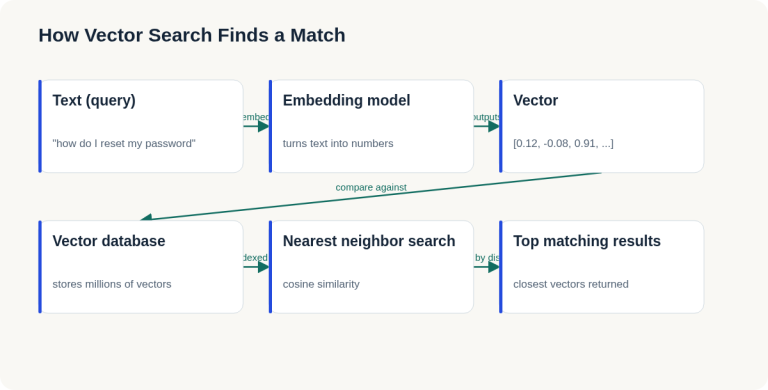
English Lesson — Tuesday Morning: Embeddings & Vector Search Vocabulary
Daily English practice for tech professionals: embed, vector database, and nearest neighbor search vocabulary with pronunciation and exercises.
Read more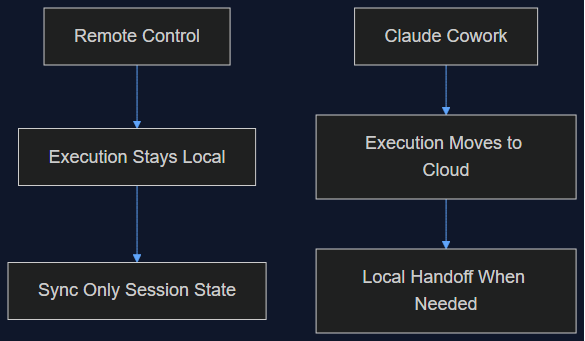
06 Oct 2026 · 5 min read
agentic coding
Claude Cowork Just Did the Thing I Said Remote Control Wasn't Doing
In August I wrote that Claude Code's Remote Control was a sync layer, not a cloud migration, and that keeping execution local was the point. This week Anthropic moved Cowork's execution to the cloud by default. Here's why both were the right call — for different products.
Read more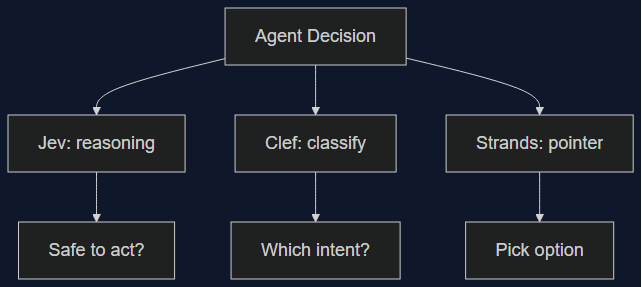
03 Oct 2026 · 5 min read
agents
Three Decision Models Shipped in One Week — None of Them Wins Outright
Cloudflare's Clef/Clef-flash and Amazon's Strands Decider both launched October 1st aiming at TypeSafe's Jev. I lined up the real benchmark, latency, and pricing numbers — the category is real, but picking a winner depends entirely on which decision you're automating.
Read more
Discussion
Comments are reviewed before publication. Your email is kept private.