
JOURNAL
A small business product video that helps people decide
Use a home-coffee-kit scenario to build an honest product video around fit, evidence and purchase questions.
On this page
Sell a decision, not just a beautiful object
A small shop does not need a cinematic promise for every product. It needs to help the right customer understand what they receive, what they must supply themselves, and whether the purchase fits their routine. Consider an original planning scenario: a neighborhood coffee seller wants to introduce a starter bundle containing beans, a simple filter, and a printed preparation card. The customer already owns a cup and kettle. The film should make those facts obvious before it asks anyone to order.
This is a proposed campaign, not a documented sales result. Its value lies in the process for creating a clearer video. HyperFrames can organize product footage, explanatory labels, and a consistent visual identity.
Connect to intentional shopping carefully
TikTok Next 2026 discusses intentional purchases and home café culture. That makes a coffee-kit demonstration a grounded creative topic, but it does not establish local demand or guarantee sales. The official report is a forecast and set of platform examples, not a live Vietnam keyword table.
The editorial interpretation is simple: explain the reason to buy and the reasons somebody might decline. A kit could suit a person who enjoys preparing coffee at home, while another person prefers the convenience and social setting of a café. Showing this distinction helps a customer make an informed choice. Do not imply that one lifestyle is superior, or borrow overseas cost claims as if they described a Vietnamese household.
Gather the offer facts before filming
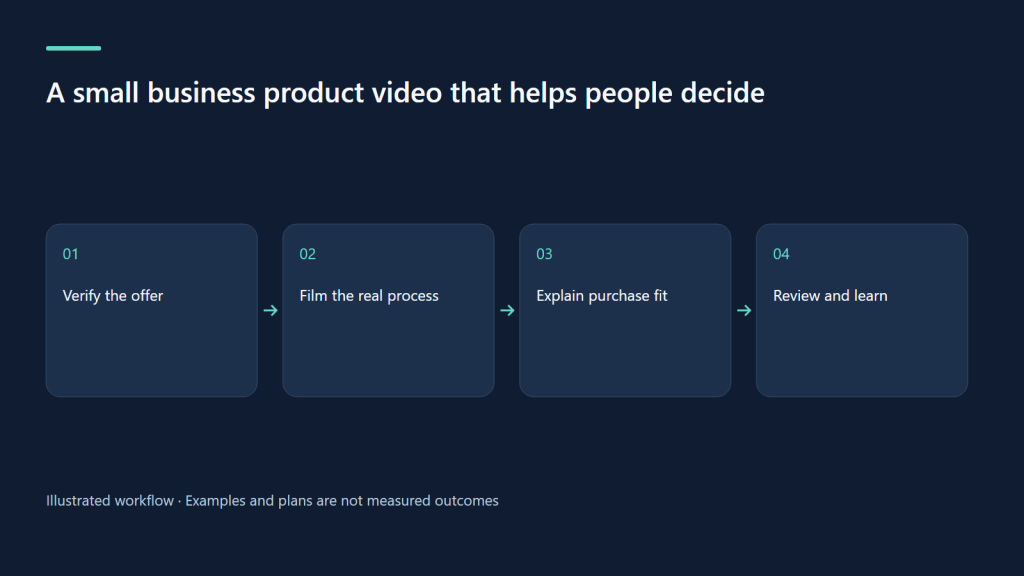
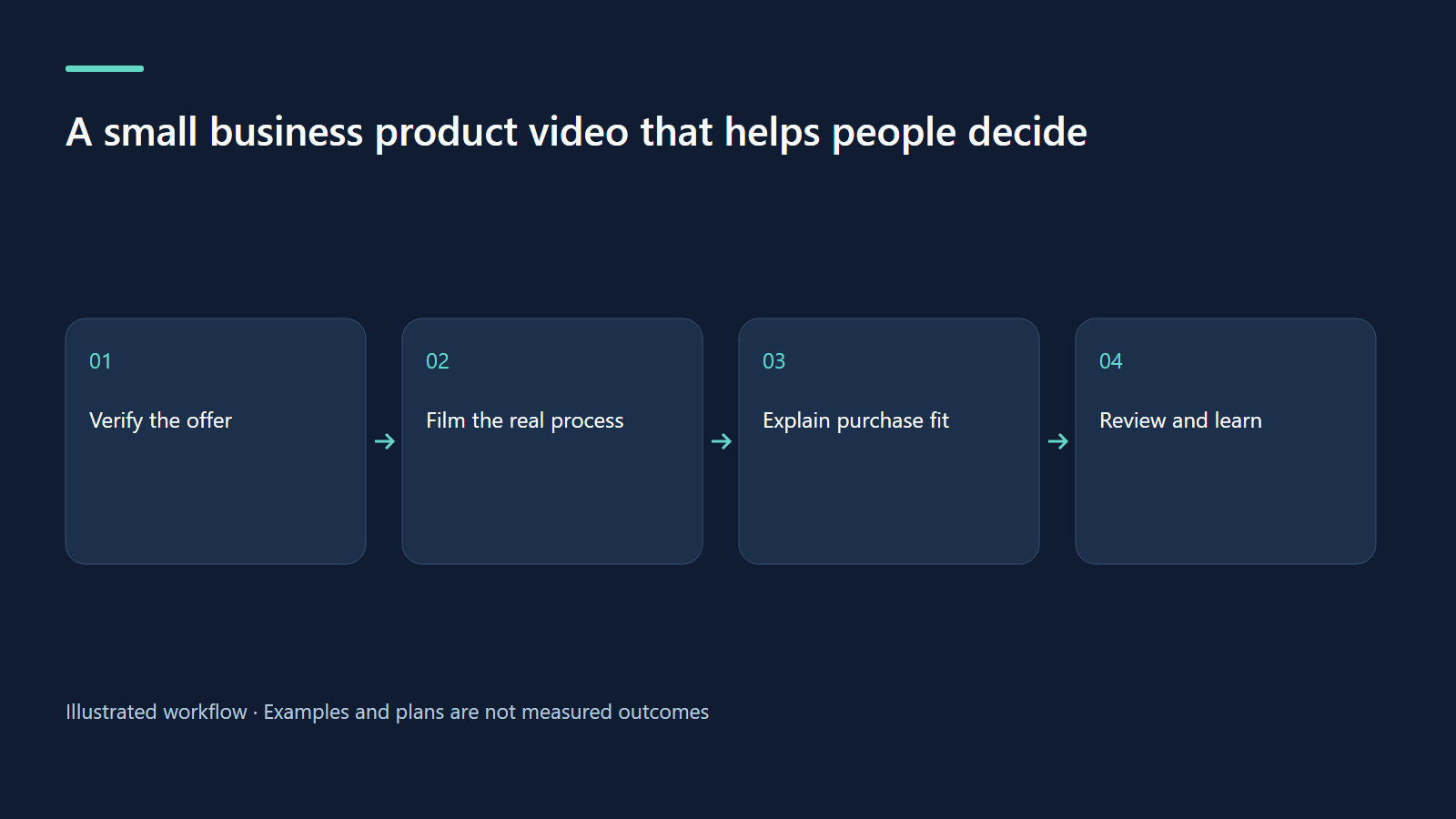
Write a one-page product record: exact bundle contents, amount of coffee, preparation requirements, storage instructions supported by the seller, current price, availability, delivery area, and where customers can confirm the latest terms. Separate stable facts from fields that may change. If you cannot verify shelf life, do not improvise it in a voiceover. If the price varies by option, show the correct option instead of a convenient lowest figure without context.
List common questions from real customer conversations only when you have them. Otherwise label your questions as proposed research: is the filter included, what cup size works, how difficult is cleanup? Prepare a factual answer or mark each question unresolved. This record prevents an attractive edit from silently introducing an offer the shop cannot fulfill.
Film proof with ordinary tools
Capture the closed package, unpacked contents, one complete preparation, the finished drink, and cleanup. Use a stable phone position and consistent light. A close shot should show texture or a useful detail rather than simply conceal the surroundings. Film enough of the process to support the instruction card. If a step involves waiting, the final edit can shorten it with a clear time-compression label.
Record product sounds separately if they help the scene, but do not let music obscure the spoken instructions. Avoid synthetic images of the product where they could misrepresent the actual contents. An illustration can explain a sequence, while the sold object should remain identifiable in real footage.
Pick the workflow and keep assets organized
Use /hyperframes as the entry point, then /product-launch-video for a commercial product brief or shop website. The official HyperFrames repository documents this route. /media-use handles permitted images, footage and voice assets. /hyperframes-creative helps establish typography and color; /hyperframes-core keeps the composition structured; /hyperframes-cli supports checking and rendering. Add /hyperframes-audio when the music and narration need mixing.
Keep product photographs, logos, narration, terms and source notes in clearly named folders. Specify whether each asset is supplied by the business, licensed, or created for the project. If the brief requests a named visual treatment, search /hyperframes-registry before building it.
| Time | Scene | Evidence and editorial purpose |
|---|---|---|
| 0–5s | The buying question | Who wants to prepare coffee at home? |
| 5–14s | Contents | Actual supplied objects; cup and kettle excluded |
| 14–29s | Preparation | Visible steps, labeled compressed waiting |
| 29–39s | Fit and cleanup | Show effort and who may prefer another option |
| 39–48s | Next step | Confirmed offer destination; editable current terms |
A prompt you can adapt
Using /hyperframes and /product-launch-video, plan a 48-second vertical buying guide for my coffee starter bundle. It contains only the beans, filter and instruction card shown in my supplied photos; customers supply their own cup and kettle. Ask for missing product facts and use placeholders until verified. Show unpacking, preparation, cleanup, suitability and where to confirm current terms. Do not invent savings, testimonials, scarcity or sales results. Draft the scene table and narration first. Use /media-use for supplied assets, /hyperframes-audio for intelligible narration and /hyperframes-cli for checks. Create separate Vietnamese and English versions with editable price and availability fields.
Structure a forty-eight-second buying guide
The proposed storyboard begins with the customer’s question, then shows contents, preparation, fit, and the next step. It deliberately includes who the product may not suit. This is not pessimism; it reduces confusion before purchase. A simple layout can reserve one area for the real object and another for two short facts, with the call to action appearing only when the offer is understandable.
Keep price and availability easy to update. Do not bake a temporary promotion into every visual asset. If the shop has several package sizes, make separate variants whose labels match the footage. A vertical version should be reframed deliberately rather than cropped from a horizontal export that loses the filter, captions, or important preparation detail.
Localize the reason, not only the words
For Vietnamese viewers, explain unfamiliar terms through everyday preparation steps. The English version may need different assumptions about filter familiarity, units, or delivery availability. Use the same verified product facts while adapting the explanation. A literal translation can preserve grammar and still lose the buying question. Ask a reader in each language what they think is included and what they need to own already.
Avoid making both languages compete for screen space. Separate versions are easier to read and review. Keep a glossary for product names and units so the voiceover, packaging shot, captions and order page agree. If a name is printed on the actual product, preserve it accurately rather than inventing a more fashionable translated label.
Common failures and practical repairs
The glamour-only video fails when people admire the drink but cannot identify the bundle. Add an unpacking scene and a plain contents label. The unsupported savings video fails when it compares a homemade cup with a café price while ignoring ingredients, equipment, waste and different experiences. Remove the comparison or present a properly measured, explicitly scoped example. The overloaded offer fails when several prices, sizes and delivery conditions arrive together. Split it into variants or move detailed terms to a clear destination.
Another failure is publishing an old price after the offer changes. Put the last-confirmed date in the content record and check the order page before every reuse. A final frame should identify where the latest terms live. Never invent testimonials, customer counts, stock scarcity, or sales lifts simply to make the film feel established.
Review as a customer and an operator
Ask a person unfamiliar with the kit to answer what is included, what is required, how to prepare it, who it suits, and where to confirm the offer. Review their mistakes against the script. Then ask the shop operator whether every shown item, preparation claim, price and fulfillment condition matches reality. These reviews serve different purposes: one tests understanding, the other operational accuracy.
Check the exported busiest frame on a phone and listen with ordinary speakers. Verify captions, voiceover pronunciation, product color and readable labels. Do not interpret a passing technical check as a guarantee of factual correctness. The Be Vui Học Studio example shows another kind of bounded demonstration; its UI fixtures are useful references for clarity, not evidence about coffee-product sales.
Run an experiment tied to useful business questions
Compare two openings: one asks what the bundle contains; the other asks whether home preparation fits the viewer’s morning. Keep the rest of the offer identical and record posting dates, distribution conditions, and changes to stock or price. Useful outcomes include questions that reveal uncertainty, visits to the correct offer page, and orders that can actually be attributed when the shop has suitable tracking. Views alone do not tell you whether the offer was understood.
For a small sample, use the experiment to improve the next version rather than declare a winner with false precision. Group customer questions by topic, update the product record, and turn the most persistent confusion into a short follow-up. A practical exercise is to storyboard the same kit for a first-time user and an experienced coffee drinker. Keep all factual claims identical while changing the explanation each audience needs.
Sources and research boundary
Primary sources checked on 9 October 2026, Asia/Saigon. Scenarios, timings, experiments and prompts are original editorial proposals, not published campaign results.
Continue learning
Related reading
· 6 min read
HyperFrames
HyperFrames for Data Stories and Public-Interest Media Literacy
Teach realistic synthetic-media verification with checked platform policy, transparent source notes, and clearly labeled synthetic data.
Read more
· 6 min read
HyperFrames
HyperFrames for Training, Onboarding, and Evidence-Based Code Demos
Build a sanitized onboarding lesson with decision checkpoints, practice tasks, and a clear boundary between mock interfaces and real PR evidence.
Read more
· 7 min read
HyperFrames
HyperFrames production: audio, bilingual delivery, privacy and real costs
Build a repeatable delivery process with audible exports, honest captions and transparent hypothetical budgeting.
Read more
Discussion
Comments are reviewed before publication. Your email is kept private.