
JOURNAL
GLM-5.3: What It Means When an Open-Weight Model Catches Up on Coding and Security
Z.ai shipped GLM-5.3 without retraining the base model and still doubled coding and cybersecurity benchmark scores. A technical lead's read on why post-training gains matter more than model size, and what it changes about build-vs-buy on agent models.

On this page
On August 14, Z.ai shipped GLM-5.3. The headline number that got my attention wasn’t a benchmark leaderboard position — it’s that they reused the GLM-5.2 base model entirely. No retraining. All the gains came from post-training. And the gains are not small: Terminal-Bench 3.0 went from 4.6 to 28.3, DeepSWE v1.1 from 46.2 to 66.9, AutomationBench from 26.2 to 48.2. On CyberGym, a white-box vulnerability discovery benchmark, GLM-5.3 hit 84.5% versus 77.2% for its predecessor. Within days of release, it reportedly found a real, exploitable vulnerability in Cursor.
If you lead a team that has to make build-vs-buy calls on models — self-host an open-weight model, or keep paying frontier API prices — this release is worth twenty minutes of your attention. Here’s why.
Post-training is doing more work than pretraining right now
For the last two years, the story was “bigger base model, better everything.” GLM-5.3 is a data point for a different story: most of the headroom left in coding and agentic tasks isn’t in the base model’s raw knowledge, it’s in how well that knowledge gets elicited — better RL environments, better reward shaping for long-horizon tasks, better tool-use trajectories in the training mix.
This matters operationally because it changes the economics of staying current. If frontier gains increasingly come from post-training on top of a frozen base, the cost of catching up drops. You don’t need a new pretraining run (tens of millions of dollars, months of compute) to close a meaningful chunk of the gap to the frontier — you need a well-designed RL pipeline on an existing base. That’s a much smaller check, and it’s why Chinese labs in particular have been able to compress release cycles without matching frontier lab compute budgets. Nathan Lambert’s take at Interconnects frames GLM-5.3 exactly this way — a case study in how post-training-first competitors keep pace without keeping pace on FLOPs.
Weights aren’t public yet — and that’s the part to plan around
Z.ai says weights ship roughly two weeks after launch, once safety evaluation and hardening finish. If you’re evaluating GLM-5.3 for a self-hosted coding assistant or an internal security-scanning agent, you’re not testing it this week — you’re testing it in early September. Put that on your roadmap now rather than discovering it when procurement asks “can we have this in production by end of month.”
In the meantime, the API is live, so you can validate on your own tasks:
curl https://api.z.ai/api/paas/v4/chat/completions \
  -H "Authorization: Bearer $ZAI_API_KEY" \
  -H "Content-Type: application/json" \
  -d '{
    "model": "glm-5.3",
    "messages": [
      {"role": "system", "content": "You are a senior security engineer reviewing a diff for injection vulnerabilities."},
      {"role": "user", "content": "<diff here>"}
    ]
  }'
Run your actual regression suite of past incidents — the CVEs your team already knows about, the bugs a real code reviewer caught — before trusting any benchmark number, including the ones I just quoted. CyberGym and ExploitBench are useful signal, but they’re not your codebase.
The cybersecurity numbers are the part that should worry security teams, not just excite them
The ExploitGym numbers are stark: GLM-5.3 completed 105 exploitation tasks within a two-hour budget and 130 within six hours, versus 29 and 39 for GLM-5.2. That’s roughly a 3.5x jump in automated exploit-completion throughput in one release cycle, on an open model that will have public weights within weeks.
Read that two ways at once, because both are true:
Defensive read: you can point this class of model at your own repos before an attacker does. Wiz’s Red Agent finding a real vulnerability in Snowflake’s CI/CD pipeline (a story I covered in a companion post this week) is the same pattern — autonomous agents doing vulnerability discovery at a pace human review can’t match. GLM-5.3 being competitive with proprietary “Mythos 5”-class models on CyberGym means that capability is about to be available to anyone who can run a 30B-class model, not just teams with frontier API budgets.
Offensive read: the same capability, once weights are public, runs on attacker infrastructure with no rate limits, no usage monitoring, and no terms-of-service to violate. A model that can complete 130 exploitation tasks in six hours doesn’t need a nation-state budget to operate — it needs a GPU and a target list. Attack surface scales with adoption of AI-assisted development regardless of who’s holding the model.
What I’d actually do with this
If you’re a tech lead evaluating this release, three concrete actions:
- Don’t wait for the weights to start evaluating. The API is live now — run GLM-5.3 against your last 10 real production bugs (not synthetic benchmarks) and see if it would have caught them at code-review time.
- If you run a bug bounty or internal red team, budget for AI-agent-assisted submissions now. The Wiz/Snowflake pattern — an autonomous agent finding a real vuln that a human-plus-Copilot review missed — is going to repeat with GLM-5.3-class models in the loop on both sides.
- Treat “no retraining, just better post-training” as the new baseline expectation. When you’re comparing vendors, ask what changed between versions. A vendor whose gains come from a smarter RL pipeline on a stable base is iterating faster and cheaper than one that needs a new pretraining run every major version — that’s a signal about how quickly they’ll keep improving, not just where they are today.
The base model story is over for this cycle. The post-training story is where the actual competitive dynamics are happening, and GLM-5.3 is the clearest evidence yet that it’s cheaper to compete there than most teams assume.
Related reading
08 Oct 2026 · 4 min read
ai-agents
Cloudflare Built a Security Agent That Checks Its Own Citations Before an Analyst Sees Them
Cloudflare's new Managed Defense harness admits its first prototype hallucinated, then redesigned around code-verified citations instead of trusting one big agent.
Read more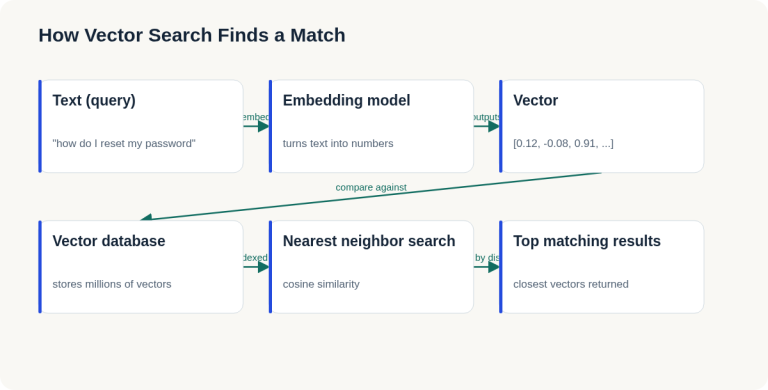
07 Oct 2026 · 4 min read
ai
English Lesson — Tuesday Morning: Embeddings & Vector Search Vocabulary
Daily English practice for tech professionals: embed, vector database, and nearest neighbor search vocabulary with pronunciation and exercises.
Read more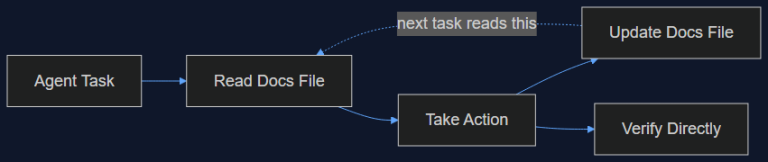
06 Oct 2026 · 5 min read
agentic coding
My Agent Didn't Forget. It Never Wrote Anything Down.
A Hacker News post about agent memory landed the same week I'd debugged a real dedup failure caused by exactly the problem it describes. I tested the fix against my own incident — here's what held up and what didn't.
Read more
Discussion
Comments are reviewed before publication. Your email is kept private.