
JOURNAL
Gemini 3.7 Flash: When the ‘Cheap’ Model Becomes Your Agent Workhorse
Google's new Flash model jumped from 34.4% to 43.6% on FrontierCode 1.1 at half the price of its predecessor. A technical lead's take on when to route agentic coding work to the fast, cheap tier — and when not to.

On this page
On August 13, Google shipped Gemini 3.7 Flash — a model it’s explicitly pitching as “our most intelligent workhorse model yet” for software engineering, knowledge work, and autonomous agent tasks. The headline numbers: a jump from 34.4% to 43.6% on FrontierCode 1.1 Main (a benchmark that grades not just whether code runs, but whether it passes bug testing and follows project style guides), a 1-million-token context window, and pricing at $0.75 / $3.75 per million input/output tokens — half of what 3.6 Flash cost.
That last part is the story. Not the benchmark bump — every model release claims a benchmark bump. The story is that the price of “good enough for agentic coding” just fell by half again, and that changes how a tech lead should be architecting agent pipelines, not just which vendor to pick.
Why FrontierCode 1.1 matters more than the usual benchmark
Most coding benchmarks (HumanEval, MBPP, even SWE-bench in its early form) measure “does the code run and pass the tests.” FrontierCode 1.1 adds two things that map directly onto what breaks in real engineering orgs: the code has to survive bug testing as a distinct pass, and it has to follow project-specific style guides. That’s a proxy for “would this pass code review,” not “would this pass CI.” It’s a meaningfully harder bar, and a 9-point jump on it in one release cycle is not noise.
For a tech lead, that’s the signal to actually re-test, not just re-read the changelog. Benchmark deltas on easier evals routinely fail to predict real-world agent reliability. A jump on a review-shaped eval is more likely to show up in your PR queue.
The architecture implication: tiered model routing
The practical move isn’t “switch everything to Gemini 3.7 Flash” or “ignore it and keep paying flagship prices.” It’s building your agent pipeline so the model tier is a routing decision, not a hardcoded default. I’ve been running a simple three-tier split on a personal agent stack for the last few months, and this release is a good excuse to revisit the thresholds:
type TaskTier = "flash" | "standard" | "flagship";

function routeTask(task: AgentTask): TaskTier {
  // Scoped, well-specified, single-file changes
  if (task.fileCount === 1 && task.hasExplicitSpec && !task.touchesSharedState) {
    return "flash"; // Gemini 3.7 Flash / equivalent fast tier
  }

  // Multi-file refactors, ambiguous requirements, architecture decisions
  if (task.requiresCrossFileReasoning || task.isArchitectural) {
    return "flagship"; // Opus-class, higher effort
  }

  return "standard";
}
The thing that changed this week isn’t the logic — it’s the flash threshold. At $0.75/$3.75 per million tokens with genuine gains on a review-shaped benchmark, more of your task distribution can safely sit in the flash bucket than it could a quarter ago. If you’re running an internal agent fleet (PR triage bots, changelog generators, test-scaffolding agents, doc updaters), this is worth an actual re-benchmark against your own task mix, not just a vendor comparison chart.
Where the 1M context window actually pays off
The context window bump is easy to wave at and hard to use well. In practice, the place it earns its keep in agentic coding isn’t “paste the whole repo” — that’s usually a sign your retrieval layer is weak, not a feature. It’s useful for two more specific things:
- Long-running agent sessions where the transcript itself (tool calls, intermediate reasoning, file diffs) accumulates across dozens of turns. A 1M window means fewer forced summarizations mid-task, which is where agents silently drop constraints stated early in a session.
- Whole-module review, where you deliberately want the model to see an entire bounded subsystem (a service, a package) rather than a RAG-selected slice, because cross-cutting bugs (a changed interface breaking three unrelated call sites) are exactly what chunked retrieval misses.
If your agent’s context strategy is still “grep for relevant files and stuff them in,” the bigger window is mostly wasted. If it’s “load the bounded module plus session history,” it’s a real capability unlock.
A hands-on comparison worth running
Before you route production traffic to any new “cheap tier” model, run this minimal harness against a sample of your own recent PRs, not a public benchmark:
# Pull last 20 merged PRs with a clear spec (issue link) and single-file diff
gh pr list --state merged --limit 50 --json number,title,files \
  | jq '[.[] | select(.files | length == 1)] | .[:20]'

# For each, replay the original issue as a prompt against the candidate model,
# diff its output against the actual merged code, and score on:
# - compiles/passes existing tests
# - style-guide conformance (lint clean)
# - reviewer would have approved without a second round
That third criterion — “would a reviewer approve without a second round” — is the one that actually correlates with FrontierCode-style scoring, and it’s the one generic benchmarks can’t tell you about your own codebase’s conventions.
The takeaway
Gemini 3.7 Flash isn’t interesting because it’s a new frontier model — it isn’t one, and Google isn’t claiming it is. It’s interesting because it moves the price/quality frontier for the bulk of agentic coding work: the scoped, well-specified tasks that make up most of an engineering backlog. The tech lead move this week isn’t “adopt Gemini” — it’s “re-run your tiering thresholds,” because the line between “flash-tier task” and “flagship-tier task” just shifted, and if your routing logic hasn’t shifted with it, you’re either overpaying or under-delivering on a chunk of your pipeline.
Sources: Google Blog — Introducing Gemini 3.7 Flash, VentureBeat, MarkTechPost
Related reading
07 Oct 2026 · 4 min read
ai
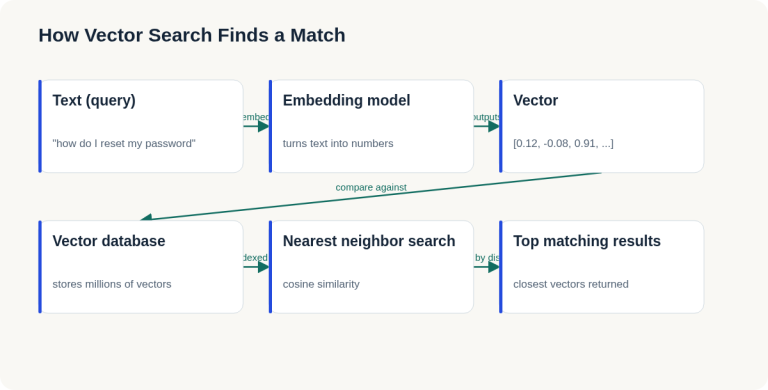
English Lesson — Tuesday Morning: Embeddings & Vector Search Vocabulary
Daily English practice for tech professionals: embed, vector database, and nearest neighbor search vocabulary with pronunciation and exercises.
Read more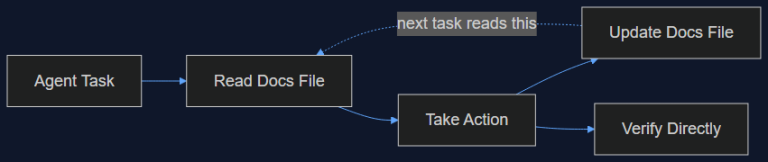
06 Oct 2026 · 5 min read
agentic coding
My Agent Didn't Forget. It Never Wrote Anything Down.
A Hacker News post about agent memory landed the same week I'd debugged a real dedup failure caused by exactly the problem it describes. I tested the fix against my own incident — here's what held up and what didn't.
Read more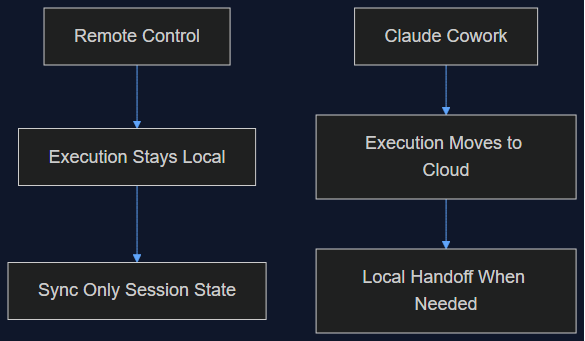
06 Oct 2026 · 5 min read
agentic coding
Claude Cowork Just Did the Thing I Said Remote Control Wasn't Doing
In August I wrote that Claude Code's Remote Control was a sync layer, not a cloud migration, and that keeping execution local was the point. This week Anthropic moved Cowork's execution to the cloud by default. Here's why both were the right call — for different products.
Read more
Discussion
Comments are reviewed before publication. Your email is kept private.