
JOURNAL
English Lesson — Tuesday Morning: AI & Machine Learning
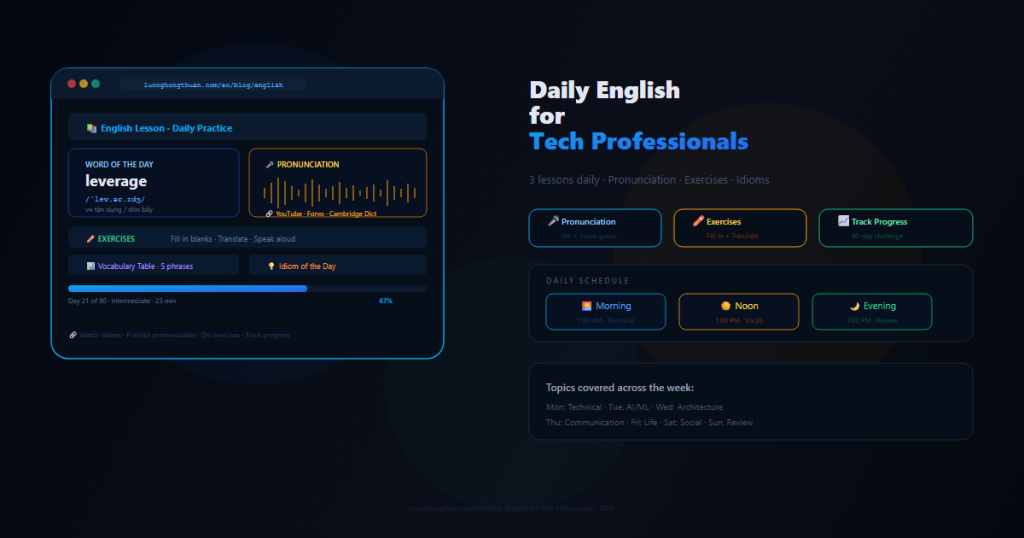
Daily English practice for tech professionals. Morning session covering AI/ML vocabulary — inference, fine-tuning, embeddings, hallucination — with pronunciation guide and exercises.
On this page
Tuesday Morning: AI & Machine Learning English
AI and ML are reshaping every tech conversation — from job interviews to architecture reviews to stakeholder updates. Today we focus on the words you say in those conversations, not just read.
🌟 Word of the Day: Inference
| Pronunciation | /ˈɪn.fər.əns/ |
| Vietnamese | suy luận / chạy model để dự đoán kết quả |
| Stress | IN-fer-ence (3 syllables, stress on first) |
🔊 Hear it: Cambridge · YouGlish AI · 3Blue1Brown YouTube
3 real-world examples:
- “Our inference latency dropped from 800ms to 120ms after we switched to a quantized model.”
- “We’re running inference on-device to avoid sending user data to the cloud.”
- “The cost of inference at scale is the real bottleneck — training is a one-time cost.”
Common mistake: Vietnamese engineers often say “in-FER-ence” (stress on second syllable). The correct stress is IN-fer-ence.
📋 Vocabulary: AI/ML in Real Conversations
| Phrase | Vietnamese | Example |
|---|---|---|
| fine-tune a model | tinh chỉnh model cho domain cụ thể | “We fine-tuned GPT-4o on our support tickets to reduce hallucinations.” |
| context window | cửa sổ ngữ cảnh — lượng text model xử lý được | “The 200k context window lets us pass the whole codebase in one prompt.” |
| hallucinate | bịa ra thông tin sai — model tự “sáng tác” | “The model hallucinated a function that doesn’t exist in the SDK.” |
| embeddings | vector biểu diễn ngữ nghĩa của text | “We store embeddings in Pinecone for semantic similarity search.” |
| prompt engineering | kỹ thuật viết prompt để tối ưu output | “Good prompt engineering cut our token costs by 40%.” |
🗣️ Pronunciation Guide
Practice sentence (read aloud 3 times):
“We’re using retrieval-augmented generation to reduce hallucinations during inference — the embeddings are stored in a vector database.”
Breakdown:
- retrieval = /rɪˈtriːvəl/ — re-TRIEV-al (3 syllables)
- augmented = /ɔːɡˈmentɪd/ — aug-MENT-ed
- hallucinations = /həˌluːsɪˈneɪʃənz/ — ha-loo-si-NA-tions
- inference = /ˈɪn.fər.əns/ — IN-fer-ence
- embeddings = /ɪmˈbedɪŋz/ — em-BED-ings
Rhythm tip: This sentence has a technical density — pause after “generation” and after “inference” to let each concept land.
✏️ Exercise 1: Fill in the Blank
Choose from: inference, fine-tune, hallucinate, context window, embeddings, prompt engineering
- “We need to _______ the model on our legal documents — the base model doesn’t know our terminology.”
- “The model started to _______ when we asked about events after its training cutoff.”
- “Shrinking the _______ helped reduce costs, but we lost accuracy on long documents.”
- “Our _______ pipeline converts all support articles to vectors for semantic search.”
- “With careful _______, we reduced the number of tokens per request by 30%.”
✅ Answers
- fine-tune
- hallucinate
- context window
- embeddings
- prompt engineering
✏️ Exercise 2: Translate to English
- “Model của chúng tôi đang hallucinate khi được hỏi về dữ liệu ngoài training set.”
- “Chi phí inference ở production scale cao hơn nhiều so với khi chúng tôi dự đoán ban đầu.”
- “Chúng tôi cần fine-tune model với domain-specific data để cải thiện accuracy.”
✅ Suggested Answers
- “Our model is hallucinating when asked about data outside its training set.”
- “Inference costs at production scale are much higher than we initially projected.”
- “We need to fine-tune the model with domain-specific data to improve accuracy.”
💡 Idiom of the Day: “Garbage in, garbage out”
Vietnamese: Dữ liệu rác vào thì kết quả rác ra — chất lượng output phụ thuộc vào chất lượng input.
In AI conversations:
- “The embeddings are giving us poor search results. Garbage in, garbage out — the source documents need better chunking.”
- “No matter how good the model, garbage in, garbage out — our prompt is too vague.”
📺 Recommended Watching
- Andrej Karpathy — YouTube — deep technical explanations of neural nets, LLMs, in excellent English
- AI Explained — YouTube — current AI news explained clearly, great for vocabulary in context
- Yannic Kilcher — YouTube — paper walkthroughs, advanced but excellent pronunciation of technical terms
🎯 Daily Challenge
In your next Slack message or PR comment today, use at least one of these words naturally:
- “inference” (e.g., in a cost or latency discussion)
- “hallucinate” (when describing a model error)
- “fine-tune” (when discussing model customization)
Don’t force it — wait for the right moment. When it comes, use it.
Tomorrow: Wednesday Morning — Architecture vocabulary (system design, scalability, distributed systems) 🏗️
Related reading
08 Oct 2026 · 4 min read
architecture
English Lesson — Wednesday Morning: Failover & High Availability Vocabulary
Wednesday architecture English: failover, pronunciation drills, a vocabulary table, two exercises, and an idiom every on-call engineer should know.
Read more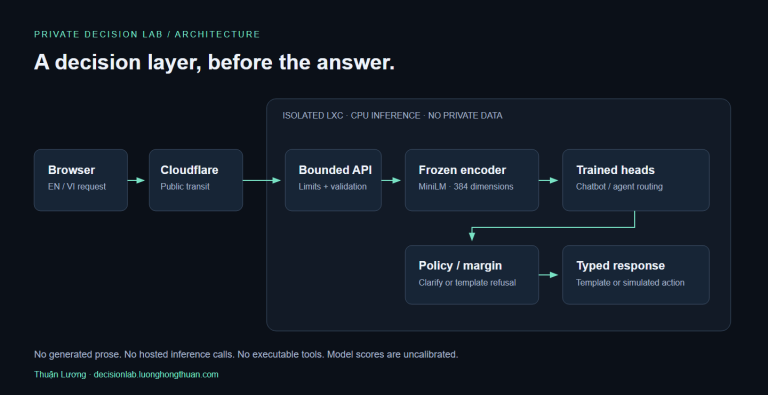
07 Oct 2026 · 8 min read
agentic-ai
Building a Private Decision Layer for Chatbots on a CPU Homelab
A CPU-only chatbot and agent routing demo: trained classifier heads, bilingual tests, measured LXC latency, failure cases and a live homelab deployment.
Read more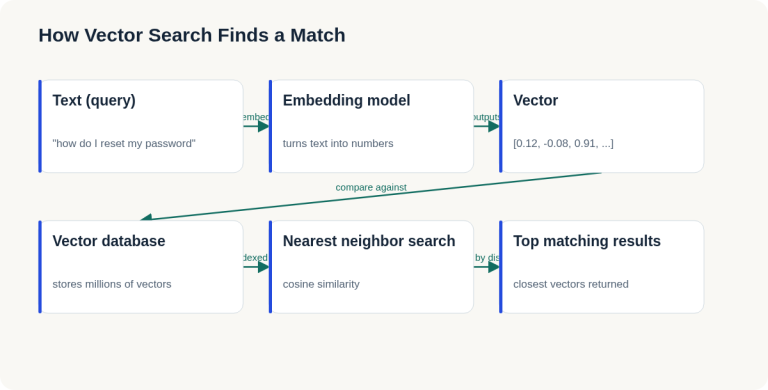
07 Oct 2026 · 4 min read
ai
English Lesson — Tuesday Morning: Embeddings & Vector Search Vocabulary
Daily English practice for tech professionals: embed, vector database, and nearest neighbor search vocabulary with pronunciation and exercises.
Read more
Discussion
Comments are reviewed before publication. Your email is kept private.