
JOURNAL
DeepSeek Just Raised Prices 12x. That’s the Real News, Not the Benchmarks.
DeepSeek-V4-Pro-0813 went GA with sharp benchmark gains over its preview — and API prices up to 12x higher. A Technical Lead's read on what this means for anyone who built a cost model around DeepSeek's 'race to zero' pricing.

On this page
DeepSeek-V4-Pro-0813 went generally available on August 13, and the benchmark deltas from preview to GA are genuinely large: DeepSWE jumped from 12.8 to 62.7, CyberGym from 52.7 to 83.3, Terminal-Bench 2.1 from 72.1 to 87.9. On the Artificial Analysis Intelligence Index it now sits at 53, against Claude Opus 5’s 63 and Fable 5’s 62 — closing a gap that looked much wider a few months ago.
That’s the headline everyone’s writing. The story I think actually matters for anyone with DeepSeek in their stack is buried lower in the announcement: API prices went up as much as 12x with this release.
Why this matters more than the benchmark table
If you built any part of your cost model around DeepSeek’s reputation for aggressive, near-cost pricing — the “race to zero” narrative that’s defined the open-weight API market for the better part of two years — that model just broke. Not gradually. A 12x jump isn’t a routine price adjustment; it’s a repricing event, and it tells you something about where DeepSeek thinks it can now compete: on capability, not just on being the cheap option.
This is worth sitting with, because it changes the calculus for a decision a lot of teams made without much scrutiny: “use DeepSeek because it’s cheap and good enough” was a defensible default for months. It stops being automatically true the moment the price gap narrows. You have to re-run the comparison, not assume the old numbers still hold.
A cost model you should actually run this week
If DeepSeek is in your routing layer or your agent’s model selection logic, don’t take my word for the magnitude — pull current pricing and do the math against your actual traffic mix:
# rough monthly cost comparison — replace with your real per-model token counts
models = {
    "deepseek-v4-pro-0813": {"input_per_1m": 2.80, "output_per_1m": 11.20},  # post-hike, verify current
    "claude-sonnet-5":      {"input_per_1m": 3.00, "output_per_1m": 15.00},
    "gemini-3.7-flash":     {"input_per_1m": 0.75, "output_per_1m": 3.75},
}

monthly_input_tokens = 400_000_000   # pull from your own logs
monthly_output_tokens = 120_000_000

for name, price in models.items():
    cost = (monthly_input_tokens / 1_000_000) * price["input_per_1m"] \
         + (monthly_output_tokens / 1_000_000) * price["output_per_1m"]
    print(f"{name}: ${cost:,.2f}/mo")
The numbers above are illustrative — go pull the actual current DeepSeek pricing page before you act on this, because the point isn’t the specific dollar figure, it’s that the gap between “cheap open model” and “frontier-adjacent closed model” pricing has compressed enough that you need to re-run this comparison rather than trust whatever conclusion you reached six months ago.
The pattern behind the price hike
I don’t think this is DeepSeek being opportunistic so much as it’s DeepSeek’s economics catching up with its capability claims. Serving a model that scores 62.7 on DeepSWE and 87.9 on Terminal-Bench 2.1 costs meaningfully more in compute than serving the preview that scored 12.8 and 72.1 on the same benchmarks — better agentic performance generally means longer reasoning chains, more tool-call round trips, or larger effective context usage per request, all of which show up directly in your inference bill regardless of who’s hosting the model. A price hike that tracks a genuine capability jump is a different story than a price hike on a static model, and this looks like the former.
That said, “the price hike is economically justified” and “you should keep budgeting for DeepSeek at the old rate” are two separate claims, and only one of them is true. Plan for the new pricing, not the old reputation.
What I’d actually do about it
- Re-run your model comparison now, not next quarter. Any cost model built on DeepSeek’s old pricing is stale as of August 13. If DeepSeek is your default for cost-sensitive workloads, verify it’s still winning that comparison at current prices — it might not be for every workload anymore.
- Separate “cheap” workloads from “capable” workloads in your routing logic. If you were using DeepSeek as a blanket default, this is a good forcing function to actually tier your model selection: route high-volume, low-complexity calls to whatever’s now cheapest (Gemini 3.7 Flash is a strong current contender at $0.75/$3.75 per 1M tokens), and reserve DeepSeek or a frontier model for calls where the capability jump actually pays for itself.
- Don’t assume open-weight means permanently cheap. DeepSeek is still open-weight — you can self-host V4-Pro if the API pricing stops working for your economics — but self-hosting a model with these benchmark numbers has its own nontrivial GPU cost. Run that comparison too before assuming self-hosting is the automatic answer.
The bigger signal
Open-weight model providers spent the last two years competing primarily on price, using API cost as the wedge against closed frontier labs. A 12x hike from one of the category’s most aggressive price competitors, timed to a real capability jump, suggests that wedge is narrowing — providers are starting to price closer to what the capability is actually worth rather than racing each other to the bottom. If your infrastructure or cost strategy assumes “open model API pricing only goes down,” this is the data point that should make you stress-test that assumption before it costs you a budget surprise.
Source: DeepSeek-V4-Pro-0813 on Hugging Face, Official release benchmarks
Related reading
07 Oct 2026 · 4 min read
ai
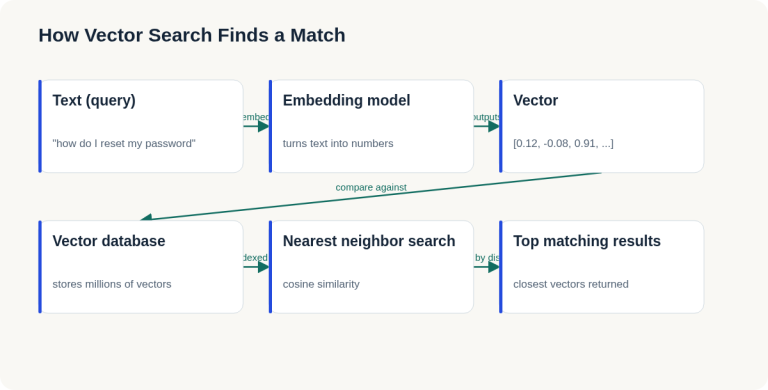
English Lesson — Tuesday Morning: Embeddings & Vector Search Vocabulary
Daily English practice for tech professionals: embed, vector database, and nearest neighbor search vocabulary with pronunciation and exercises.
Read more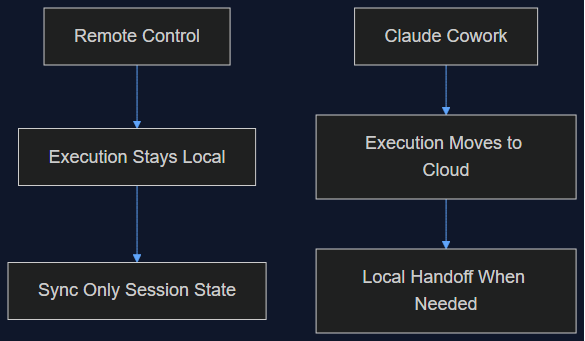
06 Oct 2026 · 5 min read
agentic coding
Claude Cowork Just Did the Thing I Said Remote Control Wasn't Doing
In August I wrote that Claude Code's Remote Control was a sync layer, not a cloud migration, and that keeping execution local was the point. This week Anthropic moved Cowork's execution to the cloud by default. Here's why both were the right call — for different products.
Read more
03 Oct 2026 · 4 min read
agents
950 Agents, 21 Hours, 210M Tokens: What Anthropic's CRISPR Search Actually Proves About Fan-Out
Anthropic's life-sciences lab ran 950 agents in parallel to surface a possible new CRISPR-like enzyme system. The funnel math is a genuinely useful fan-out pattern — but the scientist pushback is the part worth reading closely.
Read more
Discussion
Comments are reviewed before publication. Your email is kept private.