
PRODUCT CASE STUDY
LingoLive AI
A real-time English conversation tutor with gentle feedback, session reports and progress tracking.
- Role
- Product direction, voice experience and hands-on engineering
- For
- Adult learners who want more practice speaking English
On this page
Explore the product
English narration and captions. Current public website captured on 15 October 2026; this is a website showcase, not an authenticated app session.
English transcript
- Knowing English and feeling ready to speak are different things.
- Lingo Live is designed to help adults rehearse meetings, interviews, and client conversations with an AI tutor.
- Choose your level, pick a situation, and start speaking. Suggestions and session reports give you a separate moment to reflect.
- These are current public website screens, not a recorded tutoring session. Explore Lingo Live and choose what to practice next.
Narration credits
Piper LJ Speech · LJ Speech dataset (public domain). Narration synthesized and loudness normalized.
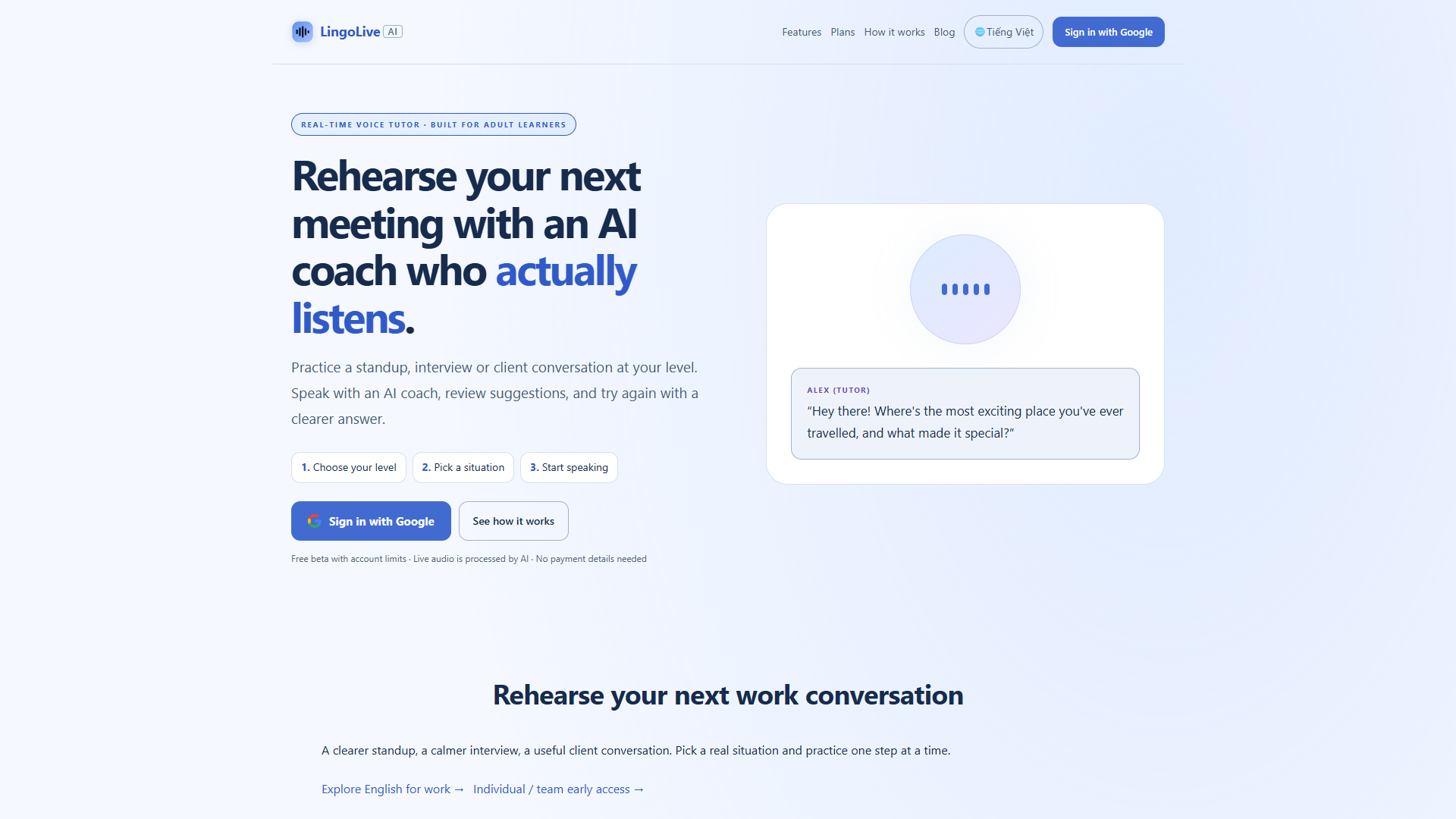
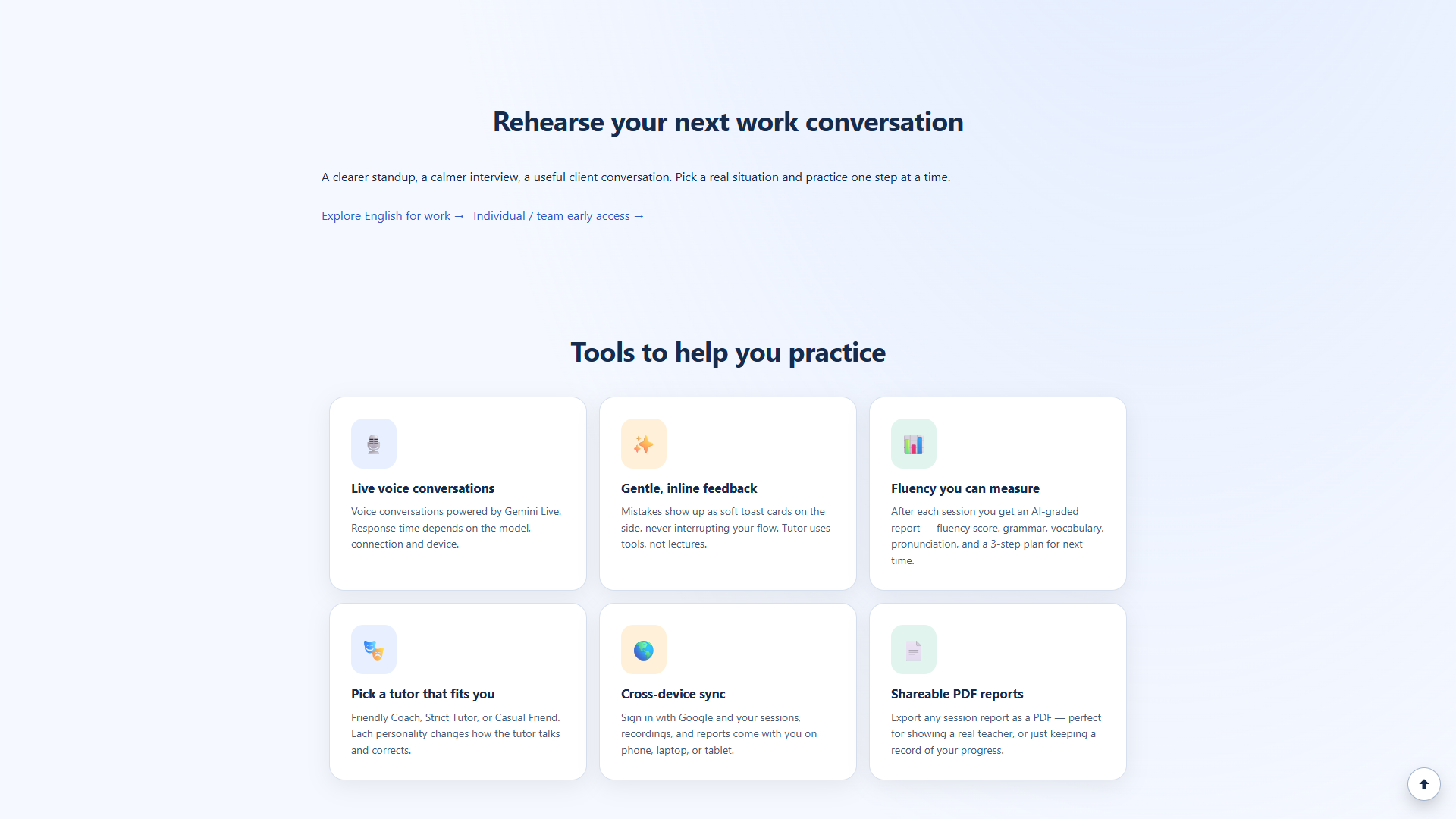
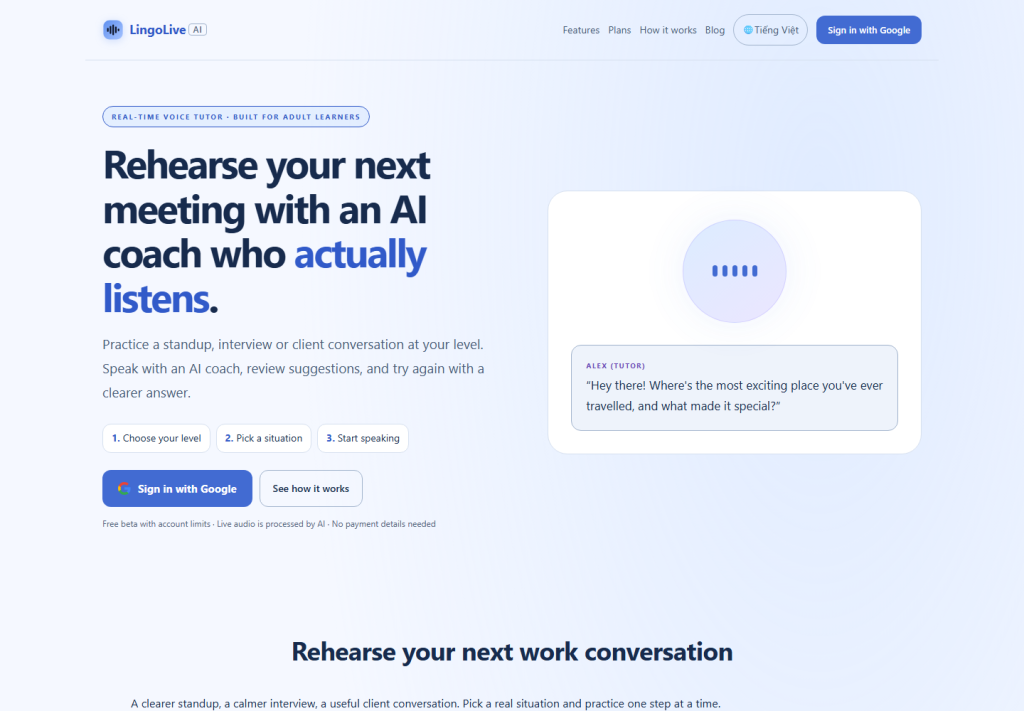
Public interface refreshed on 14 October 2026: a light theme and level → situation → speaking flow. The landing page focuses on rehearsing meetings, interviews and client conversations. The screenshot below shows the current public interface.
The user problem
Knowing English is different from speaking comfortably. Learners need conversation practice and useful corrections without turning every exchange into a grammar lesson.
Product decisions
The experience centers on spoken conversation. Tutor personalities change the tone of practice; gentle feedback keeps the conversation moving. Session reports and progress views help learners decide what to practice next.
Engineering trade-offs
Gemini Live handles real-time conversations. Browser audio capture and playback, short-lived session tokens and Firebase-backed account sync connect the voice experience to persistent reports. Microphone permissions, connection recovery and privacy explanations are essential parts of the product.
What exists today
The public landing page and deployed app were checked on 5 October 2026. The app and its companion voice service were running. Source inspection found conversation, reporting and sync implementations. This inspection did not complete an authenticated tutoring session or independently measure latency, learning gains or retention.
A decision worth explaining
Conversation comes before exhaustive correction. Gentle feedback keeps the learner speaking; session reports provide a separate moment for reflection. Real-time audio also makes microphone permission, interrupted connections and session boundaries part of the product experience rather than hidden implementation details.
Evidence and current outcome
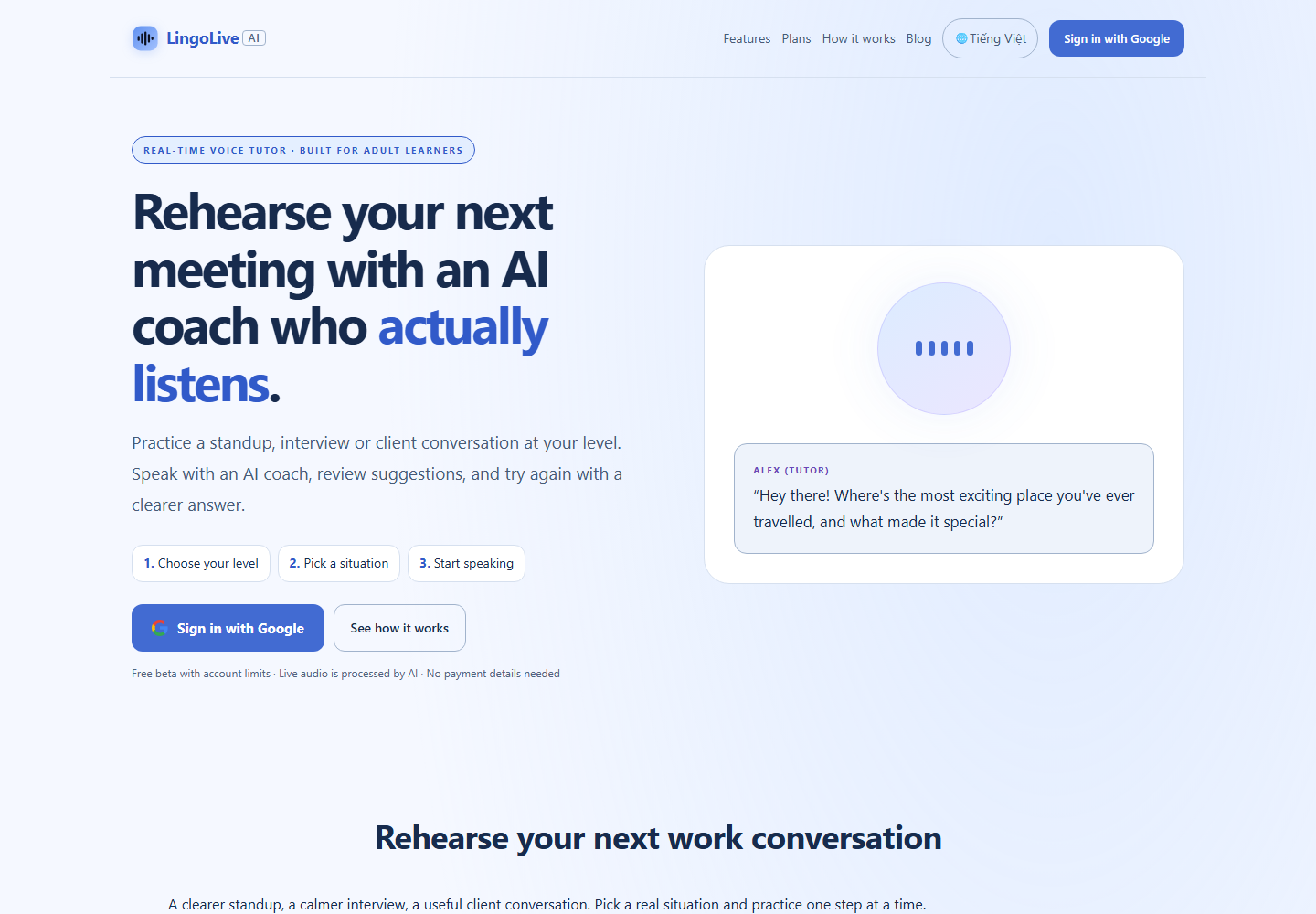
The public app and companion voice service were running during the 5 October 2026 inspection. Source review found conversation, reporting and sync implementations. The screenshot below shows the public website. That evidence establishes implementation scope; it does not establish a completed authenticated lesson, measured latency or learning gains.
What I would validate next
Run an authenticated conversation with explicit microphone consent. Record connection setup, interruption recovery and report persistence as separate checks. Evaluate whether corrections help the learner continue speaking before making a claim about learning outcomes.
Applying this to your project
For an AI MVP, LingoLive illustrates why the complete journey matters: microphone consent, an ongoing conversation, interruption recovery and useful feedback. The linked evidence describes implementation and the remaining authenticated-session checks; it does not establish measured learning gains.
Evidence & next steps
Implementation evidence is separate from measured user or business outcomes. Next: validate the complete user journey and its results.