
PRODUCT CASE STUDY
KidsLen
Parental monitoring built around one rule: the child always knows what is shared.
- Role
- Product and technical lead — consent-first parental monitoring
- For
- Families who want transparent parental monitoring
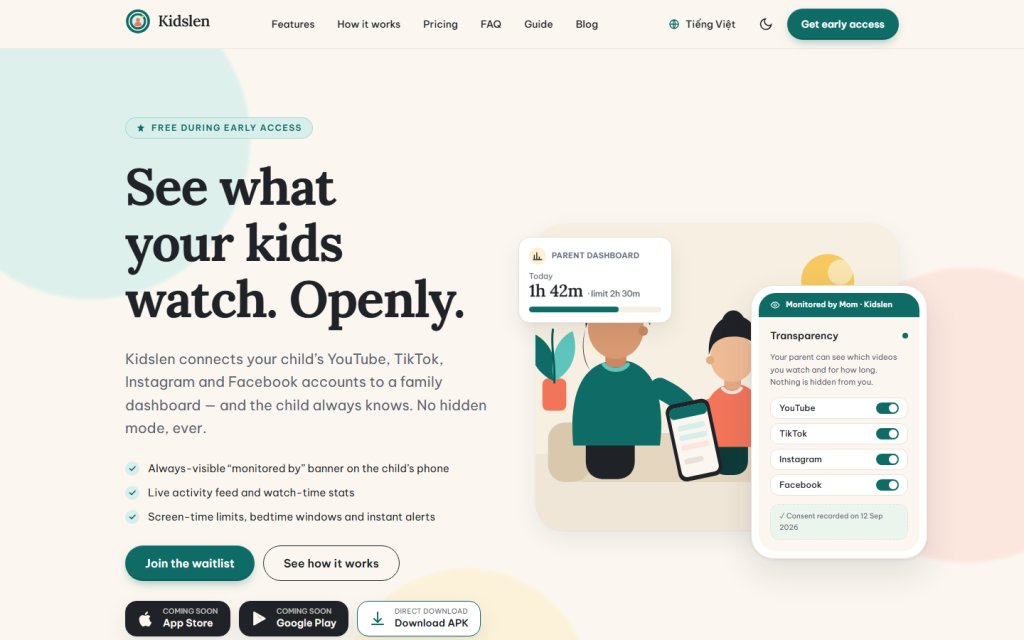
Explore the product
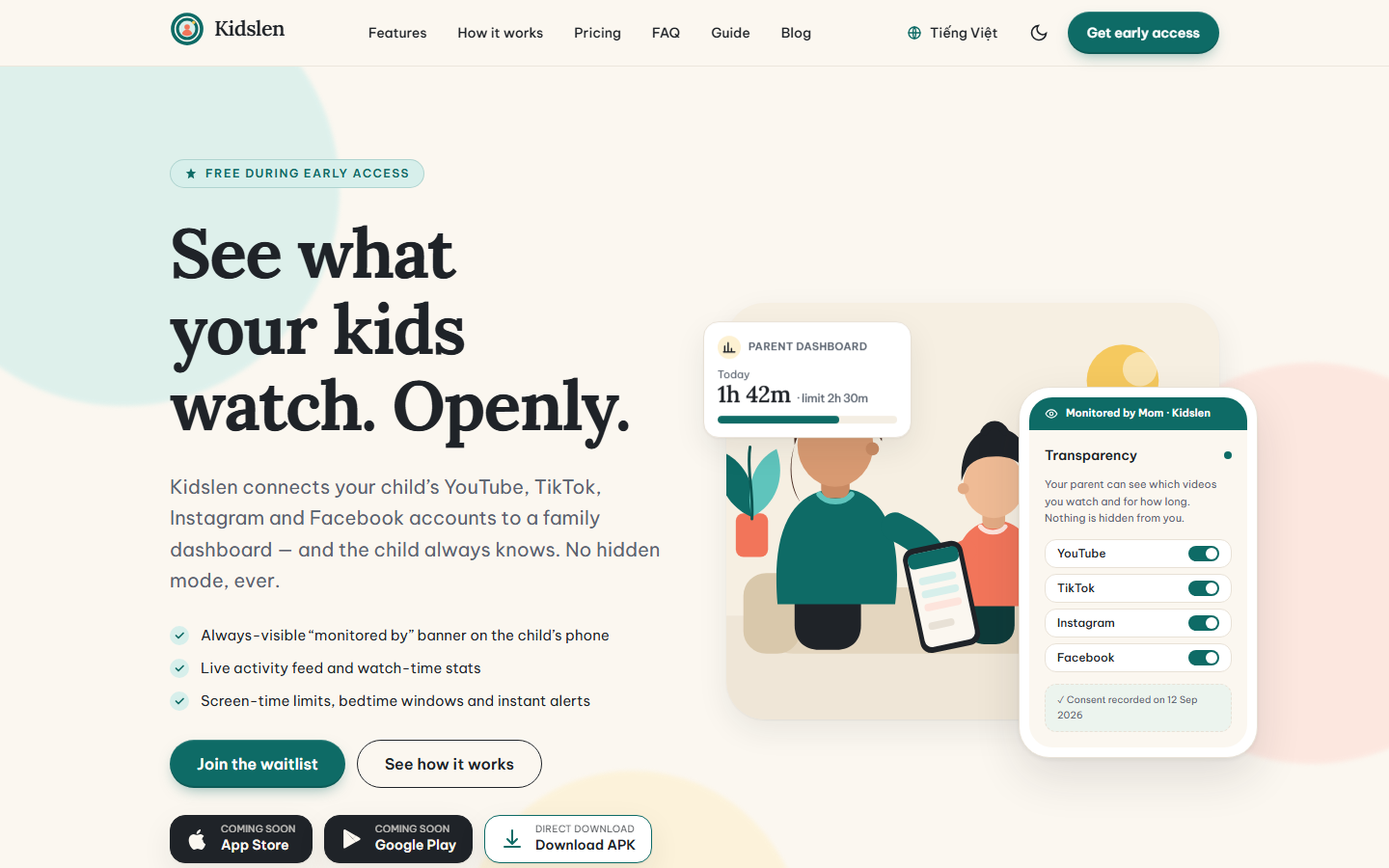
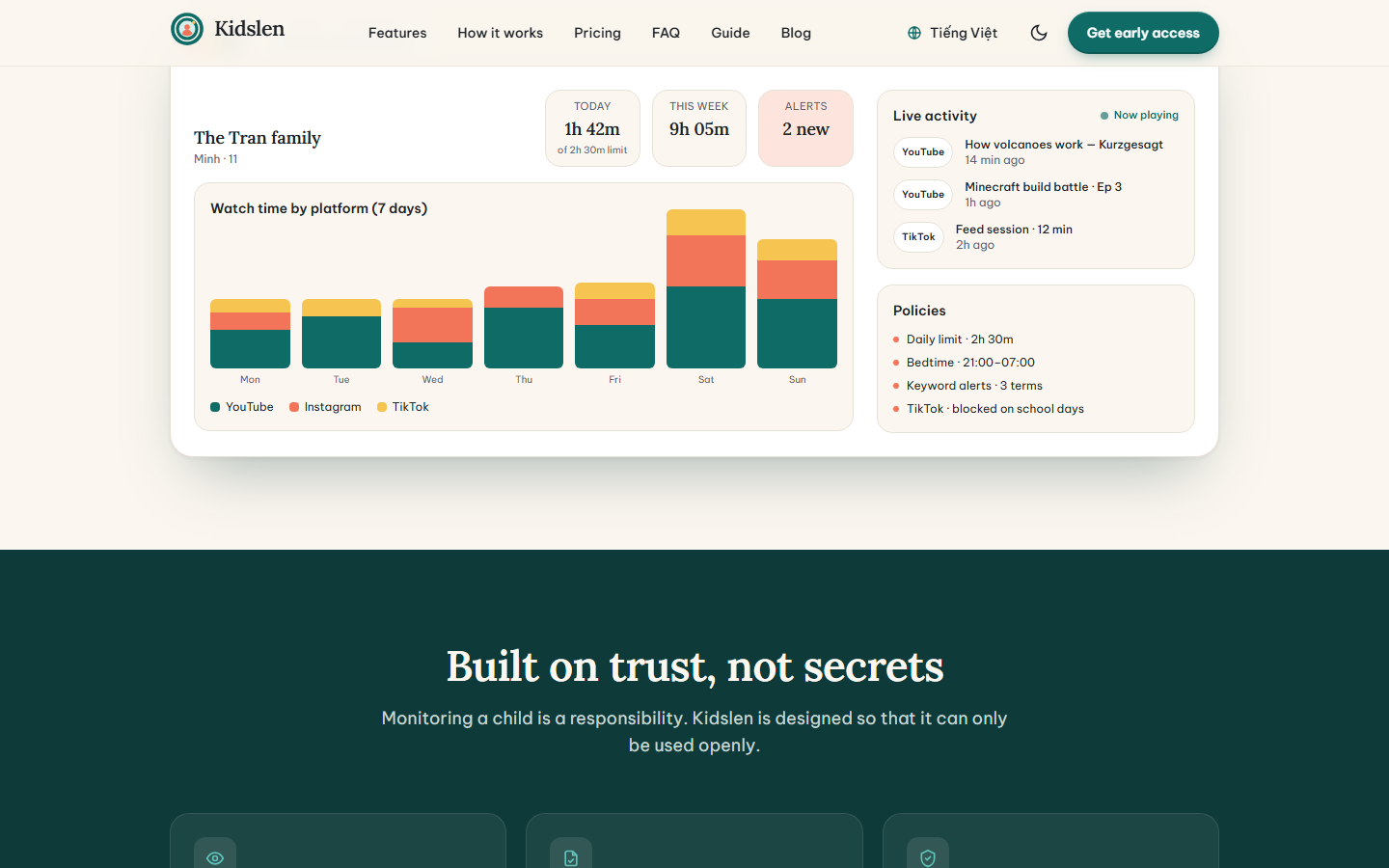
A preview of the public website, with English titles and captions. No audio. This is not an authenticated app demonstration.
English transcript
- A transparent view of digital family life
- Screen time, with transparency
- Explore the public feature overview
- Discover KidsLen and early access
The user problem
Parents need context about children’s digital activity, but hidden monitoring damages trust. I made transparency a product constraint rather than a setting that can be turned off.
Product decisions
Visible monitoring, explicit consent and family policies shape the experience. The product includes a companion app, parent dashboard, policy engine and operations console. Early access is the right stage to collect feedback before promising wider availability.
Engineering trade-offs
A Kotlin/Spring Boot backend with PostgreSQL supports event processing and policies; React Native and React serve the companion and dashboard experiences. The architecture is intentionally restrained: simpler deployment and observable operations come before adding services.
What exists today
The public early-access website and product-building series document the current implementation.
Evidence & next steps
Implementation evidence is separate from measured user or business outcomes. Next: validate the complete user journey and its results.