
JOURNAL
Tech Lead English: How to Run Code Reviews and 1-on-1s That Actually Work
Practical English phrases and scripts for Vietnamese tech leads: how to give code review feedback, run productive 1-on-1s, and handle tough technical discussions in English.
On this page
Introduction
For many Vietnamese tech leads working in international teams, writing code is the easy part. The real challenge shows up in the conversations: a code review comment that accidentally sounds rude, a 1-on-1 where you do not know how to bring up a performance issue, or a standup where you hold back because you are not sure your English is precise enough. These moments matter — they define how your team sees you as a leader.
Vietnamese communication culture tends toward harmony and indirectness. We often soften criticism to protect the other person’s feelings, or stay silent rather than risk an awkward exchange. English workplace culture — especially in Western and international tech teams — expects something different: directness combined with respect. Feedback should be specific, honest, and actionable. The goal is not to make someone feel good or bad; it is to help them grow.
The good news is that this is a skill you can learn phrase by phrase. Once you have the right language, code reviews and 1-on-1s stop feeling like minefields and start feeling like the powerful leadership tools they are. This lesson gives you exactly what you need.
🗣️ Key Phrases to Say Out Loud
Practice each phrase aloud at least three times before your next meeting.
1. Opening a code review “I had a few thoughts on this PR — mind if I walk through them?” IPA: /aɪ hæd ə fjuː θɔːts ɒn ðɪs piː.ɑːr — maɪnd ɪf aɪ wɔːk θruː ðəm/ This opener signals collaboration, not judgment. You are thinking together, not delivering a verdict.
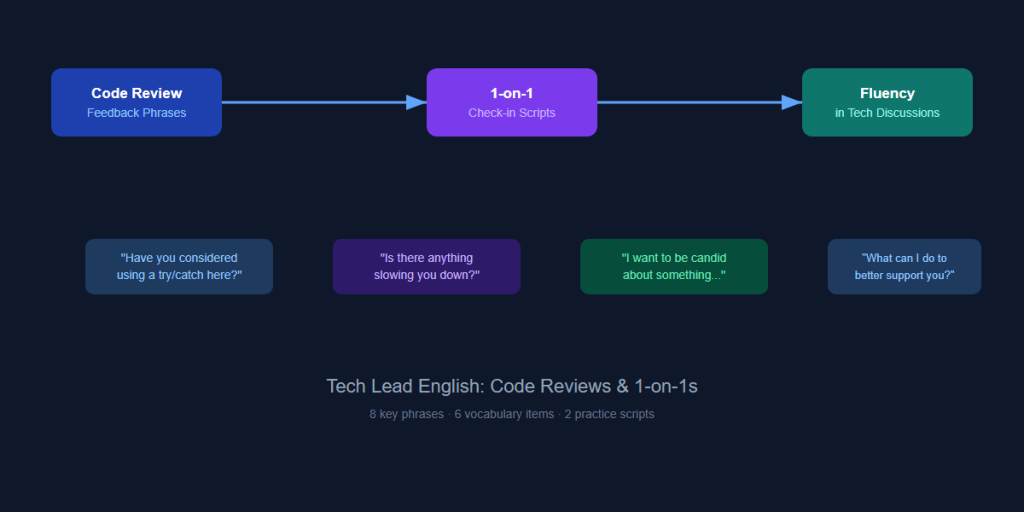
2. Giving constructive feedback “Have you considered using a try-catch block here instead?” IPA: /hæv juː kənˈsɪdəd ˈjuːzɪŋ ə traɪ kætʃ blɒk hɪər ɪnˈstɛd/ A question form invites dialogue. It respects the developer’s thinking while opening space for improvement.
3. Suggesting an alternative “One thing I’d suggest is extracting this logic into a separate service.” IPA: /wʌn θɪŋ aɪd səˈdʒɛst ɪz ɪkˈstræktɪŋ ðɪs ˈlɒdʒɪk ˈɪntʊ ə ˈsɛprət ˈsɜːvɪs/
4. Praising good work “This is a clean solution — I especially like how you handled the edge cases.” IPA: /ðɪs ɪz ə kliːn səˈluːʃən — aɪ ɪˈspɛʃəli laɪk haʊ juː ˈhændəld ði ɛdʒ keɪsɪz/ Be specific when you praise. “Good job” fades. Pointing to exactly what worked shows you actually read the code.
5. 1-on-1 check-in opener “How are you feeling about the current sprint — any parts that feel harder than expected?” IPA: /haʊ ɑːr juː ˈfiːlɪŋ əˈbaʊt ðə ˈkɜːrənt sprɪnt — ˈɛni pɑːts ðæt fiːl ˈhɑːdər ðæn ɪkˈspɛktɪd/
6. Asking about blockers “Is there anything slowing you down right now that I should know about?” IPA: /ɪz ðɛr ˈɛnɪθɪŋ ˈsloʊɪŋ juː daʊn raɪt naʊ ðæt aɪ ʃʊd noʊ əˈbaʊt/
7. Giving difficult feedback “I want to be honest with you about something — I think we can raise the bar on code quality here.” IPA: /aɪ wɒnt tə biː ˈɒnɪst wɪð juː əˈbaʊt ˈsʌmθɪŋ — aɪ θɪŋk wiː kæn reɪz ðə bɑːr ɒn koʊd ˈkwɒlɪti hɪər/
8. Ending a 1-on-1 “What’s one thing I can do to better support you going forward?” IPA: /wɒts wʌn θɪŋ aɪ kæn duː tə ˈbɛtər səˈpɔːt juː ˈɡoʊɪŋ ˈfɔːwəd/
9. Escalating diplomatically “I wanted to flag this early so we can address it together before it becomes a bigger issue.” IPA: /aɪ ˈwɒntɪd tə flæɡ ðɪs ˈɜːli soʊ wiː kæn əˈdrɛs ɪt təˈɡɛðər bɪˈfɔːr ɪt bɪˈkʌmz ə ˈbɪɡər ˈɪʃuː/
📚 Vocabulary
actionable /ˈækʃənəbl/ — có thể thực hiện được Feedback that tells someone exactly what to do next. “Please make your review comments actionable — not just ‘this is wrong’ but ‘try this approach instead.'”
blocker /ˈblɒkər/ — vật cản / điều đang chặn tiến độ Anything that stops work from moving forward. “Let me know if you hit any blockers before the end of day.”
align /əˈlaɪn/ — đồng thuận / thống nhất quan điểm To reach a shared understanding or agreement. “Before we start the sprint, let’s align on the acceptance criteria.”
candid /ˈkændɪd/ — thẳng thắn, trung thực Honest and direct, without sugarcoating. “I appreciate you being candid — that kind of feedback helps the team improve.”
iterate /ˈɪtəreɪt/ — cải tiến từng bước To go through repeated cycles of improvement. “We don’t need a perfect solution now — let’s ship this and iterate based on real usage.”
ownership /ˈoʊnərʃɪp/ — tinh thần làm chủ / chịu trách nhiệm Taking full responsibility for a task or outcome. “What I look for in senior engineers is ownership — they follow through without being asked twice.”
🎯 Practice Now
Script 1: Code Review — Error Handling PR
Tech Lead: “Hey, I reviewed the PR — overall the logic looks solid. One thing I’d flag is the error handling in the API call. Right now it catches all errors the same way. Have you considered distinguishing between network errors and validation errors?”
Developer: “Ah, I see what you mean. I was trying to keep it simple, but you’re right — a 404 and a timeout should probably be handled differently.”
Tech Lead: “Exactly. If you can split those out, it’ll make debugging much easier down the line. The rest of the PR is clean — I especially like how you structured the retry logic. Good thinking there.”
Script 2: 1-on-1 — Junior Developer Seems Stressed
Tech Lead: “How are you feeling about the current sprint? You’ve seemed a bit quieter than usual in standups.”
Developer: “Honestly, I’m a little overwhelmed. The new authentication module is more complex than I expected, and I don’t want to fall behind.”
Tech Lead: “I appreciate you telling me that — that’s exactly what these 1-on-1s are for. Is there anything slowing you down right now that I can help unblock?”
Developer: “I think I need a clearer picture of the expected behavior for edge cases. The ticket isn’t detailed enough.”
Tech Lead: “Let’s fix that today. I’ll add more detail to the ticket and we can pair on it for an hour this afternoon. And going forward — what’s one thing I can do to better support you?”
Tips for Vietnamese Tech Leads
Use the sandwich method — but don’t make it a formula. Open with something genuine you appreciated, deliver the honest feedback clearly, then close with confidence in the person. This is not about being fake — it signals respect before and after a hard message. Just make sure the middle part does not get buried.
“We” language reduces defensiveness. Say “I think we can improve the test coverage here” instead of “your tests are not good enough.” The first version puts you on the same side. The second version puts you across a table from each other.
Be direct, but not abrupt. English directness does not mean skipping context. “This needs to be rewritten” lands hard. “I think this approach will cause maintenance issues at scale — let me show you what I mean” says the same thing while bringing the person with you.
Silence is not agreement in international meetings. In Vietnamese culture, staying quiet often means respect or polite disagreement. In English meetings, silence is often read as having nothing to add — or worse, as agreement. Train yourself to say “Let me think about that for a second” to buy time, or “I see it a bit differently — can I share my perspective?” to enter the conversation confidently.
Discussion
Comments are reviewed before publication. Your email is kept private.