Building KidSpark: Production — Analytics, Monitoring, Crash Reporting, and Iteration
Launch day is just the beginning. Privacy-compliant analytics, crash reporting that respects child data, and a feedback loop that actually improves the product.
Launch day is just the beginning. Privacy-compliant analytics, crash reporting that respects child data, and a feedback loop that actually improves the product.
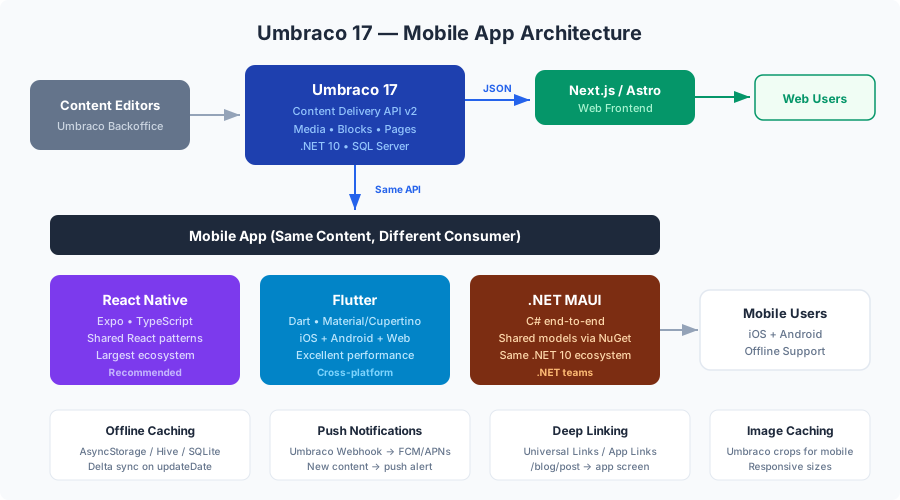
Umbraco isn't just for websites. Here's how to use the Content Delivery API to power native mobile apps with React Native, Flutter, or .NET MAUI — with offline support, push notifications, and content syncing.
Mobile CI/CD is not web CI/CD. Code signing, provisioning profiles, app bundles, and two very different app store review processes await. Here's how we automated the painful parts.
Standard testing isn't enough for kids apps. Motor skill variations, accidental input, old tablets, and accessibility requirements demand a testing strategy built specifically for young users.
The features that make a kids learning app actually work: adaptive lessons, interactive quizzes, offline progress tracking, and gamification that motivates without manipulating.
From React to React Native to Flutter. Building cross-platform voice interview clients with LiveKit SDKs, audio visualization, and reconnection strategies.
The framework debate almost split the team. Flutter, React Native, or going fully native? Here's our decision matrix and what we learned comparing all three.
Children are not small adults. Designing for a 4-year-old and a 12-year-old requires fundamentally different thinking about touch, color, navigation, and cognitive load.
Your web platform is thriving, parents want a mobile app, and your team is ready to build. But kids apps play by different rules.
Get notified when I publish new posts on AI, .NET, cloud architecture and more.