Llama 4 vs Gemma 4: The Open-Source LLM Race Just Got Real
Meta dropped Llama 4 Scout, Maverick, and Behemoth. Google fired back with Gemma 4. As a Technical Lead, here's what these releases actually mean for your teams and projects.
Meta dropped Llama 4 Scout, Maverick, and Behemoth. Google fired back with Gemma 4. As a Technical Lead, here's what these releases actually mean for your teams and projects.
Alibaba just released its third proprietary model in days. Google's Gemini Flash-Lite costs $0.25 per million tokens. NVIDIA's Nemotron runs 2.2x faster than GPT-OSS-120B. The LLM cost war has arrived — here's what it means for architects choosing AI infrastructure in 2026.
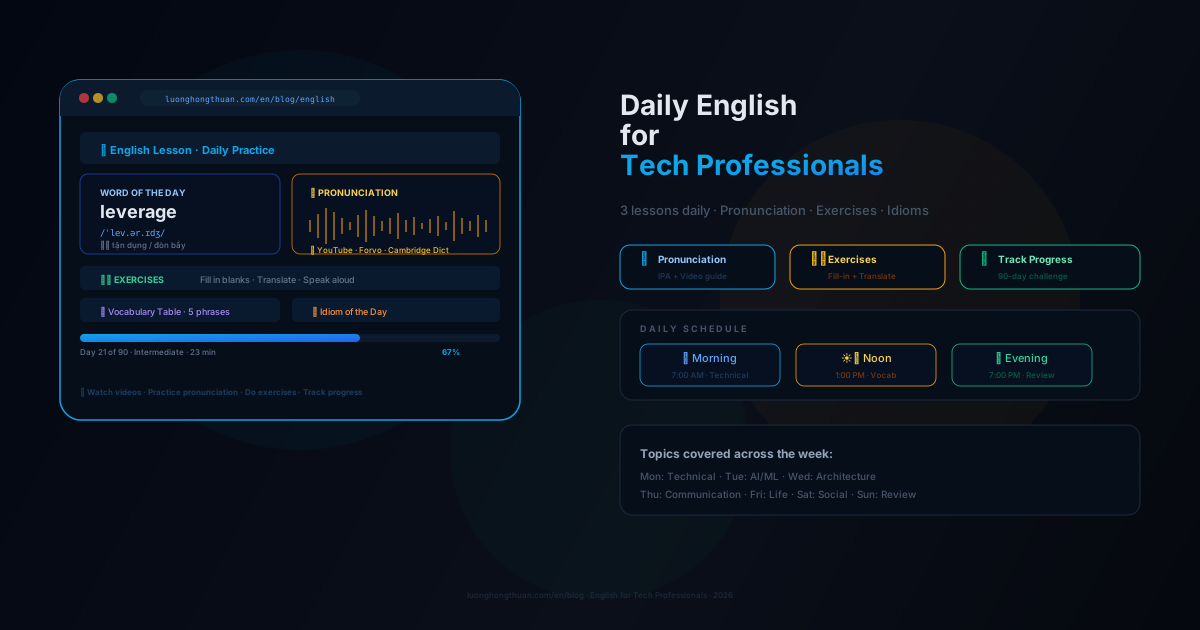
Daily English practice for tech professionals. Morning session covering system architecture vocabulary with pronunciation guide, exercises, and real-world examples.
The A2A protocol under the Linux Foundation is quietly becoming the HTTP of the agentic era. Here's what it means for enterprise architects, why it matters more than another model release, and how to think about it from a systems design perspective.
Practical English phrases for Vietnamese tech leads navigating technical disagreements, design discussions, and architecture decision meetings with international teams.
The Model Context Protocol crossed 10,000 published servers under the Linux Foundation's Agentic AI Foundation. As someone who's integrated dozens of AI systems, here's why this number matters more than any benchmark.
GPT-4 level AI cost $30/M tokens in 2023. Today it's under $1. Here's the technical architecture that lets you capture 90%+ of that savings without sacrificing quality.
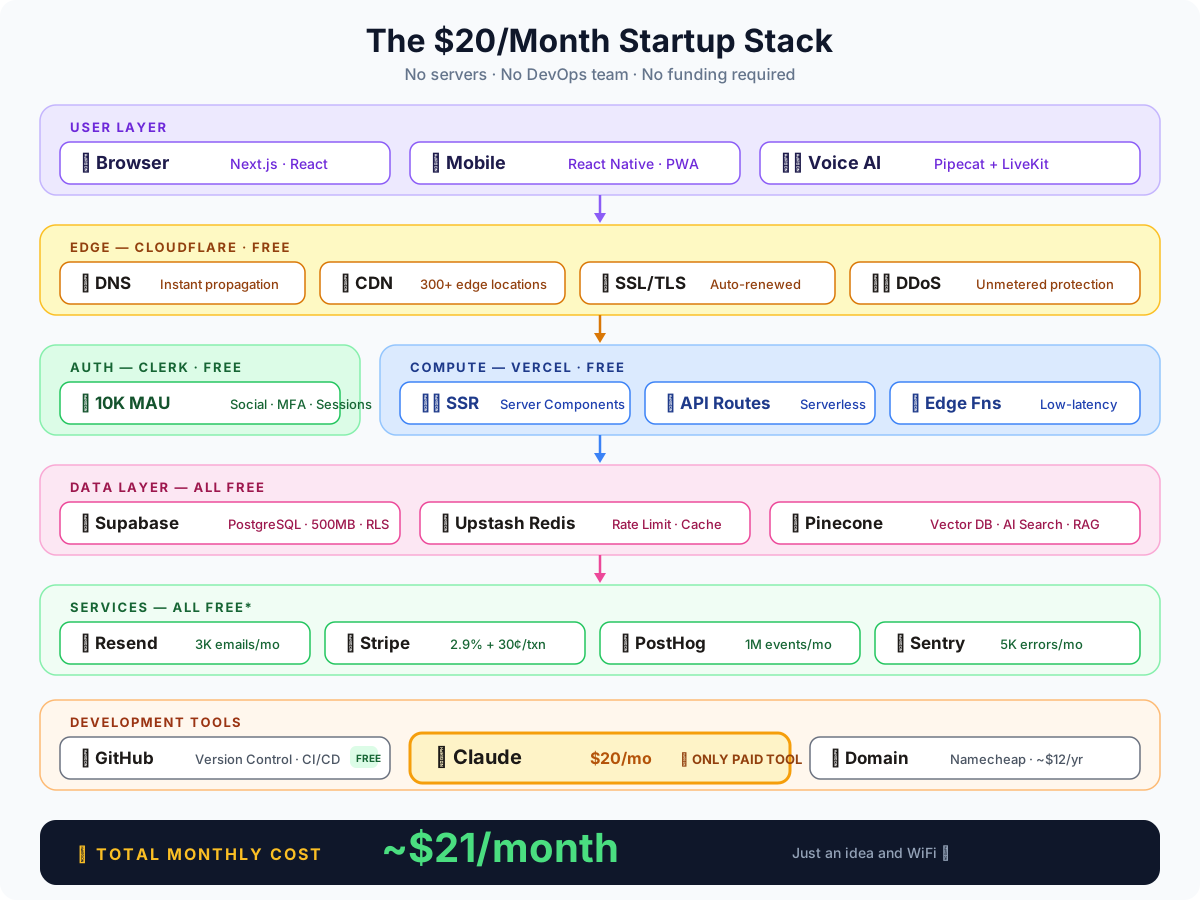
A comprehensive guide to the modern free-tier tech stack that lets you build, deploy, and scale a startup for roughly $20/month. No servers. No DevOps team. No funding required. Just an idea and WiFi.
90% of developers now use AI at work. But the real shift in March 2026 is agents moving from suggestion-mode to autonomous execution. Here's what that actually looks like in production systems and what breaks when you go too far too fast.
Daily English practice for tech professionals. Morning session covering System Architecture vocabulary — microservices, scalability, fault tolerance, load balancing, and cloud design patterns — with pronunciation guide, exercises, and real-world examples.
Daily English practice for tech professionals. Noon session — vocabulary deep dive with pronunciation, exercises, and real-world examples.
Gartner says 40% of enterprise apps will embed AI agents this year. But 40% of agentic projects will be scrapped by 2027. Here's what separates the teams that ship production agents from those that get stuck in pilots forever.
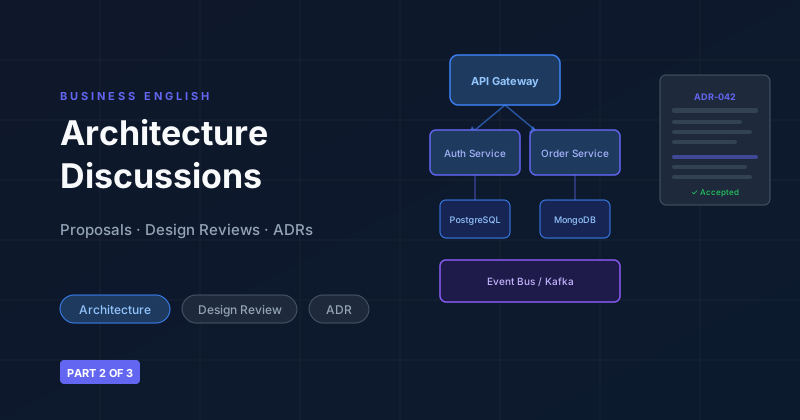
Practical English phrases and dialogue templates for Vietnamese Tech Leads running architecture reviews, proposing solutions, and handling technical disagreements in international teams.
Anthropic's Agent Teams feature in Claude Opus 4.6 lets multiple Claude Code instances work in parallel on the same codebase. Here's the architectural model, real-world performance data, and what actually changes for teams building production software.
The exact language patterns senior engineers use to propose technical solutions, run architecture review meetings, push back on bad ideas without damaging relationships, and write ADRs that actually get read and followed.
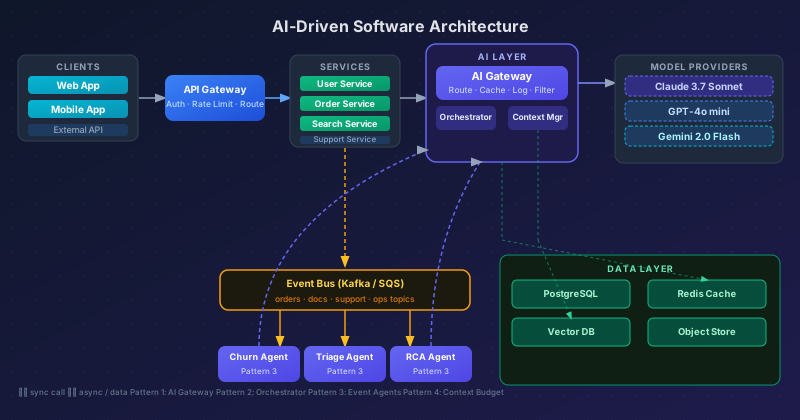
How AI is reshaping software architecture from the inside — ML-powered pattern selection, LLM orchestration, AI gateways, event-driven agents, and a full team implementation roadmap with diagrams and production-ready code.
GPT-5.4, Gemini 3.1 Pro, and Claude 4.6 are now neck-and-neck on benchmarks. When the models are equal, everything else becomes the differentiator. Here's how to choose.
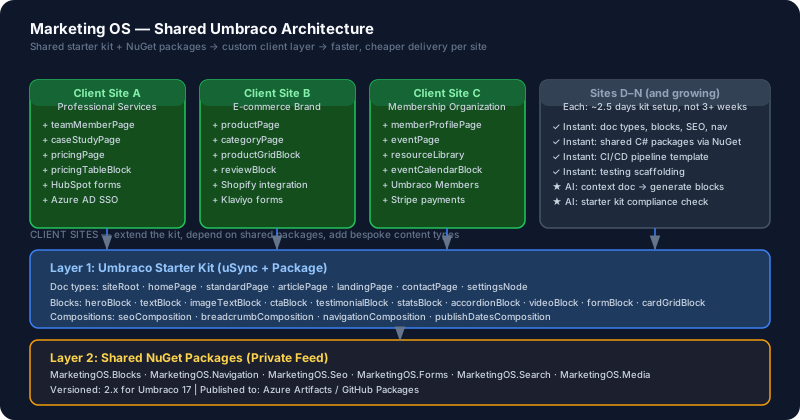
When you're managing 10, 20, or 50 Umbraco sites, individual project economics don't work. The Marketing OS framework: shared NuGet packages, shared document type libraries, AI-accelerated delivery, and how to reduce per-site migration cost by 50–70%.
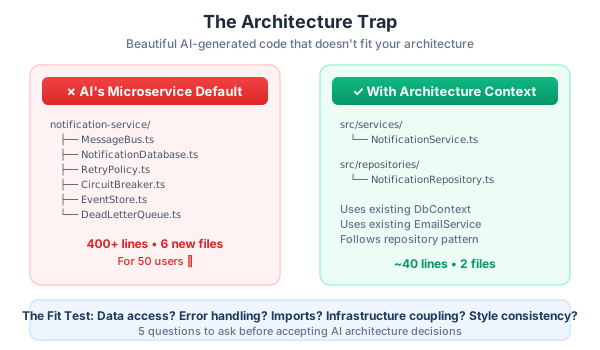
AI can generate impressive code that completely ignores your architecture. How to provide architectural context, enforce patterns, and know when to override AI suggestions.
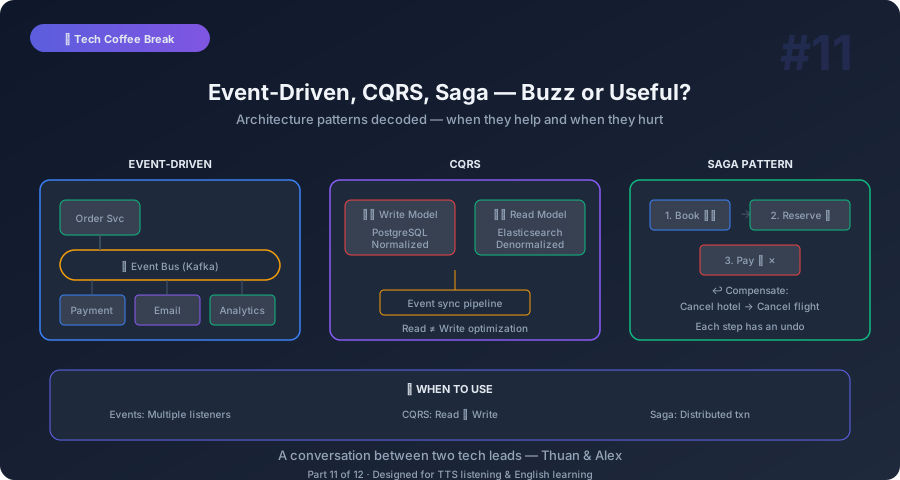
Architecture buzzwords demolished and rebuilt. Two tech leads explain when event-driven architecture, CQRS, and the Saga pattern are genuinely useful — and when they're just resume padding. Pizza delivery analogies included.
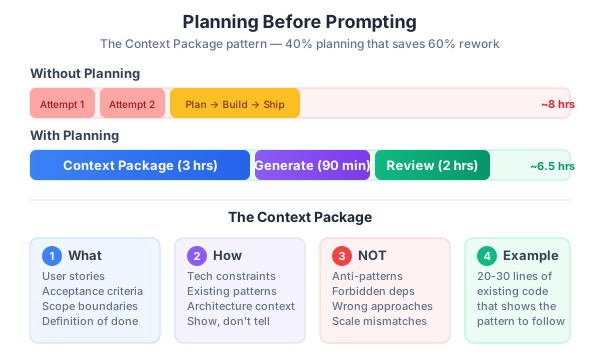
Most developers skip straight to 'generate code.' The teams that get real value from AI spend 40% of their time planning before writing a single prompt.
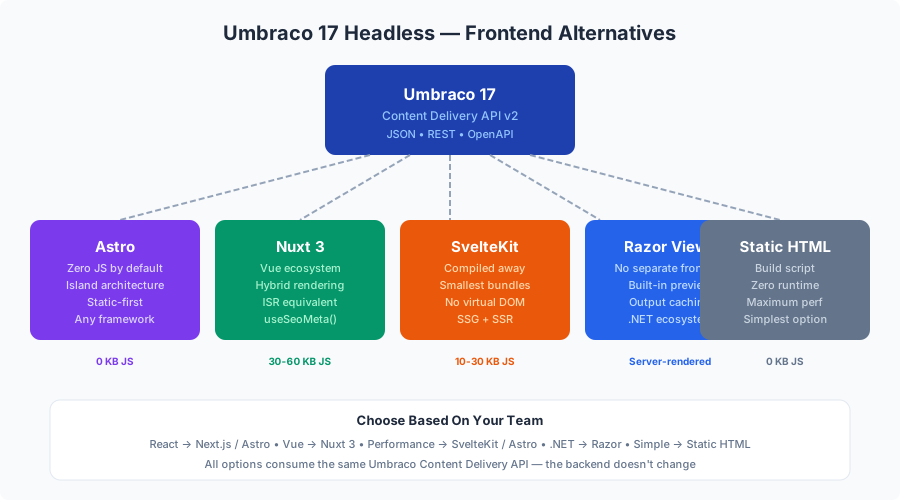
Not every team wants React. Here are five production-ready alternatives for building marketing websites with headless Umbraco 17 — from Astro and Nuxt to SvelteKit, .NET Razor, and even plain HTML.
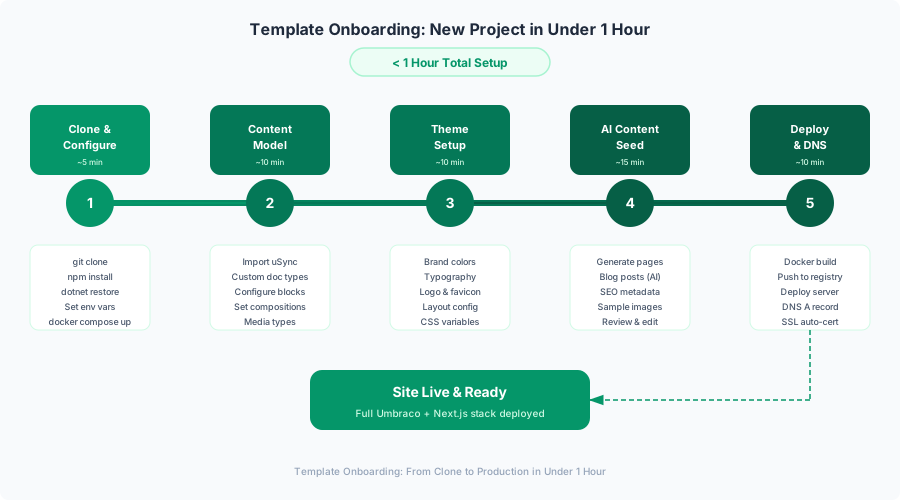
Turning MarketingOS into a reusable template: new client onboarding in under an hour, multi-tenant content management, cost analysis showing 70% reduction per site, lessons learned, and what I'd do differently.
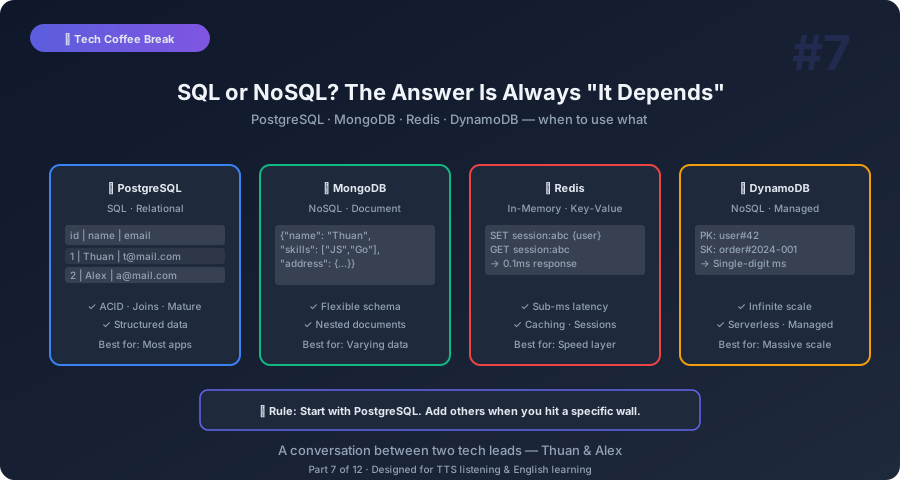
PostgreSQL, MongoDB, Redis, DynamoDB — when do you use what? Two tech leads break it down with filing cabinet analogies, real use cases, and zero religious wars.
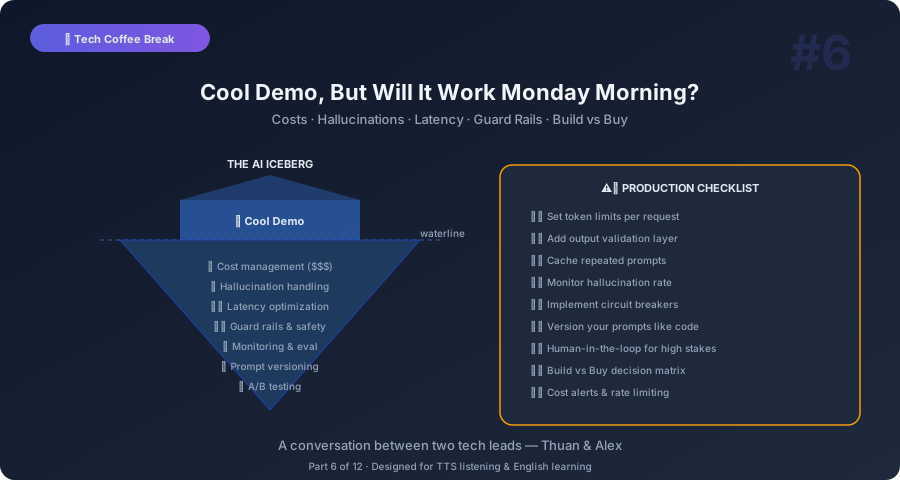
Putting AI into production is nothing like building a demo. Two tech leads discuss costs, hallucinations, latency, guard rails, and what actually breaks when real users hit your AI features.
The real cost of AI voice interviews, broken down per minute. Managed vs self-hosted economics, the three tipping points, and how to get from $3.45 per interview to under $1.00.
From 10 concurrent interviews to 10,000. LiveKit SFU mesh, stateless agent workers, Kubernetes auto-scaling, regional deployment, and the infrastructure patterns that handle hiring season surges.
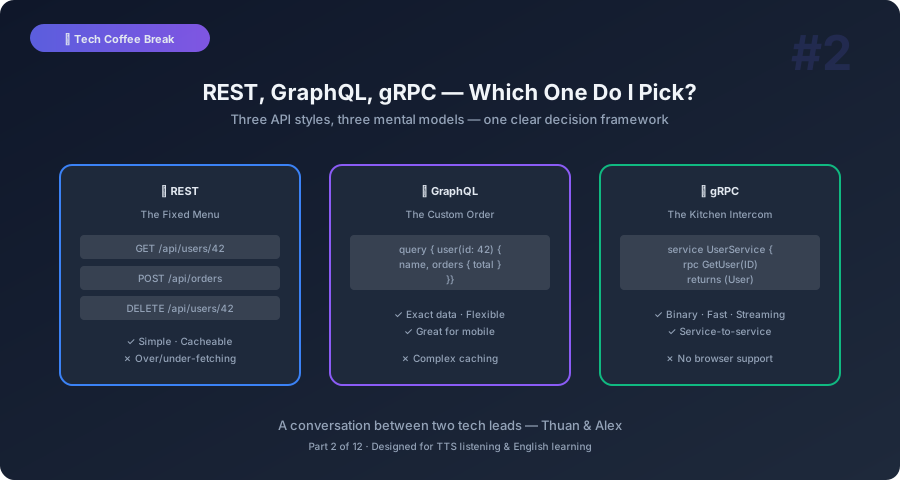
Two tech leads break down API design styles using restaurant analogies. Learn when to use REST, GraphQL, or gRPC — explained in casual English perfect for listening practice.
The framework debate almost split the team. Flutter, React Native, or going fully native? Here's our decision matrix and what we learned comparing all three.
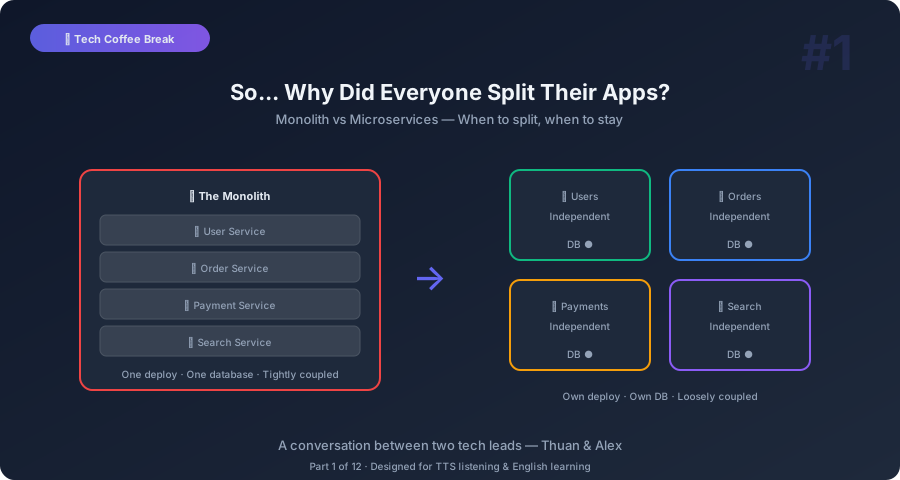
A casual conversation about microservices vs monoliths. Two tech leads explain when to split, when to stay, and why most teams get it wrong — in plain English you can listen to and learn from.
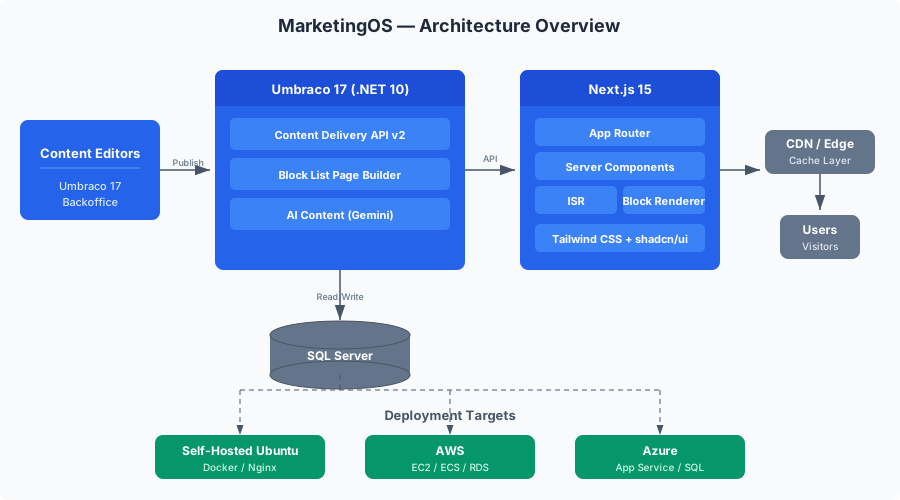
Why headless Umbraco 17 with Next.js is the sweet spot for reusable marketing websites, the architecture decisions behind MarketingOS, and setting up both projects with Clean Architecture on .NET 10.
Why research interviews need server-side voice agents, the three-tier architecture, room metadata as configuration transport, and the 100-500ms propagation latency nobody tells you about.
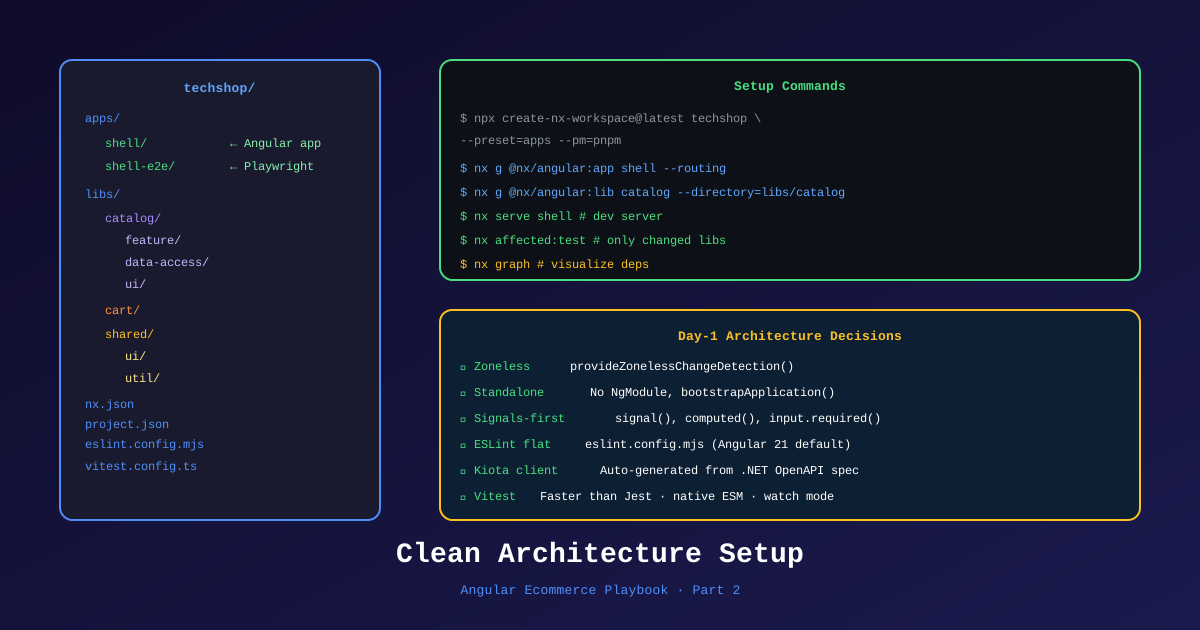
Setting up an Angular 21 ecommerce project from scratch. Nx monorepo, feature-based folder structure, ESLint flat config, Vitest, and auto-generated Kiota TypeScript API client from .NET 10.
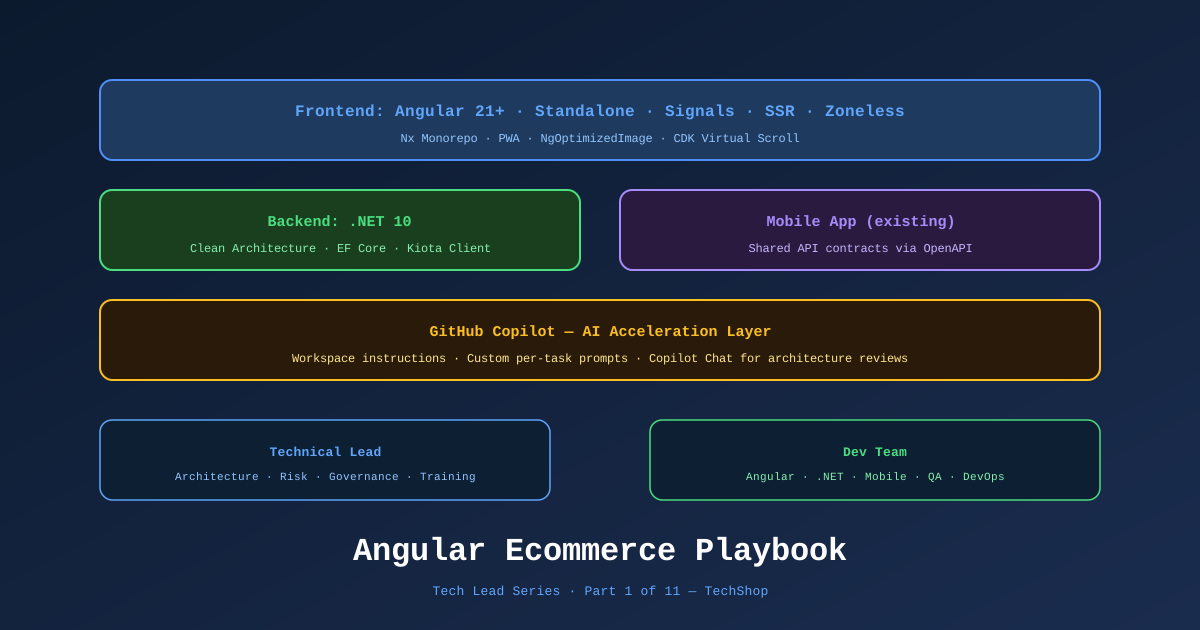
A Technical Lead's honest assessment of Angular 21 (released Nov 2025), .NET 10 LTS, and GitHub Copilot for an Ecommerce project. Architecture decisions, ADR templates, and what nobody tells you on day one.
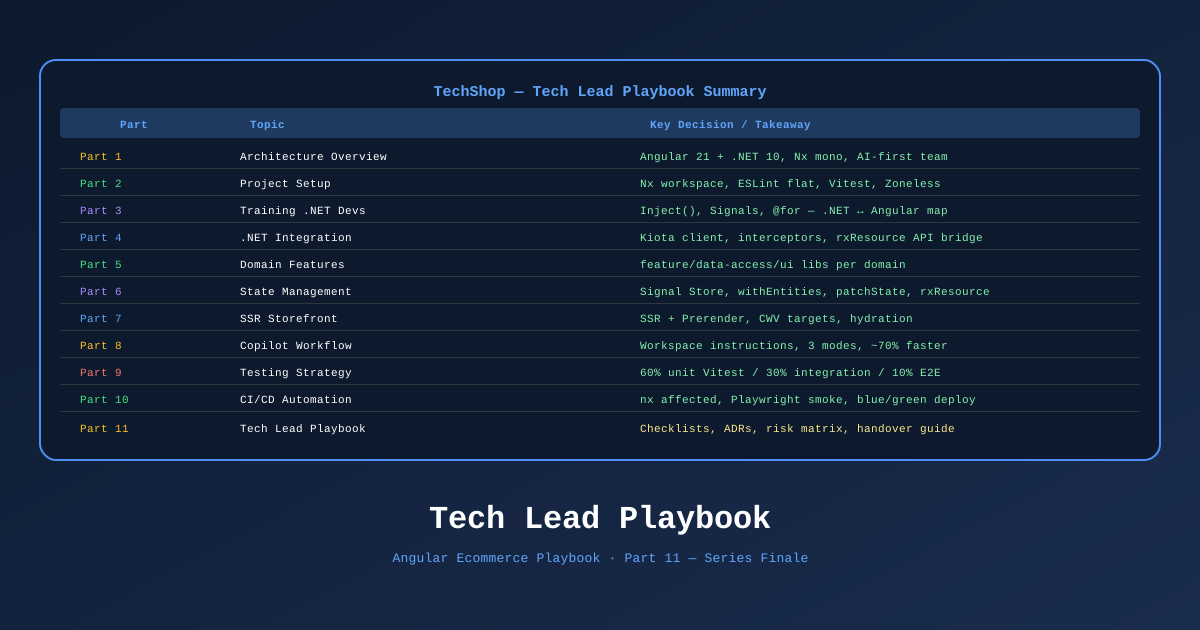
The Tech Lead's honest retrospective on Angular 21 + .NET 10 for an ecommerce project. What this stack does well, where it struggles, the risk register, and practical advice for teams starting this journey.
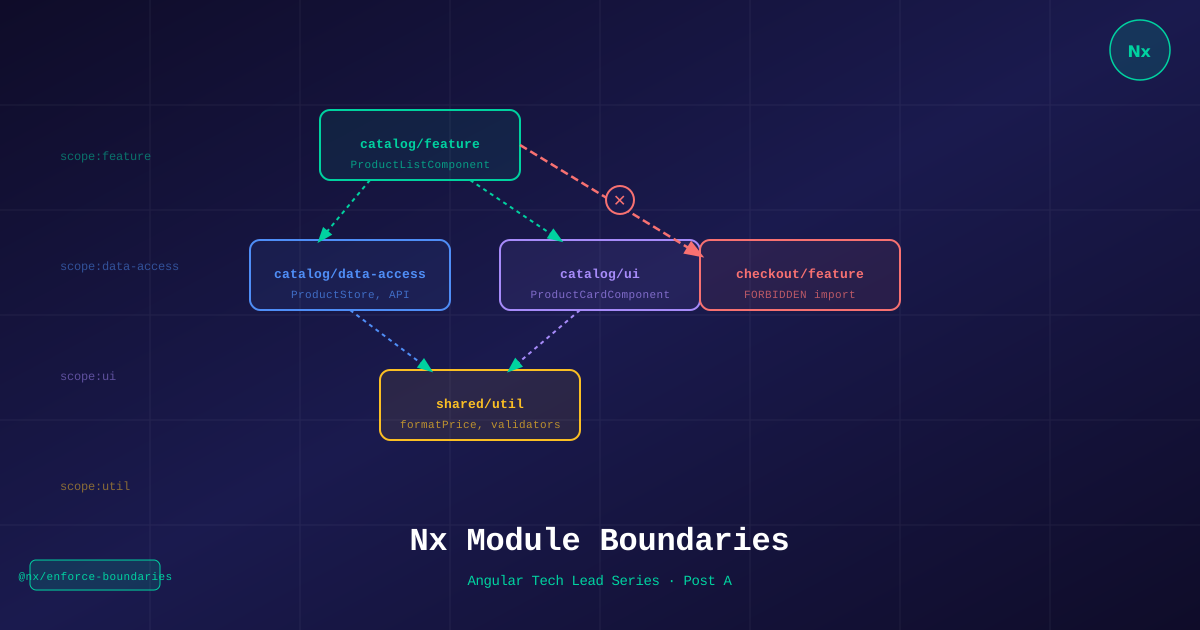
Post A — How to enforce Nx module boundary rules in Angular 21 to prevent spaghetti imports, protect domain separation, and keep teams independently productive in a monorepo.
Taking Kids Learn to production with Docker, CI/CD, OpenTelemetry observability, performance optimization, Native AOT considerations, and an honest retrospective on what worked and what was over-engineered.
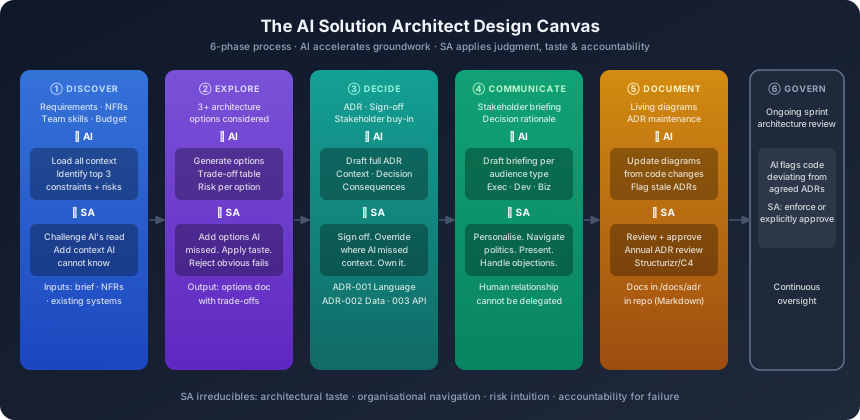
How AI transforms the Solution Architect role: AI-assisted architecture diagramming, ADR generation, trade-off analysis, technology selection rationale, and the architectural taste that only experience provides.
Testing strategy per layer for Kids Learn. Domain unit tests without mocks, Application tests with NSubstitute, integration tests with Testcontainers, and NetArchTest for enforcing the Dependency Rule.
Why pure Clean Architecture scatters features across projects, how Vertical Slice Architecture solves this, and the hybrid approach we use in Kids Learn.
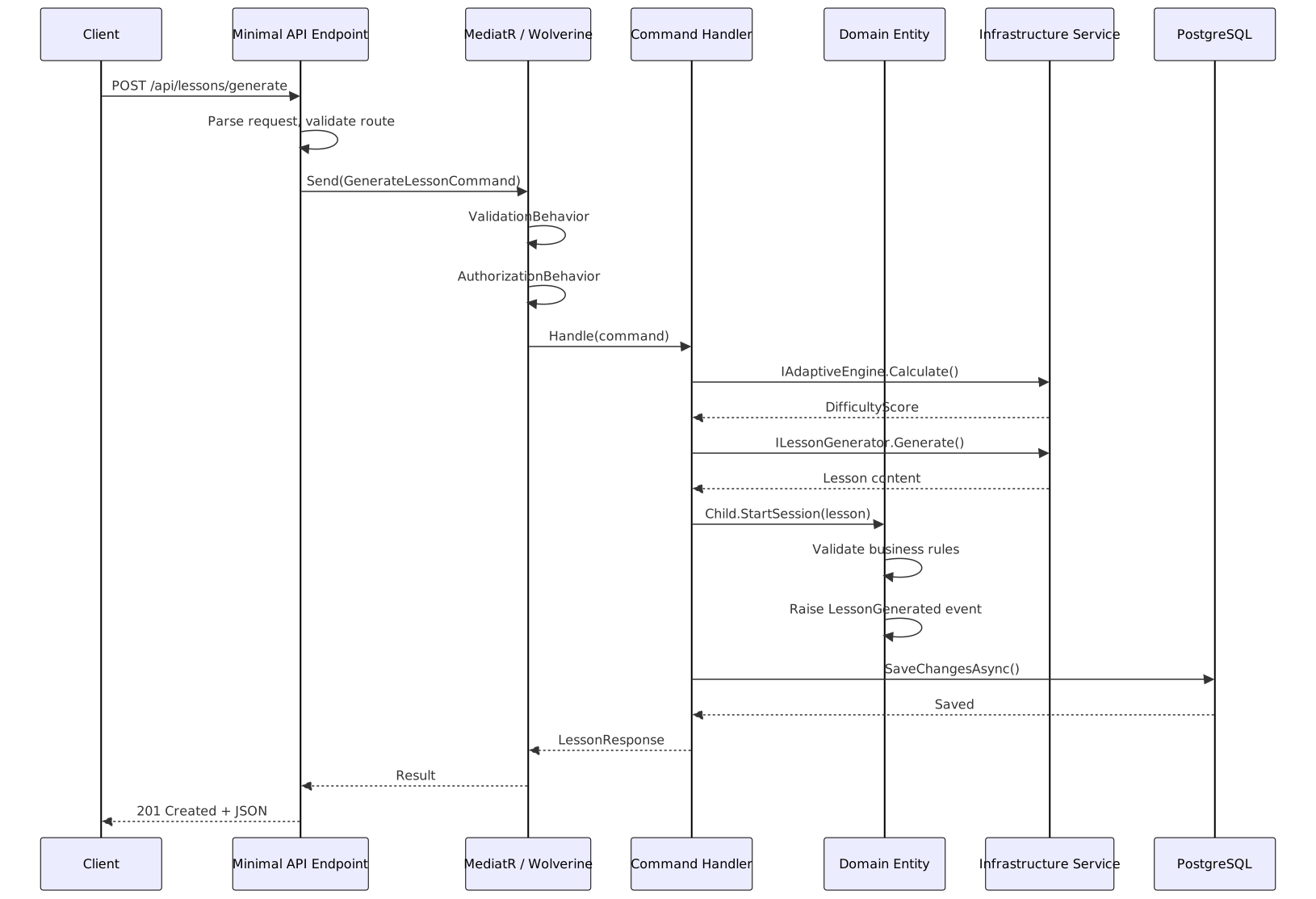
Implementing Infrastructure with EF Core 10 (pgvector, JSON columns), AI service integrations, Minimal APIs with Route Groups, authentication, and wiring it all together in Program.cs.
The cascaded STT→LLM→TTS pipeline gives you control. Speech-to-speech models give you speed. Here's how to choose — and why the best systems use both.
Command/Query separation for Kids Learn, pipeline behaviors, the MediatR licensing debate, Wolverine as the modern alternative, and the Repository Pattern in 2026.
The landscape of real-time voice AI has shifted. Gemini Live, OpenAI Realtime, Bedrock Nova Sonic, and Grok make sub-500ms AI conversations possible. Here's the reference architecture for building a production voice interview platform.
Rich domain models for Kids Learn with C# 14. Entities with invariants, value objects, domain events, aggregate roots, and architecture tests to enforce the rules.
What Clean Architecture actually means in .NET 10, the Dependency Rule explained with real code, C# 14 features that matter, and setting up the Kids Learn solution structure.
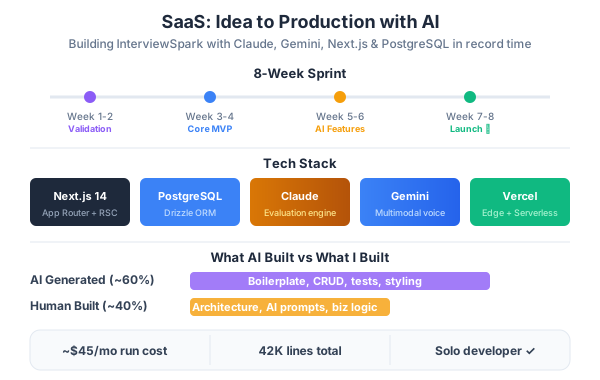
How I designed, analyzed, implemented, and tested Kids Learn — an AI-powered educational SaaS platform — using Claude as my development partner, Gemini for AI features, Next.js, PostgreSQL, and pgvector. A complete walkthrough from napkin sketch to production.
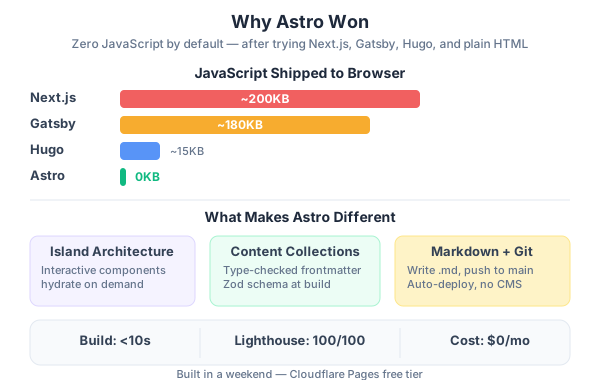
After trying Next.js, Gatsby, Hugo, and plain HTML for personal sites, I finally found the framework that fits. Here's why Astro won.
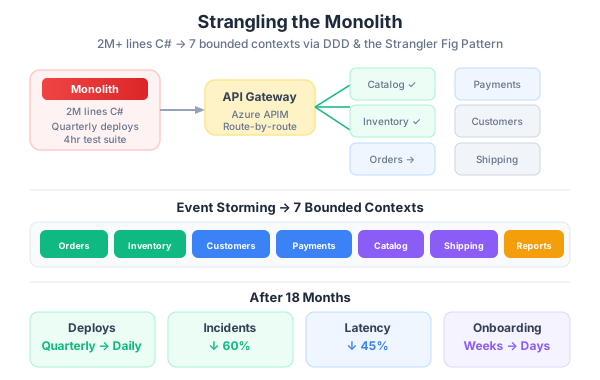
The story of migrating a 2M+ line retail platform to microservices. What the strangler pattern actually looks like when you're in the middle of it.
Get notified when I publish new posts on AI, .NET, cloud architecture and more.