
JOURNAL
Shadow & Speak: A 5-Minute Daily Drill for Vietnamese Developers
Build spoken English fluency fast with shadowing scripts, tongue twisters, and pronunciation drills designed for Vietnamese tech professionals.

On this page
Most Vietnamese developers can read and write English well. But speaking? That’s where confidence breaks down. The good news: fluency is a physical skill — and like any physical skill, it improves with daily repetition.
This post gives you a complete 5-minute daily drill. No grammar rules. No theory. Just speak, repeat, and rewire.
Why Shadowing Works
Shadowing means you listen to a sentence and immediately repeat it — matching rhythm, stress, and intonation. Language researchers call this “synchronous imitation.” Your brain stops translating and starts pattern-matching.
For Vietnamese speakers, the biggest challenges in English are:
- Final consonants: “task”, “fixed”, “helped” — Vietnamese doesn’t end syllables with these sounds
- The th sounds: “this” (voiced) vs “think” (unvoiced)
- Contractions in fast speech: “I’d’ve done it”, “we’re gonna need to…”
- Word stress shifting meaning: “REcord” (noun) vs “reCORD” (verb)
The drills below target all four.
📚 Vocabulary
1. Cadence /ˈkeɪdəns/ The rhythm and flow of speech. “Try to match the cadence of native speakers when shadowing.”
2. Intonation /ˌɪntəˈneɪʃn/ The rise and fall of your voice. “Your intonation signals whether you’re asking or telling.”
3. Articulate /ɑːrˈtɪkjuleɪt/ (verb) To pronounce clearly and distinctly. “Can you articulate the requirements one more time?”
4. Voiced /vɔɪst/ A sound made with the vocal cords vibrating — like “v”, “z”, “th” in “the”. “The ‘th’ in ‘that’ is voiced.”
5. Stress /stres/ Emphasis on a syllable or word. “Put stress on the key word to change the meaning.”
6. Liaison /liˈeɪzɑːn/ In English, sounds that link between words: “turn it on” sounds like “tur-ni-ton”. “Liaison makes fast speech hard to follow at first.”
7. Chunk /tʃʌŋk/ A phrase you learn as one unit. “Learn phrases as chunks, not word by word.”
🗣️ Key Phrases to Say Out Loud
Practice each phrase 3× out loud. Focus on the stressed words (shown in CAPS).
- “I THINK we should REVISIT this.” /aɪ θɪŋk wi ʃʊd riˈvɪzɪt ðɪs/
- “Let me WALK you THROUGH it.” /lɛt mi wɔːk ju θruː ɪt/
- “DOES that MAKE sense?” /dʌz ðæt meɪk sɛns/
- “I’ll PUSH a FIX for THAT.” /aɪl pʊʃ ə fɪks fər ðæt/
- “We’re BLOCKED on the AUTH service.” /wɪər blɒkt ɒn ðə ɔːθ ˈsɜːvɪs/
- “Can we TAKE this OFFLINE?” /kæn wi teɪk ðɪs ˈɒflaɪn/
- “I’d LIKE to PUSH BACK on THAT.” /aɪd laɪk tə pʊʃ bæk ɒn ðæt/
- “What’s the IMPACT if we DELAY?” /wɒts ðə ˈɪmpækt ɪf wi dɪˈleɪ/
⏱️ 5-Minute Drill — Read This Aloud Right Now
Set a timer. Go through each section once without stopping.
MINUTE 1 — Warm Up: Tech Tongue Twisters (say each 3×)
“Fixed bugs, pushed code, flipped the switch.”
“The tests failed, then they passed, then failed again.”
“Three threads threw exceptions through the thread pool.”
These force your mouth to hit final consonants: -d, -t, -d, -st, -st, -ds.
MINUTE 2 — The Daily Standup Script (shadow this)
Read it once normally. Then read it again faster, linking words together:
“Good morning, everyone. Yesterday I worked on the authentication service — I fixed the token refresh bug and merged the PR. Today I’m going to tackle the rate limiting logic. No blockers right now, but I might need help with the database migration later.”
Key sounds to nail:
- “authentication” = /ɔːˌθɛntɪˈkeɪʃn/ — 5 syllables, stress on 3rd
- “migration” = /maɪˈɡreɪʃn/ — not “mi-GRAY-shun” with a Vietnamese lilt
- “blocker” — don’t forget the final -er sound
MINUTE 3 — Pronunciation Drill: The TH Problem
Vietnamese has no th sound. Your tongue must go between your teeth.
Unvoiced th (like “think”) — practice:
think / thank / through / three / threshold / both / health / growth
Voiced th (like “this”) — practice:
this / that / the / them / there / other / rather / although
Now say this sentence slowly:
“I think that the other team should handle this.”
MINUTE 4 — Code Review Dialogue (read both roles)
You: “Hey, I left a few comments on your PR — mainly around the error handling.”
Teammate: “Yeah, I saw. What’s your concern with it?”
You: “So when the API returns a 500, we swallow the error and return null. I’d rather we throw and let the caller decide.”
Teammate: “Makes sense. I’ll update it and repush.”
You: “Perfect. The rest looks good — nice clean logic.”
Read it twice: once slowly, once at natural conversational speed.
MINUTE 5 — Difficult Words for Vietnamese Speakers (say each 5×)
These are words Vietnamese developers often mispronounce:
| Word | Wrong | Right |
|---|---|---|
| develop | de-VE-lop | dɪˈvɛləp |
| infrastructure | in-fra-STRUC-ture | ˈɪnfrəˌstrʌktʃər |
| regularly | re-GU-lar-ly | ˈrɛɡjʊlərli |
| particularly | par-TI-cu-lar-ly | pəˈtɪkjʊlərli |
| especially | es-PEE-ci-ally | ɪˈspɛʃəli |
| vulnerability | vul-NE-ra-bi-li-ty | ˌvʌlnərəˈbɪlɪti |
🎯 Practice Now
Exercise 1 — Record Yourself Open your phone’s voice recorder. Say the standup script from Minute 2 without reading. Listen back. What sounds choppy? Repeat until it flows.
Exercise 2 — Shadow a YouTube Video Search: “engineering manager standup English” or “code review walkthrough english”. Play 30 seconds. Pause. Repeat exactly what you heard. Do 5 rounds.
Exercise 3 — The Slow-Mo Trick Pick any sentence from the dialogue above. Say it at 50% speed, exaggerating every final consonant. Then say it at normal speed. Your mouth “remembers” the correct positions.
Exercise 4 — Sticky Note Challenge Write 3 phrases from the Key Phrases section on sticky notes. Put them on your monitor. Say one aloud every time you take a break today.
The Rule: One Minute is Enough
You don’t need 30 minutes a day. You need consistency. One minute of focused speaking practice every morning trains your muscle memory faster than an hour of passive listening.
Start with the tongue twisters. Add the standup script. Build from there.
Fluency isn’t about knowing more words. It’s about making words come out naturally — and that only happens when you actually open your mouth and speak.
Tomorrow, try the drill again. Notice what feels easier than today.
Related reading
07 Oct 2026 · 4 min read
ai
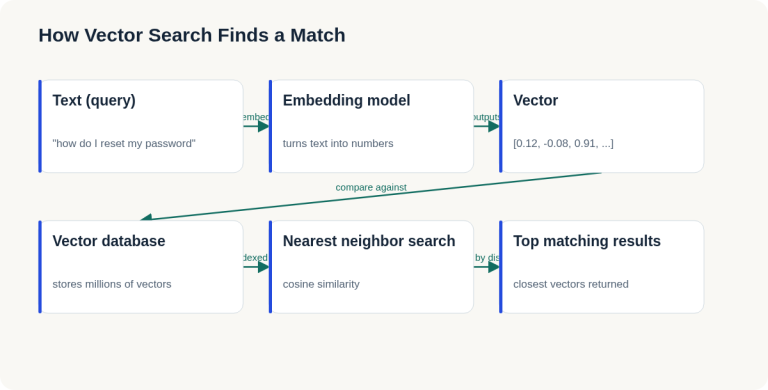
English Lesson — Tuesday Morning: Embeddings & Vector Search Vocabulary
Daily English practice for tech professionals: embed, vector database, and nearest neighbor search vocabulary with pronunciation and exercises.
Read more
05 Oct 2026 · 4 min read
english-lesson
English Lesson — Monday Morning: Networking & API Reliability Vocabulary
Daily English practice for tech professionals. Morning session covering timeout, retry, and API reliability vocabulary with pronunciation guide, exercises, and real-world examples.
Read more04 Oct 2026 · 4 min read
english-lesson
English Lesson — Sunday Morning: Weekly Review — Top 5 Words & Idioms
Daily English practice for tech professionals. Morning session covering a review of this week's top words and idioms with pronunciation guide, exercises, and real-world examples.
Read more
Discussion
Comments are reviewed before publication. Your email is kept private.