
JOURNAL
English Lesson — Wednesday Evening: How to Explain Complex Systems Simply
Daily English practice for tech professionals. Evening session — speaking practice, review, and real-world scenarios. Wednesday review: all architecture vocabulary from today + communication techniques for explaining complex systems to anyone.

On this page
Wednesday Evening: How to Explain Complex Systems Simply
You learned 9 architecture terms today. Tonight is not about adding more — it is about using what you have. The most valuable engineering skill is not knowing the terms. It is explaining them to someone who does not.
Word of the Day: Simplify
| Pronunciation | /ˈsɪmplɪfaɪ/ |
| Vietnamese | đơn giản hóa — làm cho thứ gì đó dễ hiểu hơn mà không làm mất ý nghĩa cốt lõi |
| Stress | SIM-pli-fy — stress the first syllable |
Pronunciation links:
- Cambridge Dictionary
- YouGlish — hear it in real tech talks
- YouTube — How to Explain Technical Concepts Simply
3 real-world examples:
- “Let me simplify — instead of talking about circuit breakers and downstream failures, think of it as a fuse box. When one thing overloads, it disconnects before everything burns down.”
- “We need to simplify this architecture diagram before the stakeholder meeting. Half the room has never seen a service mesh.”
- “The junior developers are struggling. Can you simplify your explanation of CQRS? Start with the problem it solves, not the pattern name.”
Why senior engineers use this constantly: When you simplify well, you demonstrate deeper understanding, not shallower. Anyone can explain complexity with complex words. Experts explain complexity simply.
Wednesday Vocabulary Review
Today’s 9 terms — can you use each one in a sentence?
| Term | IPA | Vietnamese | Quick Example |
|---|---|---|---|
| idempotent | /aɪˈdɛmpətənt/ | an toàn khi gọi nhiều lần | “Our payment endpoint is idempotent — retry safely.” |
| scalability | /ˌskeɪləˈbɪlɪti/ | khả năng mở rộng | “We designed for scalability from day one.” |
| fault tolerance | /fɔːlt ˈtɒlərəns/ | khả năng chịu lỗi | “Three replicas gives us fault tolerance.” |
| eventual consistency | /ɪˈventʃuəl kənˈsɪstənsi/ | nhất quán cuối cùng | “Reads may lag — eventual consistency.” |
| circuit breaker | /ˈsɜːkɪt ˈbreɪkər/ | ngắt mạch khi service lỗi | “Circuit breaker opened at 3 AM.” |
| sharding | /ˈʃɑːdɪŋ/ | phân mảnh database | “We shard by user geography.” |
| CQRS | /siː kjuː ɑːr ɛs/ | tách read/write model | “CQRS separates our order writes from reads.” |
| read replica | /riːd ˈrɛplɪkə/ | bản sao chỉ đọc | “Analytics hit the read replica only.” |
| service mesh | /ˈsɜːvɪs mɛʃ/ | lớp mạng microservices | “Istio is our service mesh — handles mTLS.” |
Self-test: Cover the “Quick Example” column and say one sentence for each term out loud. No peeking.
The Skill: Explaining Complex Systems Simply
Every engineer needs to explain their system to someone who does not understand it — a new teammate, a product manager, a CTO who last coded in 2015.
Here is the 3-step formula:
Step 1: Start with the problem, not the solution.
- Wrong: “We use CQRS because the read and write models need to be decoupled.”
- Right: “Our database was getting overloaded. Reads from analytics were slowing down writes from real users. So we separated them.”
Step 2: Use an analogy from real life.
- Circuit breaker = a fuse in your house
- Sharding = splitting a phone book into A–M and N–Z volumes
- Service mesh = a phone exchange that routes all calls and records them
- Read replica = a photocopy of a document — you read the copy, you write on the original
Step 3: Come back to the technical term.
- “That is what engineers call a circuit breaker. Now you know what it means and why it exists.”
Pronunciation Practice: The Explainer’s Sentence
Say this aloud. This is the sentence pattern a senior engineer uses constantly:
“Essentially, what we are doing here is separating the read path from the write path — that way, neither one slows down the other.”
Breakdown:
- Essentially = /ɪˈsɛnʃəli/ — ih-SEN-shuh-lee (4 syllables — do not say “essen-CHEE-lee”)
- separating = /ˈsɛpəreɪtɪŋ/ — SEP-uh-ray-ting (stress on SEP)
- neither… nor… = /ˈnaɪðər/ — NAY-ther (not “NEE-ther” — both are acceptable but NAY-ther sounds more professional in UK/AU English)
Rhythm tip: English explanations use a slow-fast-slow rhythm. Slow down on key technical terms. Speed up on connective words (“that way”, “neither one”, “so that”). This makes the listener focus on what matters.
Practice phrases (say each 3 times):
- “Essentially, what this means is…”
- “Think of it like a fuse box — when one thing overloads…”
- “The way we solved this was by…”
- “That is what engineers call a…”
Exercise 1: Fill in the Blank
Choose the best word: simplify / circuit breaker / sharding / eventual consistency / read replica
- “We need to _______ this explanation — our CTO is non-technical.”
- “Downstream failures were cascading, so we added a _______ to isolate the payment service.”
- “Our user table has 800 million rows. We solved it with _______ — split by region.”
- “The dashboard shows slightly stale data because of _______ — the replica lags by a few seconds.”
- “All analytics queries go to the _______ — never the primary database.”
Answers
- simplify
- circuit breaker
- sharding
- eventual consistency
- read replica
Exercise 2: Translate and Explain Simply
Take each sentence and say it in English. Then explain it using a real-life analogy.
- “Chúng tôi dùng CQRS vì write model và read model có requirement khác nhau.”
- “Service mesh xử lý mTLS giữa tất cả các services — app code không cần biết về networking.”
- “Circuit breaker mở khi payment service fail 5 lần liên tiếp trong 10 giây.”
Suggested Answers
- “We use CQRS because the write model and read model have different requirements.” Analogy: “It is like having a separate cashier counter and a separate customer service counter — same store, different queues, different optimizations.”
- “The service mesh handles mutual TLS between all services — application code does not need to know about networking.” Analogy: “It is like the postal service encrypting every letter automatically — you just write the letter, the postal system handles the security.”
- “The circuit breaker opens when the payment service fails 5 consecutive times within 10 seconds.” Analogy: “Like a fuse that blows after too many surges — it stops the damage from spreading.”
Idiom of the Day: “In a nutshell”
Vietnamese: Tóm lại / Nói ngắn gọn — dùng khi muốn tóm tắt một thứ phức tạp thành một câu.
Examples:
- “In a nutshell, our architecture separates read traffic from write traffic so neither one affects the other.”
- “I know the full technical explanation is complex — but in a nutshell, the circuit breaker stops bad requests from crashing the whole system.”
How to use it: “In a nutshell” is a signal to the listener: “I am about to give you the essential point, not the full detail.” Use it when you want to sound confident and clear. It works in meetings, in documentation, and in interviews.
Speaking Challenge: The 60-Second System Explainer
Setup: Imagine a product manager just joined your team. They have zero engineering background. You have 60 seconds to explain how your backend works.
Your script must include:
- At least 3 of today’s architecture terms
- At least 2 analogies
- The phrase “in a nutshell” or “essentially”
Starter sentence: “Let me give you a quick overview of how our system is organized…”
Do it now:
- Set a 60-second timer.
- Speak without stopping. If you get stuck on a word, use an analogy.
- Replay in your head: Did you use the terms correctly? Did the explanation flow?
Remember: Speed is not the goal. Clarity is.
Review: Architecture Terms Pronunciation Drill
Say each phrase once, slowly. Then say the whole list at normal speed:
- circuit breaker pattern
- sharding by partition key
- CQRS with a read replica
- service mesh with mutual TLS
- eventual consistency model
- fault tolerance through redundancy
Aim for smooth, connected speech — no hesitations between words.
Evening Challenge
Before tomorrow morning: Find one technical concept in your current project. Write a 2-sentence explanation of it using an analogy — as if you were explaining it to your non-technical friend.
Say it out loud once. That is your speaking practice for today.
Tomorrow: Thursday Morning — Communication & Email Phrases: Writing Professional Emails in English
Related reading
08 Oct 2026 · 4 min read
architecture
English Lesson — Wednesday Morning: Failover & High Availability Vocabulary
Wednesday architecture English: failover, pronunciation drills, a vocabulary table, two exercises, and an idiom every on-call engineer should know.
Read more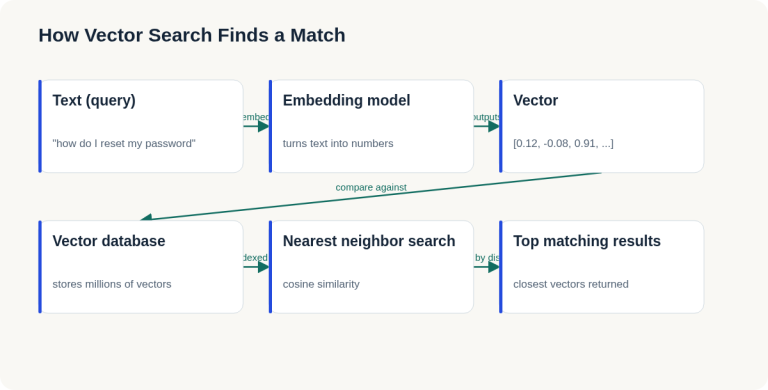
07 Oct 2026 · 4 min read
ai
English Lesson — Tuesday Morning: Embeddings & Vector Search Vocabulary
Daily English practice for tech professionals: embed, vector database, and nearest neighbor search vocabulary with pronunciation and exercises.
Read more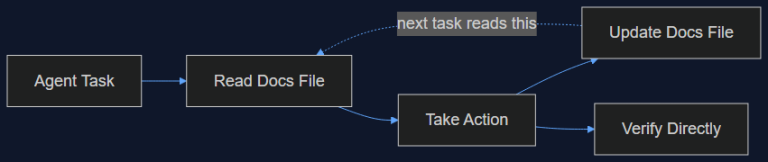
06 Oct 2026 · 5 min read
agentic coding
My Agent Didn't Forget. It Never Wrote Anything Down.
A Hacker News post about agent memory landed the same week I'd debugged a real dedup failure caused by exactly the problem it describes. I tested the fix against my own incident — here's what held up and what didn't.
Read more
Discussion
Comments are reviewed before publication. Your email is kept private.