
JOURNAL
English Lesson — Wednesday Evening: Architecture Review & Explaining Systems Simply
Daily English practice for tech professionals. Evening session — architecture vocab review, speaking practice, and how to explain complex systems to non-technical stakeholders.
On this page
Word of the Day: abstraction
IPA: /æbˈstrækʃən/ Part of speech: noun Vietnamese: sự trừu tượng hóa / ẩn đi sự phức tạp
Core meaning: Hiding complexity behind a simpler interface — so that the person using it does not need to understand what is happening underneath.
This concept is fundamental in software engineering AND in communication. When you explain a complex system to a non-technical person, you are practising abstraction.
Examples in context
1. Explaining an API to a Product Manager
“Think of our API as a vending machine. You press a button and get what you want — you don’t need to know how the machine works inside. That’s the abstraction we’ve built.”
2. Explaining Kubernetes to a CEO
“Kubernetes is an abstraction over our servers. Instead of manually managing hundreds of machines, we just tell the system what we need and it figures out the details automatically.”
3. Explaining a database abstraction layer to a junior developer
“The ORM gives us an abstraction over raw SQL. We write code in Python, and the library translates it into database queries — we don’t have to think about the underlying engine.”
Learn more
- Cambridge Dictionary — abstraction
- Fireship — Abstraction explained in 100 seconds
- ByteByteGo — System Design concepts
Architecture Vocabulary Review
Today completes a full day of architecture vocabulary. Review all five terms below:
| Phrase | Vietnamese | Example sentence |
|---|---|---|
| abstraction | sự trừu tượng hóa | “The API is an abstraction — callers don’t need to know how data is stored.” |
| idempotent | bất biến khi lặp lại | “Our payment endpoint is idempotent, so retrying the same request never double-charges the user.” |
| orchestration | điều phối hệ thống | “The orchestration layer coordinates all microservices so each one does its job at the right time.” |
| fault-tolerant | chịu lỗi / chịu được lỗi | “A fault-tolerant system keeps running even when one of its components fails.” |
| scalability | khả năng mở rộng | “We chose this architecture because of its horizontal scalability — we can add more nodes as traffic grows.” |
Quick memory tip: Think of these five words as a story. You design an abstraction → so that services can be orchestrated cleanly → each operation is idempotent so retries are safe → together this makes the system fault-tolerant → and the whole design enables scalability.
Pronunciation Practice
Stress pattern: ab-STRAC-tion
The stress falls on the second syllable: STRAC.
ab - STRAC - tion
 1  -   2   -  3
Say it aloud three times, tapping your desk on the stressed syllable:
ab-STRAC-tion / ab-STRAC-tion / ab-STRAC-tion
Verb vs. noun contrast
| Form | Stress | Example |
|---|---|---|
| ab-STRACT (verb) | Stress on second syllable | “We need to ab-STRACT this logic into a service.” |
| ab-STRAC-tion (noun) | Stress on second syllable | “The ab-STRAC-tion makes it easier to test.” |
Both stress the second syllable — but notice the noun adds a soft -tion ending (/ʃən/) which should be light and unstressed.
Full practice sentence
Read this sentence slowly, then at normal speed:
“The or-CHES-tra-tion layer pro-VIDES an ab-STRAC-tion o-ver i-DEM-po-tent op-er-A-tions, MA-king the sys-tem FAULT-tol-er-ant and hor-i-ZON-tal-ly SCA-la-ble.”
Rhythm tip: English is stress-timed, not syllable-timed. The stressed syllables below carry the rhythm — the unstressed syllables between them are compressed:
STRAC … VIDES … STRAC … DEM … A … MA … FAULT … ZON … SCA
Tap the rhythm. Do not give equal weight to every syllable the way Vietnamese does.
Exercises
Exercise 1: Fill in the blank
Choose the correct word: abstraction / orchestration / idempotent / fault-tolerant / scalability
- “Before your presentation, step back — the CEO wants ______________, not implementation details.” (hint: a noun meaning the simplified view)
- “We made the delete endpoint ______________ so that clicking the button twice doesn’t cause an error.” (hint: safe to repeat)
- “The new message queue is an ______________ over our raw database writes — the caller doesn’t need to know how messages are stored.” (hint: hiding complexity)
- “The ______________ service watches all our microservices and restarts any that crash.” (hint: coordination)
- “Horizontal ______________ means we can handle ten times the traffic just by adding more servers.” (hint: the ability to grow)
See Answers
- abstraction — “the CEO wants abstraction, not implementation details”
- idempotent — “the delete endpoint is idempotent“
- abstraction — “an abstraction over our raw database writes”
- orchestration — “the orchestration service watches all our microservices”
- scalability — “horizontal scalability means we can handle ten times the traffic”
Exercise 2: Explain it simply
Translate each technical concept into plain English that a non-technical manager would understand. A Vietnamese hint is given to help you think through the meaning first.
Concept 1:
“We use Kubernetes for container orchestration with auto-scaling and self-healing pods.”
Vietnamese hint: Chúng tôi dùng Kubernetes để tự động quản lý và khởi động lại các dịch vụ khi chúng gặp lỗi, và tự mở rộng khi lượng người dùng tăng.
Concept 2:
“Our payment service is idempotent — retrying a failed transaction will not create duplicate charges.”
Vietnamese hint: Nếu thanh toán bị lỗi và khách hàng nhấn lại, hệ thống đủ thông minh để không trừ tiền hai lần.
Concept 3:
“The API gateway provides an abstraction layer over our microservices, routing requests and handling auth centrally.”
Vietnamese hint: API gateway là cổng duy nhất cho mọi yêu cầu — ẩn đi sự phức tạp của các dịch vụ bên trong, xử lý xác thực một chỗ.
See Answers
Concept 1 — plain English:
“We use a tool that automatically manages all our backend services. If one crashes, it restarts itself. If traffic spikes, it adds more capacity — without us having to do anything manually.”
Concept 2 — plain English:
“If a payment fails and the customer tries again, our system is smart enough to recognise the duplicate and not charge them twice. It’s safe to retry.”
Concept 3 — plain English:
“All requests from our app go through a single front door. That door handles security checks and then routes each request to the right internal service. The app never talks directly to the backend — it only talks to the front door.”
What made these good explanations?
- No technical acronyms
- Use analogies the listener already understands (front door, traffic, capacity)
- Focus on the outcome for the business, not the mechanism
Idiom of the Day: “the big picture”
Vietnamese: nhìn toàn cảnh / thấy rừng trước khi thấy cây Meaning: The overall view of a situation — stepping back from details to see how everything fits together.
Examples
“Before diving into the details, let’s step back and look at the big picture of our architecture.”
“Your PM wants the big picture, not the implementation details — save the code walkthrough for the engineering sync.”
“I got so deep in debugging that I lost the big picture. The real problem was in the design, not the code.”
Why this matters for engineers
Technical people often have the opposite problem from non-technical people: we can zoom in very well but struggle to zoom out. The idiom “big picture” is a social signal — when your manager says “can you give me the big picture?”, they are asking you to practice abstraction in speech.
One sentence to remember:
“Abstraction in code and the big picture in communication are the same skill — hiding what doesn’t matter right now.”
Speaking Challenge: 60 Seconds
Task: Explain your current system architecture to an imaginary non-technical CEO.
Rules:
- You may use: abstraction, scalability, orchestration
- You may NOT use: microservices, Kubernetes, Docker, API, SQL, pods, nodes, latency, throughput, or any other technical jargon
- Time limit: 60 seconds
- Speak out loud — do not type it
Start with this opening line to get going:
“Our system is built so that each part can grow independently…”
After you finish, check yourself:
- Did you use all three target words naturally?
- Would a non-tech CEO actually follow what you said?
- Did you finish within 60 seconds without rushing?
Repeat until you can do it smoothly twice in a row.
Evening Challenge
Before tomorrow morning — pick one of the following:
Option A (Slack / Teams) Write one message to your team channel explaining a technical decision you made today. Use the word abstraction or orchestration. Keep it under three sentences.
Example:
“We added an abstraction layer over the notification service today — product can now add new channels without touching the core logic.”
Option B (Notion / Confluence) Add one sentence to a document you are already writing. Use one of today’s five vocabulary words naturally in context.
Option C (Commit message) Write a commit message that uses one of the five terms in a way that would make sense to a non-technical reader who sees it in the changelog.
The goal is not perfect English. The goal is using the word once, in a real context, today. That single repetition is worth more than ten flashcard reviews.
Day Review: Wednesday Architecture Day
| Session | Word | Core idea |
|---|---|---|
| Morning | idempotent | Safe to repeat — no side effects on retry |
| Noon | orchestration | One conductor coordinates many services |
| Evening | abstraction | Hide complexity — show only what matters |
These three words connect: you design idempotent operations so that the orchestration layer can safely retry them, and you expose the whole system through an abstraction so that callers — whether code or humans — only see what they need to see.
That is not just good software design. That is good communication.
Daily English for Tech Professionals — Wednesday Evening Session Next up: Thursday Morning — Deployment & Release Vocabulary
Related reading
08 Oct 2026 · 4 min read
architecture
English Lesson — Wednesday Morning: Failover & High Availability Vocabulary
Wednesday architecture English: failover, pronunciation drills, a vocabulary table, two exercises, and an idiom every on-call engineer should know.
Read more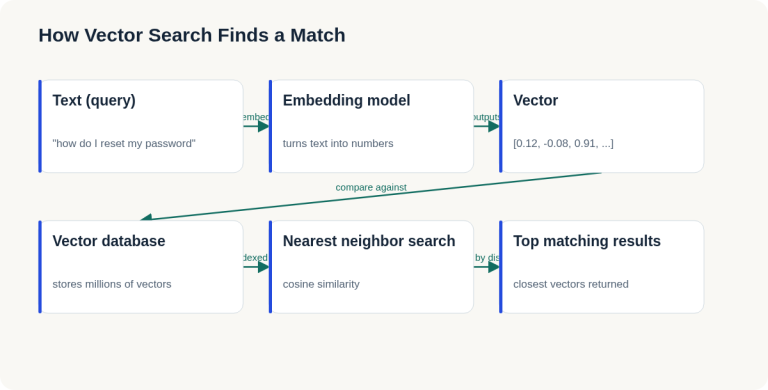
07 Oct 2026 · 4 min read
ai
English Lesson — Tuesday Morning: Embeddings & Vector Search Vocabulary
Daily English practice for tech professionals: embed, vector database, and nearest neighbor search vocabulary with pronunciation and exercises.
Read more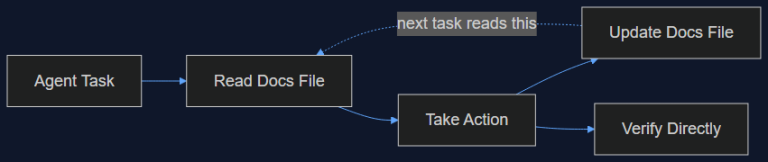
06 Oct 2026 · 5 min read
agentic coding
My Agent Didn't Forget. It Never Wrote Anything Down.
A Hacker News post about agent memory landed the same week I'd debugged a real dedup failure caused by exactly the problem it describes. I tested the fix against my own incident — here's what held up and what didn't.
Read more
Discussion
Comments are reviewed before publication. Your email is kept private.