
JOURNAL
AI News From My Muse Feed — October 17, 2026
Five AI items that showed up in my personal Muse (muse.ai) feed today — voice mode expansion, longer AI video clips, director-style AI voiceover, and AI creeping into ordinary converter tools — read with a technical lead's eye.
On this page
I run a personal Muse agent (muse.ai) that pulls a feed of things it thinks I’d want to know. Most days it’s half AI tooling, half noise. Today’s batch had five items actually worth a technical lead’s attention — not because any single one is a breakthrough, but because of where AI keeps showing up: inside tools that aren’t AI products at all.
OpenAI Ships GPT-Live-1.1 With New Voices for Six Languages
OpenAI rolled out GPT-Live-1.1, adding new voice options across six languages for its real-time voice mode.
Voice mode has quietly become the part of the stack that’s hardest to get right — latency, turn-taking, and now locale coverage. If you’re building anything with a voice interface and you’ve been waiting on language parity before shipping outside English-speaking markets, this is one less excuse. The real question isn’t “can it speak Vietnamese now,” it’s whether the latency and interruption-handling hold up once you’re not demoing in English. Worth a spike before you commit a roadmap item to it.
Kling 4.0 Finishes Rolling Out — 30-Second Clips, 2-Minute Extensions
The full version of Kling 4.0 is now live, generating 30-second clips with the ability to extend them up to 2 minutes.
Every generation of video models has crept the clip length up — first 4 seconds, then 10, now 30 with extensions. For product people, the interesting part isn’t the raw length, it’s what it unlocks: ad creative, explainer loops, even rough storyboards that don’t need a 6-second attention span to tell a story. For engineers plugging this into a pipeline, extensions mean more API calls, more cost per final asset, and more places for continuity to break between segments — budget your retry logic accordingly.
Fish Audio Drama 3 Lets You “Direct” AI Voiceover
Fish Audio’s Drama 3 release adds actor-style direction controls to AI voiceover — closer to giving notes to a voice actor than picking a preset voice.
This is the detail that matters more than it sounds like it should. Most AI voiceover tools gate quality behind the voice model itself. Direction-style controls move the bottleneck to prompt/control design instead — which means the differentiator for anyone building on top of this shifts from “which voice model” to “how good is your control layer.” If you’re evaluating voiceover vendors for a product, ask about the control surface, not just the sample reel.
UniConverter 18 Bakes AI Into an Everyday Tool
UniConverter 18 added AI-assisted batch conversion and faster upscaling to what is, at its core, a mainstream file-conversion utility.
This is the one I’d flag to any team still treating “AI feature” as something that belongs in a separate AI product. It doesn’t. It belongs wherever a repetitive, slightly-fuzzy task already lives — batch processing, upscaling, format cleanup — the boring middle of a workflow nobody wanted to own. If your product has a batch job that currently requires manual QA or parameter tuning, that’s your AI feature candidate, not a chatbot bolted onto the sidebar.
“The Great Arch” Turns Archival Photos Into Living Film Sets
A project called The Great Arch is using AI to turn archival photographs into reconstructed, living film-set scenes.
Archival and historical-media work is a quieter but genuinely useful AI application — less flashy than generative video, more durable as a use case, because the input data (the photo) is fixed and verifiable even when the output is synthetic. For anyone working in media, education, or cultural-heritage products, this is a reminder that “AI reconstruction” needs the same provenance discipline as any other derived asset: keep the source photo attached, label the reconstruction as a reconstruction, and don’t let the two blur in front of an end user.
None of these five are individually a headline. Together they’re a decent snapshot of where AI actually is right now: voice mode maturing language by language, video models buying more seconds at a time, and — the part worth remembering — AI quietly becoming a feature inside tools that were never marketed as “AI tools” in the first place. That last pattern is the one to watch if you’re deciding where to spend engineering time this quarter.
Source: compiled from the author’s personal Muse (muse.ai) AI assistant feed.
Related reading
· 4 min read
ai
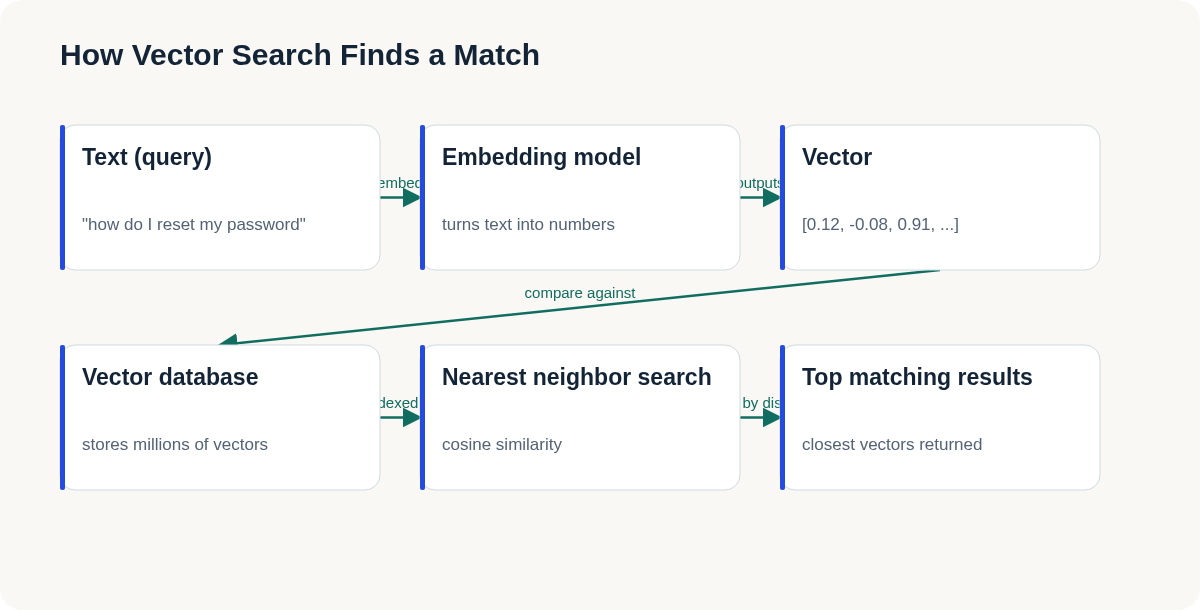
English Lesson — Tuesday Morning: Embeddings & Vector Search Vocabulary
Daily English practice for tech professionals: embed, vector database, and nearest neighbor search vocabulary with pronunciation and exercises.
Read more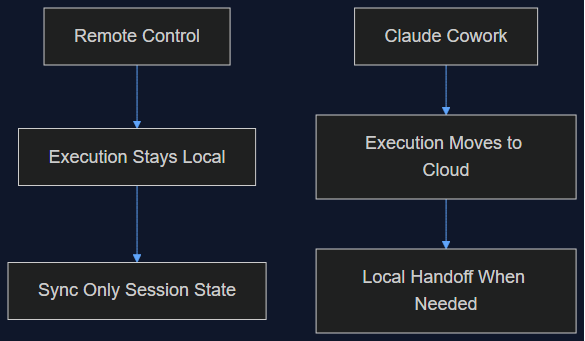
· 5 min read
agentic coding
Claude Cowork Just Did the Thing I Said Remote Control Wasn't Doing
In August I wrote that Claude Code's Remote Control was a sync layer, not a cloud migration, and that keeping execution local was the point. This week Anthropic moved Cowork's execution to the cloud by default. Here's why both were the right call — for different products.
Read more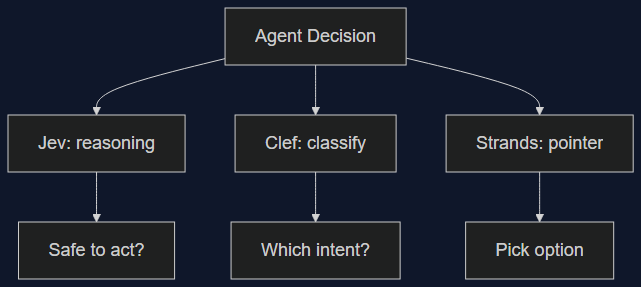
· 5 min read
agents
Three Decision Models Shipped in One Week — None of Them Wins Outright
Cloudflare's Clef/Clef-flash and Amazon's Strands Decider both launched October 1st aiming at TypeSafe's Jev. I lined up the real benchmark, latency, and pricing numbers — the category is real, but picking a winner depends entirely on which decision you're automating.
Read more
Discussion
Comments are reviewed before publication. Your email is kept private.