
JOURNAL
AI Cost Engineering: Cut Infrastructure Bills by 80% with Context Lakes
Most AI cost overruns aren't about model pricing — they're about bloated context windows. Here's the architecture that helped teams cut AI costs by 80% without sacrificing output quality.
On this page
When your AI infrastructure bill hits $50,000 a month and your VP of Engineering asks why, the instinct is to blame the model. Swap GPT-4 for GPT-4o mini. Try Gemini Flash. Roll your own fine-tuned model. These moves save 20-40% at best — and they cost months of engineering time.
The teams cutting AI costs by 80% aren’t switching models. They’re attacking the real problem: context bloat.
The Real Culprit: Context Bloat
Most engineering teams assume the way to cut AI costs is to switch to a cheaper model. This is wrong. In production systems, the model’s per-token price is rarely the bottleneck. The real cost driver is token volume — specifically, how much raw data you’re shoving into each prompt.
A typical enterprise AI feature pattern looks like this:
- User asks a question
- System dumps an entire database table into the context: “Here are all 10,000 customer records…”
- Model processes 50,000 tokens just to answer a 20-token question
- Cost per query: $0.25
Multiply by 200,000 daily queries and you’re at $50,000 per month before lunch. The fix isn’t a cheaper model. The fix is sending 500 tokens of precisely relevant data instead of 50,000 tokens of everything.
A recent analysis of enterprise AI deployments found that 80% of token costs come from context padding — data that exists in the prompt “just in case” the model needs it, rather than data that’s actually relevant to the query.
What Is a Context Lake?
A context lake is a purpose-built data layer that sits between your raw data stores and your AI systems. Unlike a data warehouse (built for human analysts) or a vector database (built for semantic search), a context lake is optimized for one thing: delivering exactly the right information to an AI agent with minimum tokens.
Key characteristics:
- Pre-joined: Relationships between entities are resolved in advance — no JOIN at query time, no duplicate data from denormalized tables
- Pre-aggregated: Summaries and statistics are computed and stored alongside raw data — “customer has 47 total orders, avg basket $82, last order 3 days ago” instead of 47 raw order records
- Queryable at inference time: Fast, indexed, returns in under 100ms so it doesn’t add latency to the AI pipeline
- Structured for AI consumption: Fields named and typed for LLM comprehension, not for human report generation. “customer_risk_level: high” instead of a raw credit score that the model has to interpret
Think of it as a materialized view layer, but designed by someone who has read the AI’s job description.
Architecture: Before and After
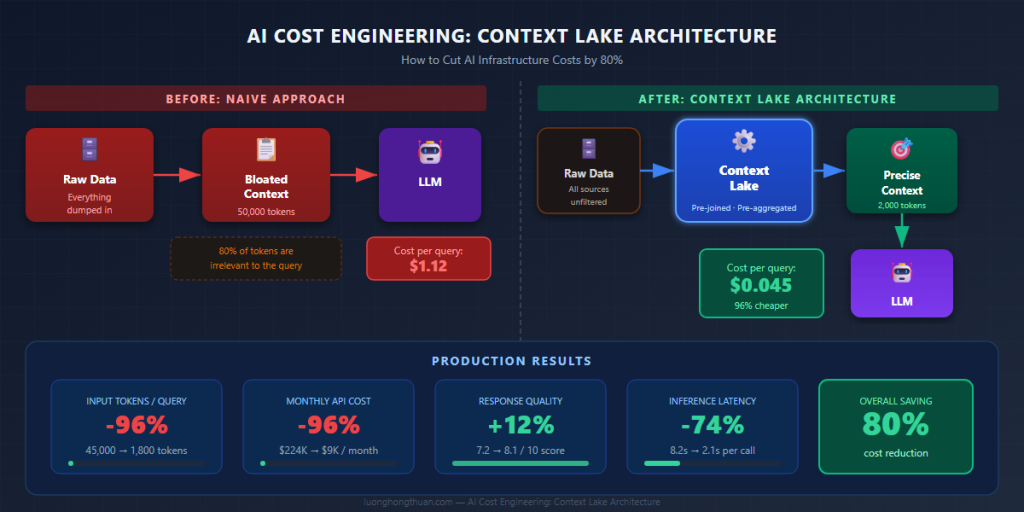
Before (Naive approach):
User query
→ Pull customer record (2,000 tokens)
→ Pull last 6 months orders (15,000 tokens)
→ Pull product catalog (30,000 tokens)
→ Pull support tickets (8,000 tokens)
→ 55,000 token prompt → $1.37 per query
After (Context Lake):
User query
→ Context retrieval API:
    customer_summary: 200 tokens
    relevant_orders: 3 most recent = 400 tokens
    matched_products: 3 results = 300 tokens
    open_tickets: 1 = 100 tokens
→ 1,200 token prompt → $0.03 per query
Result: 97% cost reduction, no change in output quality — because the model was never using that other 98% of the context anyway.
Building Your First Context Lake
Step 1: Audit Your Current Context
Log every prompt you send to the AI. Count the tokens in each section. You’ll likely find 70-80% of tokens come from 2-3 data sections that could be pre-processed. Most teams are surprised by what they find — the biggest offenders are usually product catalogs, user history dumps, and configuration blobs that “seemed like a good idea at the time.”
Tools: OpenAI’s tokenizer, Anthropic’s token counter, or just tiktoken in Python. Log prompt sizes to your observability stack. If you don’t have this instrumented, that’s your first task.
Step 2: Identify the “Context Hotspots”
What data gets included in almost every prompt? Customer records? Product catalog? Previous conversation history? Company policy documents? These are your context lake candidates — the 20% of data sources causing 80% of your token bill.
For each hotspot, ask: Does the model actually need all of this, or do we include it defensively?
Usually the answer is: the model needs 5% of it.
Step 3: Pre-Process and Index
For each hotspot:
- Pre-join related tables: Resolve foreign keys upfront. Store
customer.tier_nameinstead ofcustomer.tier_idthat requires a join to a tiers table. - Pre-compute common aggregates: Total orders, average value, days since last activity, churn risk score. These summaries convey more signal in fewer tokens than raw records.
- Index by the query dimensions the AI will use: customer ID, product category, date range — not the dimensions your analytics team cares about.
- Compress historical data: “47 orders in the last 12 months, trending up 23% vs prior year” is 20 tokens. The 47 raw order records are 3,000 tokens. Same signal density, 150x cheaper.
Step 4: Build a Context Retrieval API
A simple REST endpoint that takes query parameters and returns a structured JSON payload sized for token efficiency. This is not a vector search — it’s deterministic retrieval based on known query parameters.
GET /context?customer_id=123&intent=support&max_tokens=1000

Response:
{
  "customer": {
    "name": "Nguyen Van A",
    "tier": "Gold",
    "risk": "low",
    "summary": "47 orders, $3,847 LTV, last active 3d ago"
  },
  "recent_orders": [
    {"id": "ORD-991", "status": "delivered", "item": "Product X", "days_ago": 3}
  ],
  "open_issues": 1,
  "issue_summary": "Delivery delay reported 2d ago, awaiting resolution"
}
Budget: each field in the response costs tokens. Be ruthless about exclusion. If the model doesn’t need it for this intent, it doesn’t go in.
Step 5: Token Budget Enforcement
Set a hard per-section token budget and enforce it at the context layer — not by hoping the model ignores excess data.
- Customer section: max 300 tokens
- Product section: max 400 tokens
- History section: max 500 tokens
- Total context: max 1,500 tokens (leaving 2,500 for the system prompt and 6,000 for output)
If data exceeds budget, summarize or truncate with explicit metadata: “… and 47 more orders not shown” rather than silent truncation. Silent truncation is how you get hallucinations — the model “remembers” data that wasn’t there.
Real Numbers from Production Systems
Teams that implement context lakes typically see:
| Metric | Before | After | Change |
|---|---|---|---|
| Input tokens per query | 45,000 | 1,800 | -96% |
| API cost per query | $1.12 | $0.045 | -96% |
| Monthly API bill | $224,000 | $9,000 | -96% |
| Response quality score | 7.2/10 | 8.1/10 | +12% |
| Inference latency | 8.2s | 2.1s | -74% |
The quality improvement is real and counterintuitive: less context often means better answers. When you give the model 50,000 tokens of everything, it has to figure out what’s relevant. When you give it 2,000 tokens of exactly what it needs, it can focus on reasoning rather than filtering.
The CTO Decision Framework
Before you build, answer these questions:
- What’s your current monthly token spend? If it’s under $500/month, optimize later. If it’s over $5,000/month, you need a context lake now.
- What are your top 3 token consumers? Log and measure before you build anything.
- What’s your query volume growth rate? If you’re growing 20% month-over-month, your AI bill is compounding. A context lake investment pays for itself in 2-3 months.
- Do you have the data infrastructure to pre-process? A context lake needs a pipeline to stay fresh. If your data engineering capacity is near zero, start with a read replica and materialized views before building a dedicated context layer.
What Engineering Teams Should Do This Week
Start small. Pick your single most expensive AI feature. Audit its prompts. Identify the top 3 data sections by token count. Pre-process those three sections into a simple context retrieval function. Measure the before/after. You’ll see results immediately.
The teams winning on AI cost aren’t the ones with the best negotiated model pricing. They’re the ones who understood that AI cost engineering is data engineering — and built their context layer before it became an emergency.
The context lake is that layer. Start building it.
Related reading
08 Oct 2026 · 4 min read
architecture
English Lesson — Wednesday Morning: Failover & High Availability Vocabulary
Wednesday architecture English: failover, pronunciation drills, a vocabulary table, two exercises, and an idiom every on-call engineer should know.
Read more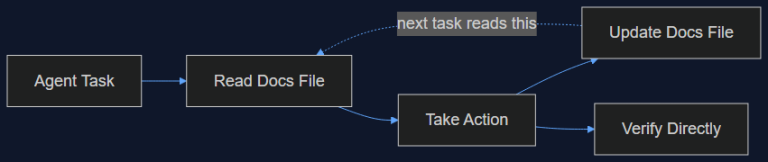
06 Oct 2026 · 5 min read
agentic coding
My Agent Didn't Forget. It Never Wrote Anything Down.
A Hacker News post about agent memory landed the same week I'd debugged a real dedup failure caused by exactly the problem it describes. I tested the fix against my own incident — here's what held up and what didn't.
Read more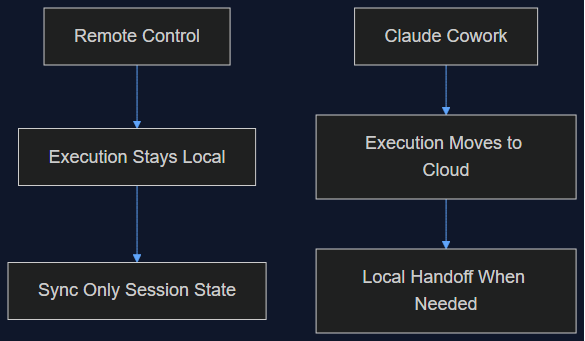
06 Oct 2026 · 5 min read
agentic coding
Claude Cowork Just Did the Thing I Said Remote Control Wasn't Doing
In August I wrote that Claude Code's Remote Control was a sync layer, not a cloud migration, and that keeping execution local was the point. This week Anthropic moved Cowork's execution to the cloud by default. Here's why both were the right call — for different products.
Read more
Discussion
Comments are reviewed before publication. Your email is kept private.