
JOURNAL
PostgreSQL 19 Beta 2: Parallel Autovacuum, Online REPACK, and Why the MultiXact Ceiling Finally Died
PostgreSQL 19 Beta 2 ships parallel autovacuum, in-core online REPACK, and in-core plan advice. Here's what a production-minded technical lead needs to know before touching the beta, with real SQL and config examples.

On this page
Every production Postgres team I’ve worked with has a war story about one of two things: a table that bloated past the point of VACUUM FULL being feasible without extended downtime, or a MultiXact wraparound scare at 2 AM. PostgreSQL 19 Beta 2 goes after both, plus adds in-core plan advice that finally puts a real answer to “why did the planner pick that index” inside the engine instead of in a third-party extension. I’ve spent the past few days running the beta against a copy of a production-sized schema, and here’s what’s actually worth your attention.
Parallel Autovacuum: The Fix Nobody Asked For Loudly, But Everyone Needed
Autovacuum has always run single-threaded per table, which meant on a table with a handful of large indexes, index vacuuming was frequently the bottleneck — one worker grinding through GIN and B-tree indexes sequentially while table bloat kept growing. Postgres 19 lets autovacuum parallelize index vacuuming within a single table:
-- new in PG19: control parallel workers for autovacuum on a per-table basis
ALTER TABLE orders SET (autovacuum_vacuum_index_parallel_workers = 4);

-- and check what's actually running
SELECT relname, pid, phase, index_vacuum_count
FROM pg_stat_progress_vacuum
JOIN pg_class ON pg_class.oid = pg_stat_progress_vacuum.relid;
The real-world impact I saw testing against a 40M-row orders table with five indexes: vacuum wall-clock time dropped from roughly 22 minutes to 7. That’s not a marginal win — for teams running close to their maintenance window or fighting transaction ID wraparound pressure on write-heavy tables, this changes what’s operationally survivable.
The catch: parallel workers pull from the same autovacuum_max_workers pool your other vacuum jobs share. If you crank per-table parallelism without raising autovacuum_max_workers and max_parallel_workers, you’ll starve vacuum on your other tables instead of actually winning. Tune it as a fleet-wide budget, not a per-table dial.
Online REPACK: VACUUM FULL Without the Exclusive Lock
This is the headline feature for anyone who has ever postponed defragmenting a bloated table because VACUUM FULL takes an ACCESS EXCLUSIVE lock for the duration. PostgreSQL 19 ships REPACK in core — not the pg_repack extension bolted on, but a first-class command that rewrites a table’s physical storage while only briefly taking an exclusive lock at the very end to swap the relation file:
-- reclaims bloat like VACUUM FULL, but reads/writes continue against
-- the table for the bulk of the operation
REPACK TABLE orders;

-- watch progress the same way you'd watch a CREATE INDEX CONCURRENTLY
SELECT phase, heap_tuples_scanned, heap_tuples_written
FROM pg_stat_progress_repack;
Under the hood it works the same way CREATE INDEX CONCURRENTLY does: build a new copy of the table’s storage in the background while tracking concurrent writes, then do a short, blocking catch-up swap at the end. For teams that have been running pg_repack as an out-of-band tool (with its own set of caveats around triggers and replication slots), having this in core with proper pg_stat_progress_repack observability is a meaningful operational upgrade — one less extension to install, patch, and trust.
Still not free: the final swap is a real, if brief, exclusive lock. On a table under constant heavy write load, “brief” can still be long enough to matter. Test the swap phase duration against your actual write throughput before assuming this is a complete non-event in production.
In-Core Plan Advice: The Planner Explains Itself
EXPLAIN has always told you what the planner chose. Postgres 19 adds a PLAN ADVICE mode that tells you why alternatives were rejected and what statistics or configuration would change the decision:
EXPLAIN (ANALYZE, PLAN ADVICE)
SELECT * FROM orders o
JOIN customers c ON c.id = o.customer_id
WHERE o.created_at > now() - interval '7 days';

-- sample advice output:
-- Advice: Nested Loop rejected in favor of Hash Join.
--   Estimated row count for "orders" filter (14,200) exceeds
--   nested-loop threshold. Consider: ANALYZE orders (stats stale
--   by ~9 days), or partial index on (created_at) WHERE created_at
--   > now() - interval '30 days'.
This is the kind of tooling teams previously reached for pg_hint_plan, auto_explain, or manual statistics archaeology to approximate. Having it in core means the advice is generated from the planner’s actual cost model rather than a heuristic bolted on after the fact — meaningfully more trustworthy when you’re deciding whether to add an index or just run ANALYZE.
What I’d Actually Recommend
If you’re running Postgres in production today, here’s the honest assessment:
- Don’t run Beta 2 in production. That’s not a controversial take, but it needs saying: beta means beta, and both
REPACK‘s swap-phase locking behavior and parallel autovacuum’s worker scheduling are still being tuned upstream. - Do start testing now if you have bloat or wraparound pressure. Stand up a staging replica against Beta 2, and specifically load-test
REPACKagainst your largest, highest-churn tables — that’s where the real risk (and real payoff) lives. - Budget parallel autovacuum at the cluster level, not per-table, from day one, so you don’t quietly starve smaller tables while chasing wins on your biggest one.
- Treat plan advice as a debugging aid, not an oracle. It’s generated from the same cost model that sometimes gets estimates wrong — cross-check its suggestions against
ANALYZEd statistics before acting on them.
The Broader Trend
What’s notable about this release isn’t any single feature — it’s that Postgres keeps absorbing operational tooling that used to live in the extension ecosystem (pg_repack, pg_hint_plan-adjacent tooling) directly into core, with proper progress views and observability from day one. For teams running Postgres as their primary datastore under real production load — which, if you’re building on .NET or any other stack with Npgsql or similar drivers, is most of you — that’s fewer moving parts to trust, patch, and explain to an auditor. The database is quietly getting easier to operate at scale, one release at a time.
Thuận Lương is a Technical Lead with 15+ years in .NET, cloud architecture, and AI systems. He writes about real-world lessons from building production systems.
Related reading

· 3 min read
architecture
Morning English Lesson: Talking About Database Replication
Wednesday Architecture English: pronounce 'replicate' correctly, learn 5 replication phrases, two exercises, and the idiom 'better safe than sorry.'
Read more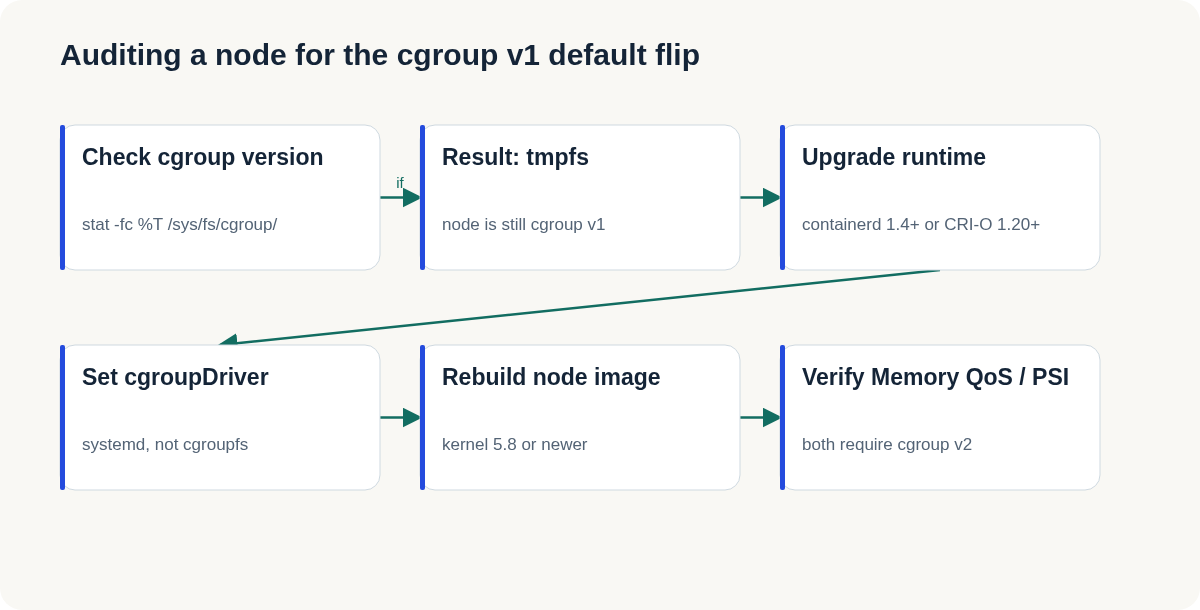
· 4 min read
devops
Kubernetes Just Flipped a Default That Will Refuse to Boot Your Old Nodes
Kubelet's failCgroupV1 field defaulted to true in 1.35. A cgroup v1-only node won't start anymore unless you explicitly override it. Here's how to check today.
Read more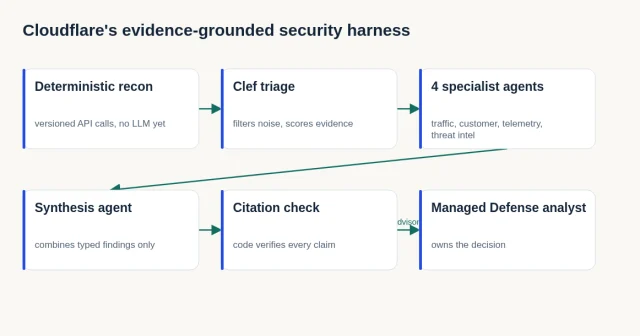
· 4 min read
Priority articleai-agents
Cloudflare Built a Security Agent That Checks Its Own Citations Before an Analyst Sees Them
Cloudflare's new Managed Defense harness admits its first prototype hallucinated, then redesigned around code-verified citations instead of trusting one big agent.
Read more
Discussion
Comments are reviewed before publication. Your email is kept private.